




Picture this. You’ve been saving your hard-earned salary for months. The flights to Thailand or Vietnam are booked, the hotel looks amazing online, and you can practically smell the street food and imagine the fun you'll have. You get to the airport, heart racing with pure excitement.
Then, reality hits.
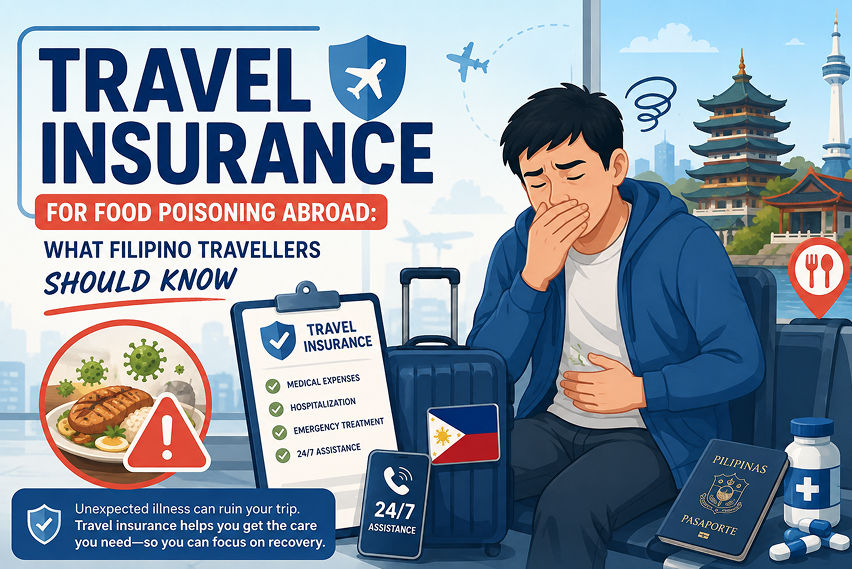
A heavy storm rolls over Manila, grounding all flights. Or you could make it to the destination, but your suitcase decides to take an unannounced solo vacation to Europe. Worse—you eat something strange on night one and wake up with a stomach ache so severe you need an emergency hospital bed.
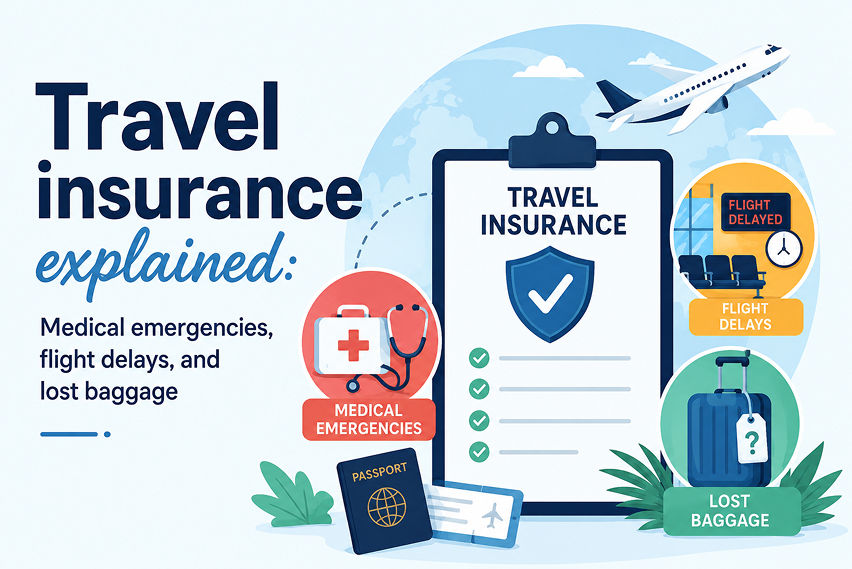
This is exactly why experienced travellers don't leave the country without an invisible backup plan. Let's talk about the big three messes travel insurance handles: medical emergencies, flight delays, and lost baggage.
1. Medical emergencies: The saviour of your savings
 AI-Generated Image
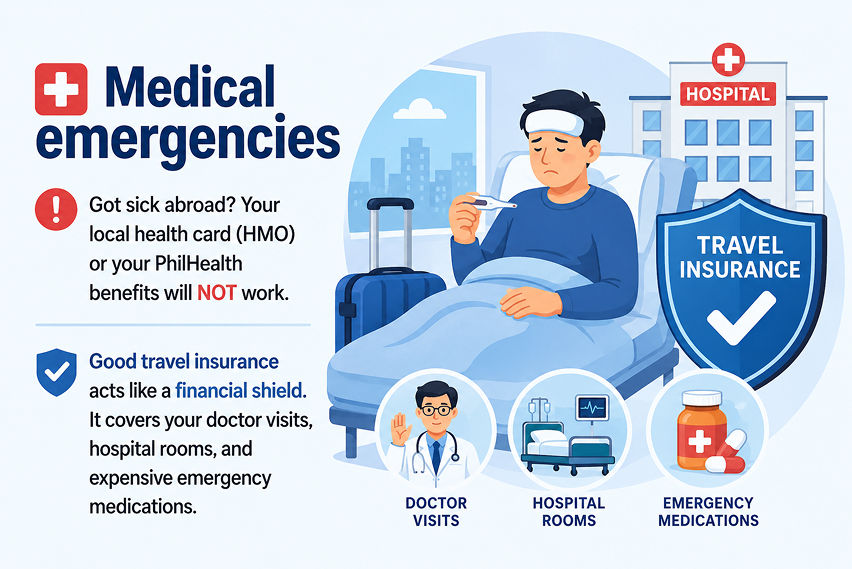
Getting sick at home in the Philippines is stressful enough. But getting sick abroad? It is a whole different level of scary. Your local health card (HMO) or your PhilHealth benefits generally won’t work once you cross the international borders.
If you have an accident or fall ill in a place like Singapore or the US, foreign hospital bills can skyrocket past hundreds of thousands of pesos in a single day.
Good travel insurance acts like a financial shield. It covers your doctor visits, hospital rooms, and expensive emergency medications. If things are truly critical, it may even cover emergency transportation, like a medical flight back to the Philippines.
2. Flight delays: Getting paid for your waiting time
 AI-Generated Image
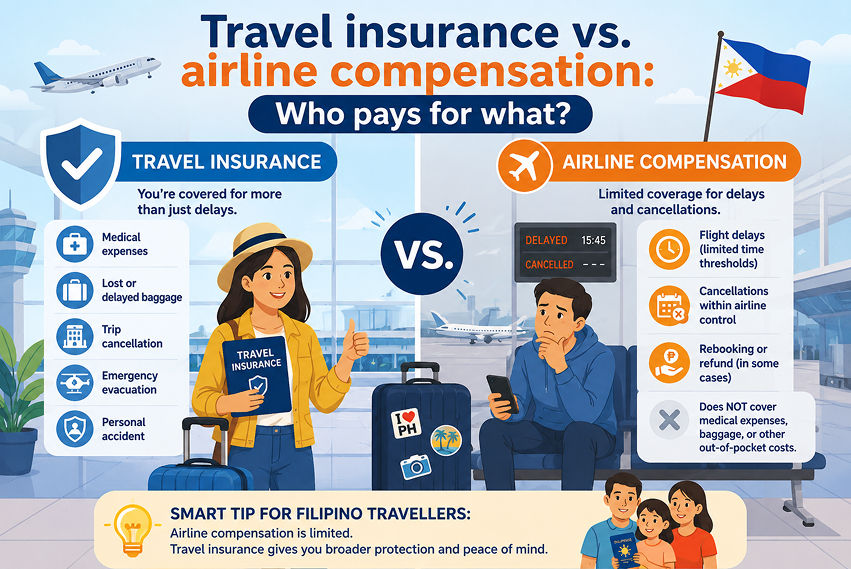
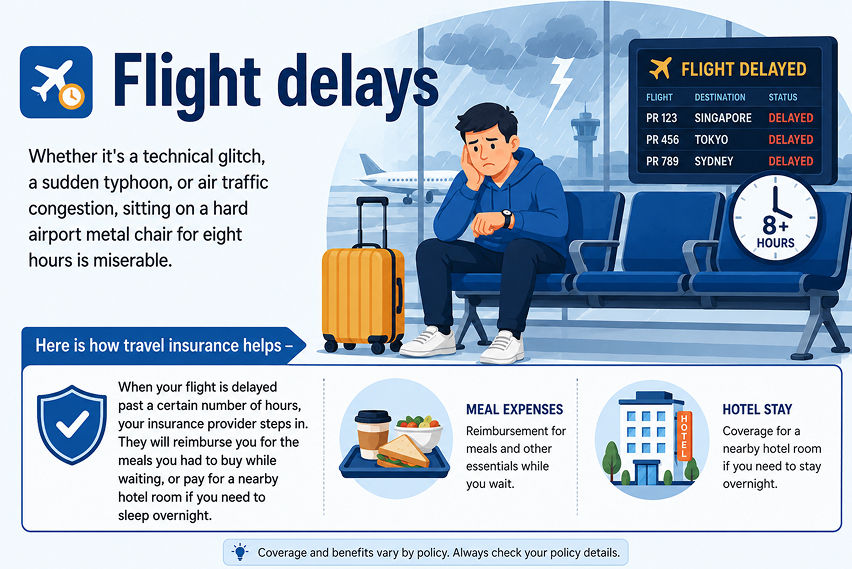
Let's face it, every Filipino traveller knows that flight delays at NAIA or Cebu are just part of life. It happens so often it's almost weird if your flight actually leaves on time! Now, whether it's a technical glitch, a sudden typhoon, or air traffic congestion, sitting on a hard airport metal chair for eight hours is miserable.
Here is how travel insurance helps -
When your flight is delayed past a certain number of hours, your insurance provider steps in. They will reimburse you for the meals you had to buy while waiting, or pay for a nearby hotel room if you need to sleep overnight. It turns a frustrating disaster into something manageable.
3. Lost baggage: Replacing your missing gear
 AI-Generated Image
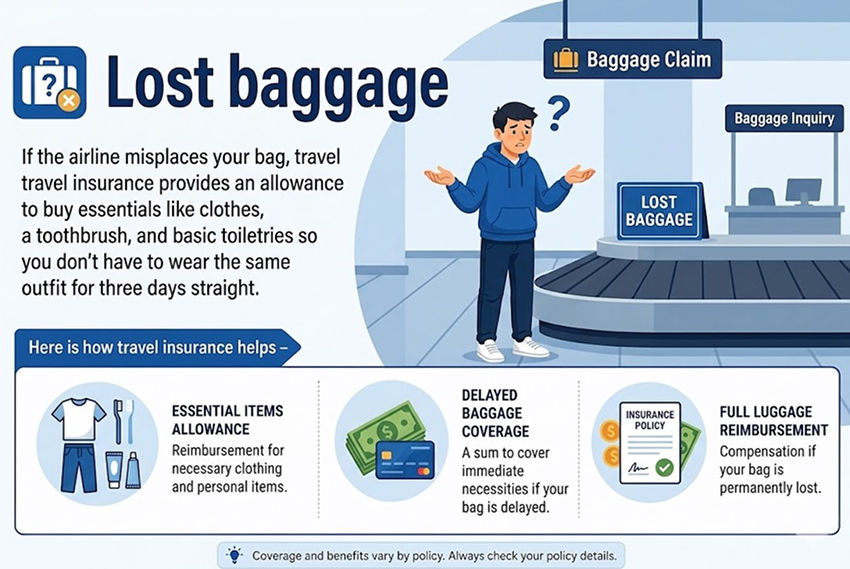
You stand by the airport luggage carousel. Watch the bags go round and round. Slowly, the crowd thins out. The conveyor belt stops with a loud groan. Your bright red suitcase is nowhere to be seen.
Losing your belongings can completely ruin the first few days of a vacation. If the airline misplaces your bag, travel insurance provides an allowance to buy essentials like clothes, a toothbrush, and basic toiletries so you don’t have to wear the same outfit for three days straight. If the airline completely loses your bag forever, your policy pays you for the value of the clothes and items you lost, subject to the policy’s terms and conditions.
How to get travel insurance in the Philippines
Buying travel insurance is incredibly easy now. You don't need to visit a fancy office. Websites like ZenInsure let you compare packages from top Philippine insurers, such as Oona, Starr, or BPI MS, side by side.
Basic plans for short Asian trips can cost less than a fancy cup of iced coffee. It's a tiny price to pay for absolute peace of mind.
The takeaway
Travel is all about having fun, creating beautiful memories, and discovering the world. But the universe is unpredictable. Spending a tiny fraction of your travel budget on insurance means you can board your flight knowing that no matter what happens—be it a bad flu, a cancelled flight, or a missing suitcase—you and your family are completely protected.
Also Read: What is travel insurance, and why every Filipino traveller should understand it
FAQs
Q1. Does travel insurance cover medical bills if I get sick while travelling?
Ans. Yes, most modern travel insurance policies sold in the Philippines now include medical coverage. Just make sure to double-check the policy details before you pay to ensure medical expense coverage.
Q2. Can I buy travel insurance while I am already on my vacation abroad?
Ans. No, you cannot. According to Philippine insurance guidelines, you must buy your policy before your trip officially starts (before you clear Philippine immigration at the airport). Buying a policy after an emergency happens is considered fraud.
Q3. What should I do if my flight is delayed or my bag is lost to make sure I get paid?
Ans. You need proof. Always ask the airline for an official written report. Keep every single receipt for meals, hotels, or emergency clothes you bought because of the issue.
Q4. Is travel insurance required by law when Filipinos travel abroad?
Ans. For most destinations, it isn't legally mandatory, though highly advised. However, if you are applying for a Schengen Visa to visit European countries such as France or Italy, you are legally required to provide proof of travel insurance with medical coverage.
Q5. Does travel insurance cover me if my phone gets stolen because I forgot it on a bench?
Ans. Usually, no. Travel insurance covers theft if your bag is cut open or taken from you by force, but it does not cover negligence or unattended property. If you accidentally leave your phone behind in a coffee shop, the insurance company will consider it a case of personal neglect and deny the claim.
Q6. Will my travel insurance offer coverage if a typhoon cancels my flight?
Ans. Yes, but only if you bought the insurance before the weather bureau officially named the typhoon. If you try to buy insurance after the storm warning is already on the news, that specific storm will be excluded from your coverage.