




For most Pinoy travellers, choosing a travel insurance policy is like picking a movie on Netflix without watching the trailer. From the cover, it might look promising, but you never know what it turns out to be eventually. It is a big gamble.
However, in the case of insurance, we all know we need it, especially with erratic monsoon weather and unpredictable airline schedules, but staring at tables of medical limits and policy jargon can give anyone a headache.
Here’s the good news: learning how to compare travel insurance plans online isn't rocket science. In fact, once you know what key features to look out for, you can score maximum protection for your hard-earned pesos in under ten minutes. Let's break down exactly how to navigate online comparison tools like a seasoned travel pro!
Also Read: Why should you purchase a travel insurance policy online?
Why comparing travel insurance online changes the game
 AI-Generated Image
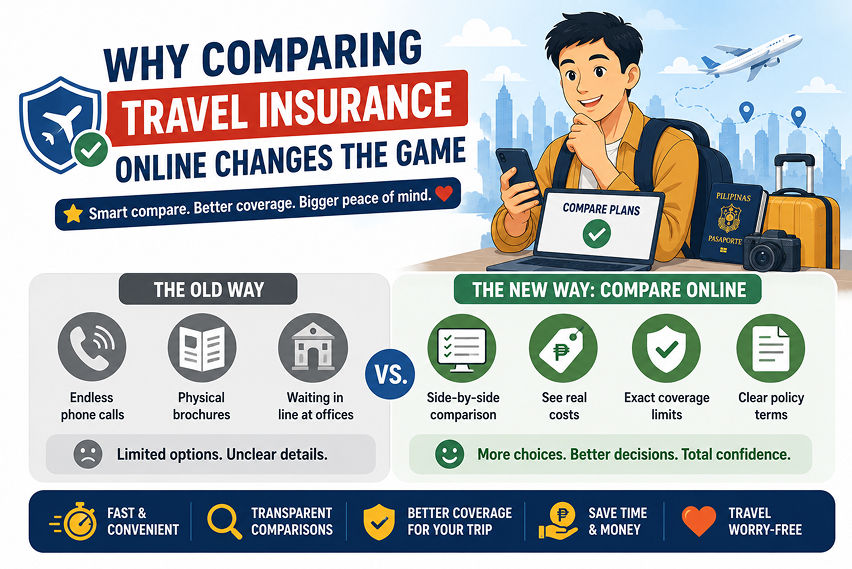
Think back to how our parents bought insurance years ago. It involved endless phone calls, physical brochures from agents, or waiting in line at an office. However, today, buying travel insurance online is as fast and flexible as checking food reviews online.
When you compare plans online, you step out of the dark. Instead of settling for whatever default policy comes your way, comparison platforms provide you with a side-by-side view of what top insurance providers are offering in the Philippines. You get to see real costs, exact coverage limits, and clear policy terms.
The result? You buy a policy that actually fits your travel style and budget without paying for unnecessary extras.
Also Read: The cost of flying unprotected: Why travel insurance is your true best friend
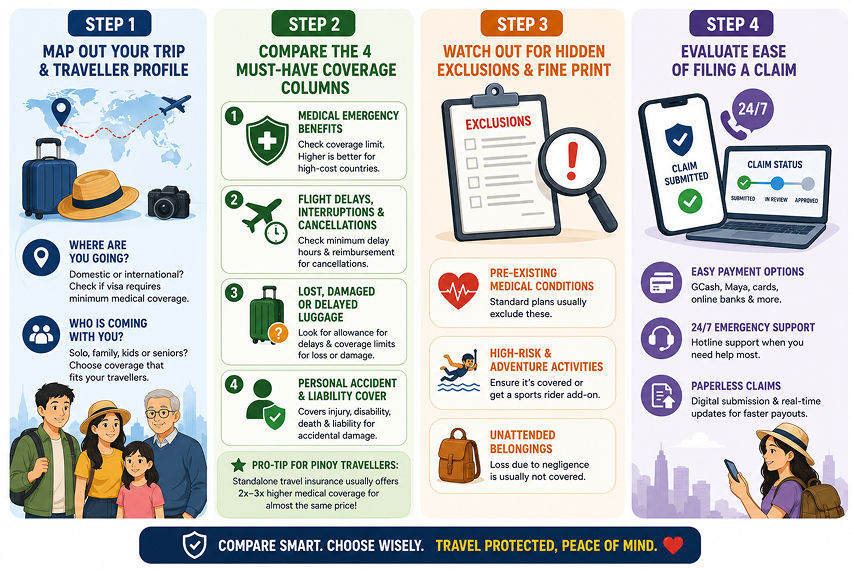
Step 1: Map out your trip and traveller profile
Before opening five browser tabs, take 30 seconds to define your trip. Not all travel protection plans are created equal, and your destination heavily shapes the coverage you need.
Where are you going?
Are you island-hopping in Siargao, eating street food in Bangkok, or skiing in Hokkaido? Domestic trips within the Philippines require different coverage (such as local emergency transport) than international trips. If you’re heading to Europe, remember that Schengen visa requirements require a minimum medical coverage from an embassy-approved insurer.
Who is coming with you?
Travelling solo is completely different from taking a family trip with young kids or elderly parents. Seniors' family members often need specialised pre-existing condition coverage, while kids might benefit from family bundle plans that cover dependents for free or at steep discounts.
Also Read: Smart travel: Should you buy travel insurance for one trip or the whole year?
Step 2: Compare the four must-have coverage columns
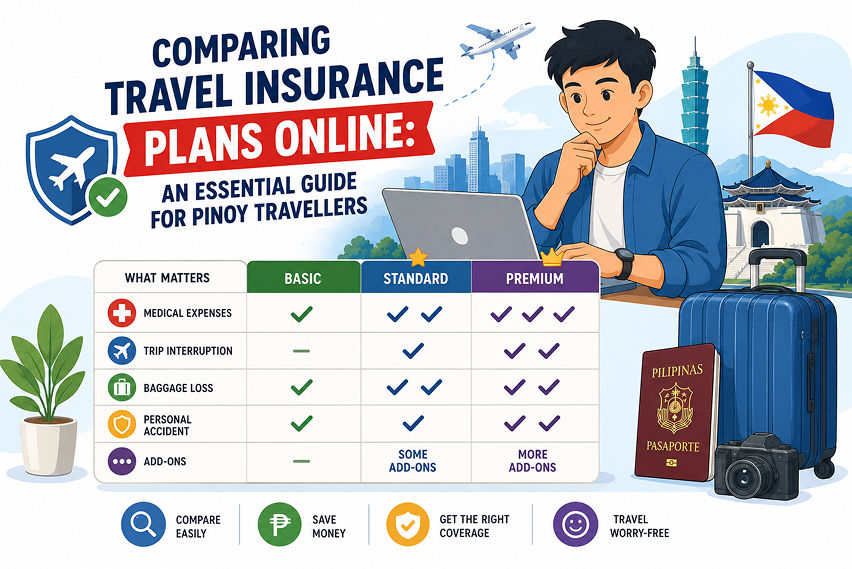
When you put two or three online insurance plans side-by-side, ignore the fancy marketing banners first. Focus straight on these four main pillars of coverage:
1. Medical emergency benefits
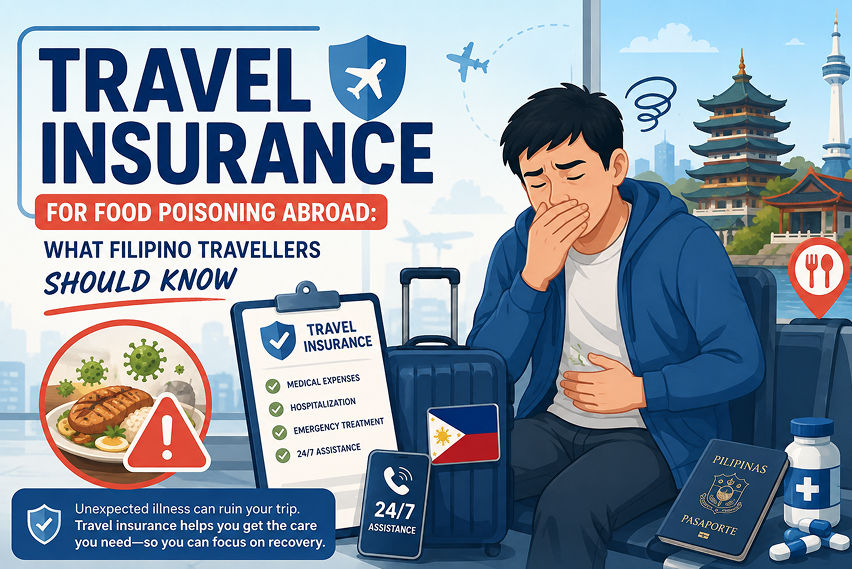
This one is the most critical part of any travel insurance policy. Getting sick or injured in another country can drain your savings in a matter of hours. Look closely at the emergency medical coverage limit.
For instance, a policy offering PHP 500,000 might sound like plenty for a Southeast Asia destination, but if you're flying to high-cost healthcare destinations like the United States or Japan, aim for higher coverage, at least a million.
2. Flight delays, interruptions, and cancellations
We’ve all seen the news when severe weather grounded flights at the airport. What if your flight is delayed by 6 hours or more? Will the policy pay a cash allowance for meals and airport lounge access? Or if a typhoon forces you to cancel your entire trip three days prior, will the insurer reimburse your non-refundable hotel bookings?
Make sure to compare the minimum delay threshold offered. Some plans kick in at 4 hours, while others require a gruelling 12-hour wait before paying out!
3. Lost, damaged, or delayed luggage
Arriving in Singapore while your luggage lands in Sydney is every traveller's worst nightmare. Compare how plans handle baggage issues. Good policies pay out a fixed allowance for emergency toiletries and clothes if your bag is delayed by more than 6 hours. In addition, they also reimburse the value of lost or damaged baggage up to a set limit per item.
4. Personal accident and liability cover
This coverage provides a payout in the unfortunate event of severe disability or death during travel. Personal liability cover also protects you if, during the trip, you accidentally cause injury to someone else or damage property, like accidentally knocking over an expensive display in a museum!
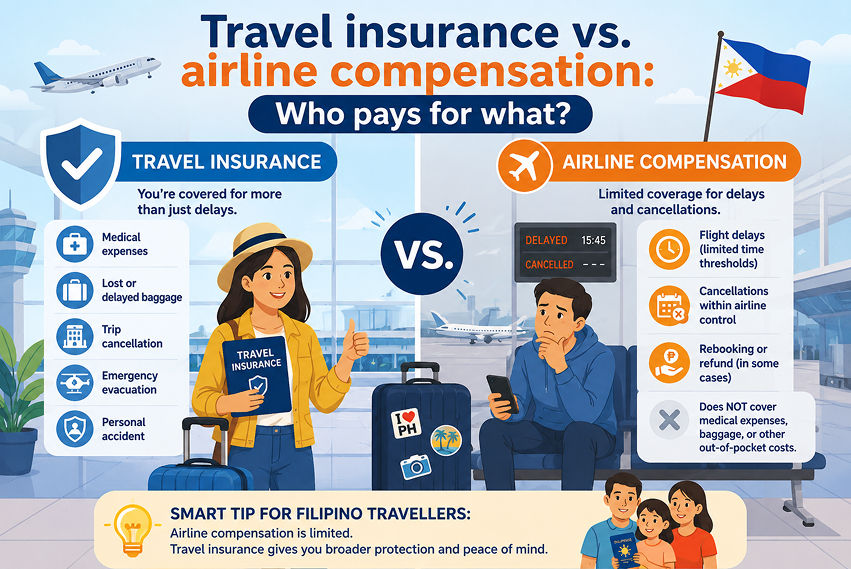
Pro-Tip for Pinoy Travellers: Airline add-on insurance is often convenient, but standalone travel insurance policies bought directly or via aggregator sites usually offer 2x to 3x higher medical coverage limits for almost the same price!
Also Read: Traveller's blueprint: How and when travel insurance pays for emergencies
 AI-Generated Image
Step 3: Watch out for hidden exclusions and fine print
A plan might look ridiculously cheap on paper, but that's usually because it leaves out essential protection. To avoid any unpleasant surprises when filing a claim, check for these common red flags:
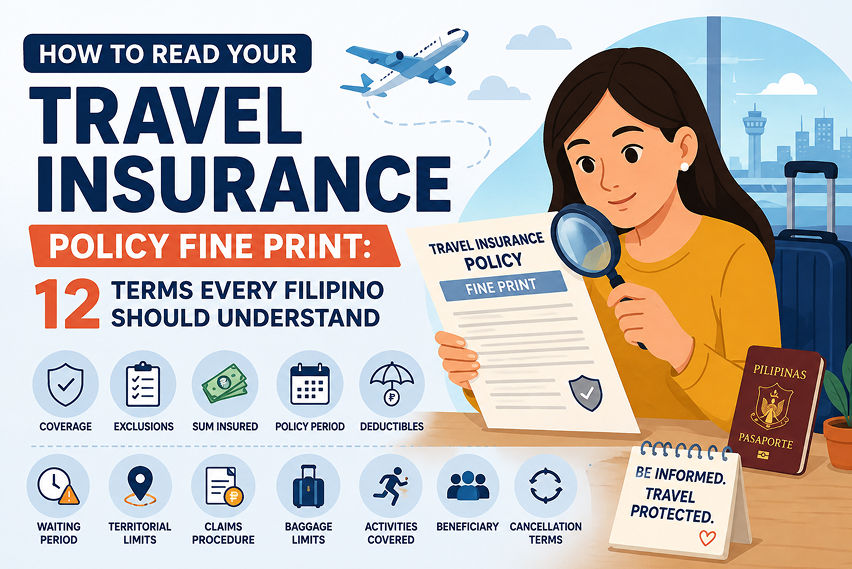
- Pre-existing medical conditions: Got asthma, diabetes, or hypertension? Standard budget plans usually exclude these unless you buy a specific policy tier.
- High-risk and adventure activities: Planning to go scuba diving in El Nido, riding a rented scooter in Bali, or snowboarding in Korea? Ensure the plan explicitly covers adventure sports, or purchase a sports rider add-on.
- Unattended belongings: If you leave your laptop on a café table in Paris while ordering coffee and it gets stolen, most policies won't pay out due to negligence clauses.
Step 4: Evaluate ease of filing a claim
Even the best travel insurance policy is useless if the claims process is cumbersome. When evaluating online travel insurance providers, make sure to check how easy it is to pay and file claims.
Top modern providers now offer seamless payments via GCash, Maya, and local online banks. When it comes to claims, look for insurers with 24/7 emergency hotline support and paperless digital claims portals. Reading recent customer reviews on Facebook groups or local travel forums gives you a realistic picture of how fast an insurer actually processes payouts!
Also Read: Travelling with kids? Don't skip these travel insurance tips
A quick checklist: How to choose a policy in 5 minutes
 AI-Generated Image
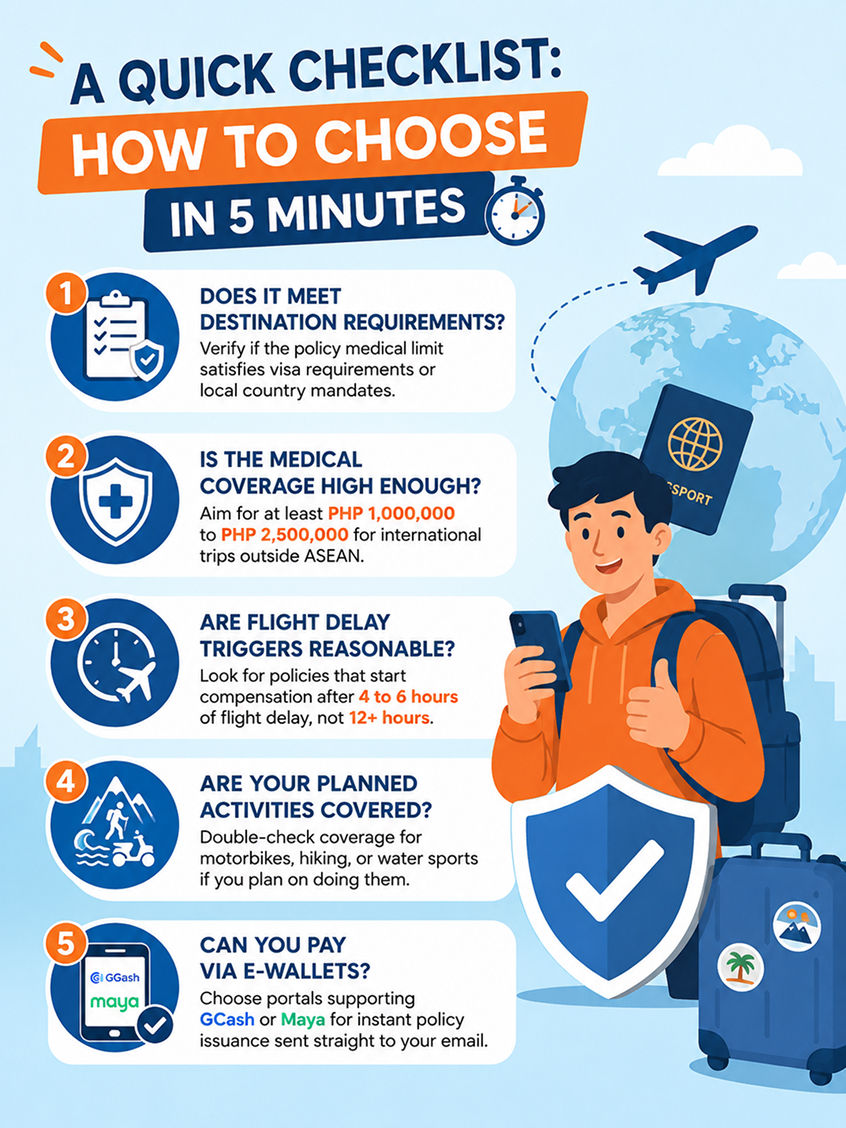
Check 1: Does it meet destination requirements?
Verify if the policy medical limit satisfies visa requirements or local country mandates.
Check 2: Is the medical coverage high enough?
Aim for at least PHP 1,000,000 to PHP 2,500,000 for international trips outside ASEAN.
Check 3: Are flight delay triggers reasonable?
Look for policies that start compensation after 4 to 6 hours of flight delay, not 12+ hours.
Check 4: Are your planned activities covered?
Double-check coverage for motorbikes, hiking, or water sports if you plan on doing them.
Check 5: Can you pay via e-wallets?
Choose portals supporting GCash or Maya for instant policy issuance sent straight to your email.
Also Read: Travelling on a budget? Don’t skip travel insurance
Final thoughts: Smart comparison means worry-free travel!
At the end of the day, spending 5 to 10 minutes comparing travel insurance plans online isn't about worrying over worst-case scenarios. It's about protecting your hard-earned vacation savings so you can explore the world with total confidence.
By comparing medical limits, flight delay perks, and policy fine print side-by-side, you ensure that every peso you spend works hard for you. So the next time you book that flight, don't just unthinkingly click "add protection"—take control, compare your options online, and pick the perfect safety net for your journey.
Also Read: Planning a Japan trip? Here's the travel insurance requirement for Filipino travellers
FAQs
Q1.What is better, buying travel insurance from an airline or a standalone provider?
Ans. Usually, standalone policies are better. The policies offered by airlines are quite basic; on the other hand, standalone plans bought through online third-party portals or directly from insurance websites typically give significantly higher medical limits, better baggage coverage, and more flexible terms for roughly the same price.
Q2. How far in advance should I compare and buy travel insurance online?
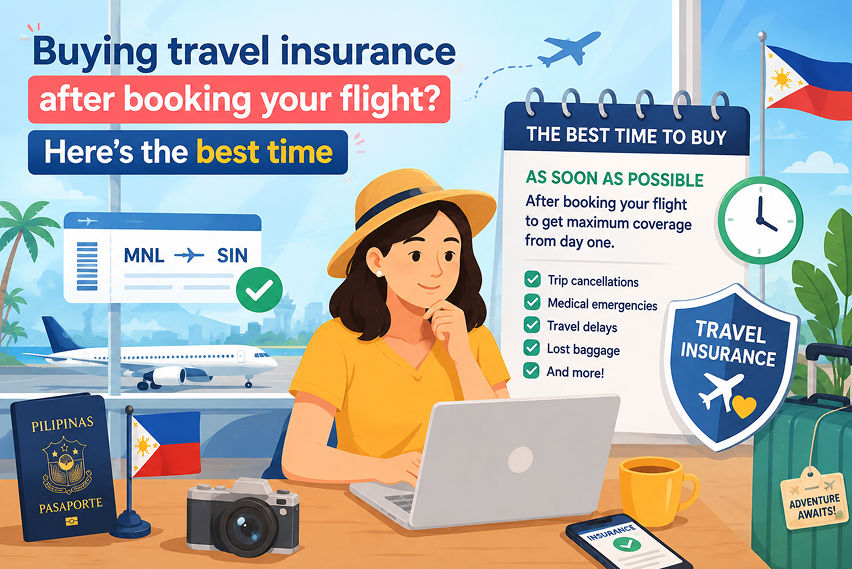
Ans. The best time to buy is immediately after booking your flights and hotel. Buying early activates pre-departure coverage, protecting you if unexpected illness or severe weather forces you to cancel your trip weeks before departure.
Q3. What is the difference between individual and family travel insurance plans?
Ans. Individual plans cover one person per policy. Family plans cover parents and dependent children under one policy—often offering lower combined premiums and bundled limits that make family vacations much cheaper to insure.
Q4. Can I compare and buy travel insurance using my smartphone?
Ans. Yes! Modern insurance comparison sites and direct insurance portals in the Philippines are fully optimised for mobile browsers. You can complete comparison, selection, and GCash/Maya payment right on your phone in under 10 minutes.
Q5. Does online travel insurance cover trip cancellations due to typhoons in the Philippines?
Ans. Yes, as long as you purchased the insurance policy before the typhoon was officially named or announced by PAGASA. If you buy the policy after a storm alert is already declared, trip cancellation benefits for that storm won't apply.
Q6. What documents do I need to keep for an online insurance claim?
Ans. Always keep your original boarding passes, airline delay certificates, medical receipts/reports, police reports (for theft), and official receipts for emergency purchases. You can upload digital photos of these directly to the insurer's online claim portal.
Also Read: Travel insurance requirements by country: Where it's mandatory in 2026