





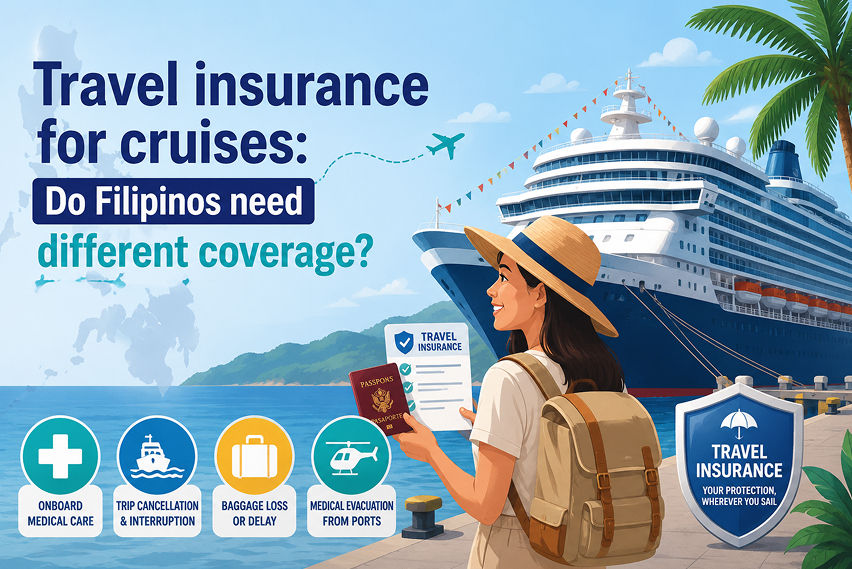
You’ve seen the TikTok and Instagram videos. Endless blue ocean views, gigantic waterslides on the top deck, all-you-can-eat midnight buffets, and waking up in a brand-new country every single morning. Taking a cruise feels like living in a floating luxury hotel that transports you straight into paradise.
It’s no wonder so many Filipino families are saving up for cruise holidays around Singapore, Japan, Alaska, or the Mediterranean islands.
You’ve booked your stateroom, bought your vacation outfits, and prepared your passport. Then comes that quiet question right before checkout: “Do I really need special cruise travel insurance, or is standard travel insurance enough?”
Here is the straightforward answer: Yes, floating on the open sea is completely different from landing on an airport runway. Regular travel insurance can leave you stranded in the middle of the ocean when things go wrong.
Let’s break down why cruise coverage works differently, what hidden risks Pinoy cruisers face, and how to choose the right policy so you can enjoy your vacation with zero stress.
Why cruise ships are totally different from normal trips
When you take a plane to Bangkok, Singapore, or Tokyo, you step off at an airport terminal. There are hospitals right around the corner, subway stations, and embassy officials. If you miss a connecting flight, you can just hang out in the terminal and buy another ticket.
 AI-Generated Image
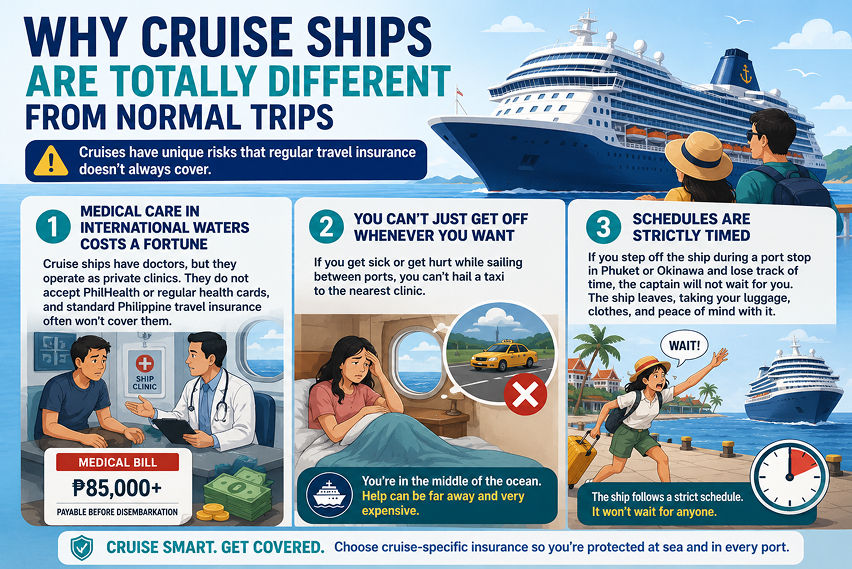
A cruise ship, however, is a floating town sailing across international waters. That sounds romantic until you realise three big facts:
- Medical care in international waters costs a fortune: Cruise ships have doctors, but they operate as private clinics. They do not accept PhilHealth or regular health cards, and standard Philippine travel insurance often won't cover them.
- You can’t just get off whenever you want: If you get sick or get hurt while sailing between ports, you can't hail a taxi to the nearest clinic.
- Schedules are strictly timed: If you step off the ship during a port stop in Phuket or Okinawa and lose track of time, the captain will not wait for you. The ship leaves, taking your luggage, clothes, and peace of mind with it.
- Pinoy Reality Check: Buying standard travel insurance for a cruise is like wearing a bicycle helmet when riding a racing motorcycle. It gives you a false sense of security until you actually hit a bump.
Also Read: Things to check before buying travel insurance: Flights, baggage, & smooth claims
What specific coverage do you need on a cruise?
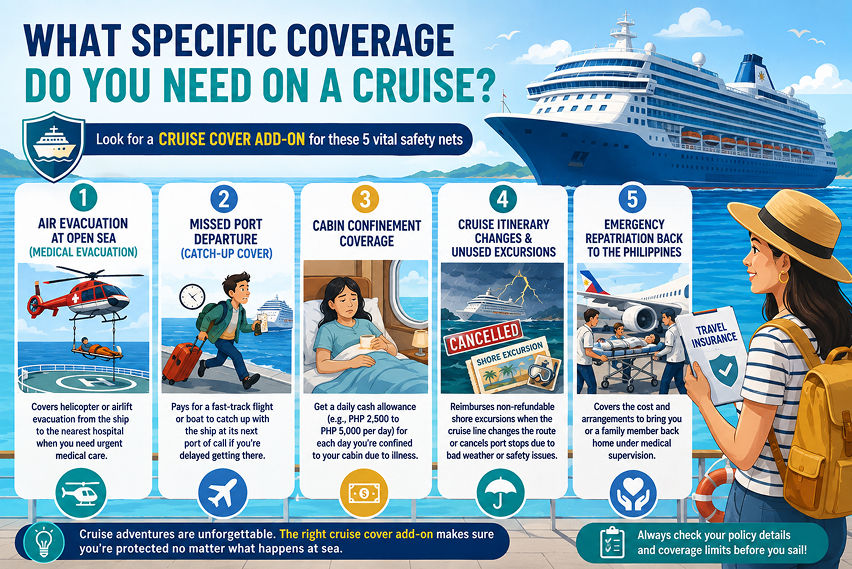
When shopping for insurance as a Filipino traveller, look specifically for a Cruise Cover Add-on. Here are the five vital safety nets you must have before stepping onto that gangway:
1. Air evacuation at open sea (medical evacuation)
Imagine having severe appendicitis or a heart issue while your ship is 200 kilometres off the coast of Vietnam. A ship doctor can stabilise you, but they cannot perform major surgery. You will need an emergency medical evacuation.This means calling a specialised helicopter to hover over the ship deck, lift you in a stretcher, and fly you directly to the nearest island hospital.
Standard travel insurance usually covers land ambulances or changes to commercial flights. These plans almost always exclude air-sea rescue or helicopter transfers unless you add cruise cover.
2. Missed port departure (catch-up cover)
Most Pinoy cruisers fly from Manila, Cebu, or Clark to catch their cruise ship. Now, imagine your flight gets delayed by four hours due to bad weather or air traffic congestion. By the time you land and rush to the port, you see your cruise ship already floating far away toward the horizon.
Without cruise insurance, you lose your whole vacation. With proper cruise cover, your insurance pays for a fast-track flight or boat to catch up with the ship at its next port of call!
 AI-Generated Image
3. Cabin confinement coverage
Suppose you catch a contagious illness while onboard. The onboard doctor will order you to stay strictly in your cabin for 3 to 5 days to protect other passengers. That means missing out on the swimming pools, live theatre shows, speciality dining, and shore tours you paid for. Specialised cruise insurance pays you a fixed daily allowance (for example, PHP 2,500 to PHP 5,000 per day) for each day you are confined to your room. Standard travel insurance doesn't do this.
4. Cruise itinerary changes & unused excursions
The weather can be unpredictable. If a typhoon approaches, the ship's captain might cancel stops and stay at sea instead. If you pre-booked expensive shore excursions like a food tour or diving trip, you could lose your money.
Cruise cover reimburses non-refundable shore trips when the cruise line alters the sailing route due to safety concerns or bad weather.
5. Emergency repatriation back to the Philippines
In case something serious happens on the ship that requires you or a family member to be brought back home under medical supervision, emergency repatriation kicks in. Usually, cruise-specific policies coordinate this directly with international maritime rescue centres, which saves your family from bureaucratic nightmares.
Important warning for senior travellers: Many Filipino families bring aged parents or grandparents on cruises because it's comfortable and accessible. However, make sure to declare any pre-existing medical conditions (such as high blood pressure or diabetes) when buying insurance. Failing to declare them might void your policy!
Also Read: Travelling with your aged parents? Don’t skip these travel insurance tips!
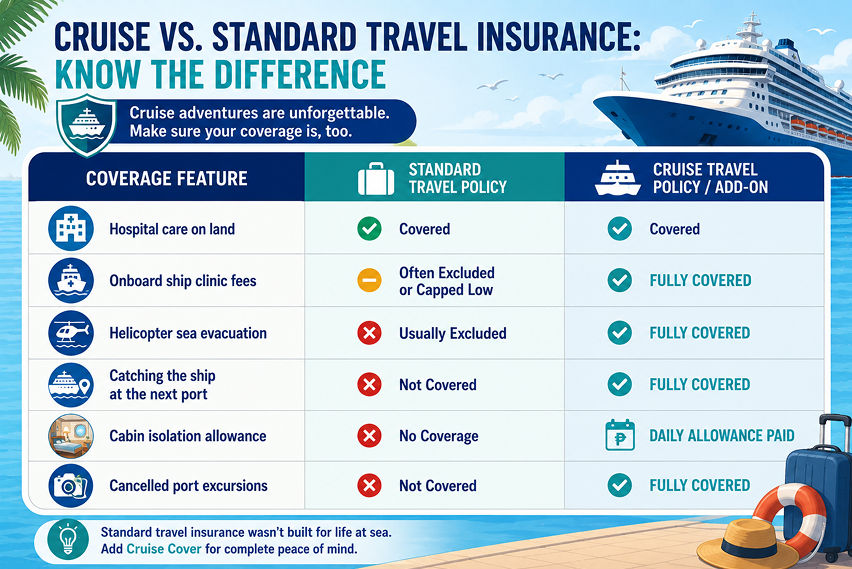
Standard travel insurance vs. Dedicated cruise insurance
To see why standard insurance falls short, look at how the two compare side-by-side:
 AI-Generated Image
Also Read: How to claim travel insurance: A step-by-step guide for Pinoy travellers
Tips for buying cruise insurance
Ready to secure your cruise protection? Don't leave it until the night before your flight. Follow this straightforward plan:
- Check the insurance offered by the cruise line: When booking a cruise, companies offer their built-in protection plan. Compare its price and terms with those of local Philippine insurance providers such as AXA Philippines, PGA Sompo, Oona Insurance, or Malayan Insurance. Local providers often offer better family rates and cover your pre-cruise flights from Manila or Cebu!
- Fly out 1 day early: Always arrive at your departure city one full day before the ship leaves. This buffers you against flight delays at the airport.
- Keep digital copies of receipts: If you visit the onboard medical centre, ask for an itemised receipt in English before checking out. These would prove helpful while filing an insurance claim back home in the Philippines.
- Read the policy fine print: If you are planning to engage in activities like ziplining, rock climbing, or jet skiing during shore stops? Check if your policy covers adventure sports or if you need an add-on.
Also Read: The biggest travel insurance claim mistakes Filipino travellers make & how to avoid them
Bottom line
A cruise vacation, solo or with friends/family, is all about relaxation, delicious food, amazing ocean views, and making great memories with your loved ones. Here, don't let an unexpected medical bill or delayed flight turn your dream cruise trip into a financial burden.
By securing dedicated cruise travel insurance before you depart from Manila, Cebu, or Clark, you can step on board with complete confidence. Have a safe, fun, and worry-free voyage!
Also Read: Travel insurance checklist for first-time Filipino travellers
FAQs
Q1. Is it a good idea to rely on the travel insurance plan offered by credit card companies?
Ans. Most premium Philippine credit cards offer free travel insurance when you book your flights with them. However, almost all free credit card insurance policies apply only to standard flight and hotel trips. They rarely cover maritime emergencies, ship medical centres, or open-sea helicopter evacuations. Always call your bank provider to confirm before relying on it!
Q2. Does PhilHealth cover medical expenses on a cruise ship?
Ans. No. PhilHealth generally does not cover medical treatments received inside foreign cruise ship clinics or overseas hospitals. You need private travel insurance with international medical cover to pay for shipboard medical bills.
Q3. What happens if I miss the ship while in port?
Ans. If you get stuck in traffic during a self-guided tour in Phuket or Taiwan and the ship leaves, your cruise insurance (with missed port departure cover) will pay for reasonable accommodation and transport costs to get you to the cruise ship’s next destination port.
Q4. How much does cruise travel insurance cost in the Philippines?
Ans. Cruise insurance is surprisingly affordable! For a typical 4-to-7-day Asian cruise, comprehensive cruise coverage usually costs between PHP 1,200 and PHP 3,000 per person, depending on your age and policy limits. That is a tiny price to pay for peace of mind on a PHP 50,000+ vacation.
Q5. When is the best time to purchase my cruise insurance policy?
Ans. Buy your cruise insurance as soon as you pay your initial cruise deposit. Getting insurance early ensures proper coverage against trip cancellation in case you fall sick or face an emergency weeks before the cruise starts.
Q6. What if I am prone to seasickness? Does insurance cover that?
Ans. Seasickness medicine over the counter at guest services is usually cheap. However, if severe seasickness causes dehydration requiring IV fluids inside the ship's infirmary, cruise medical coverage will reimburse those clinical expenses!
Also Read: Comparing travel insurance policies: Without looking at price