



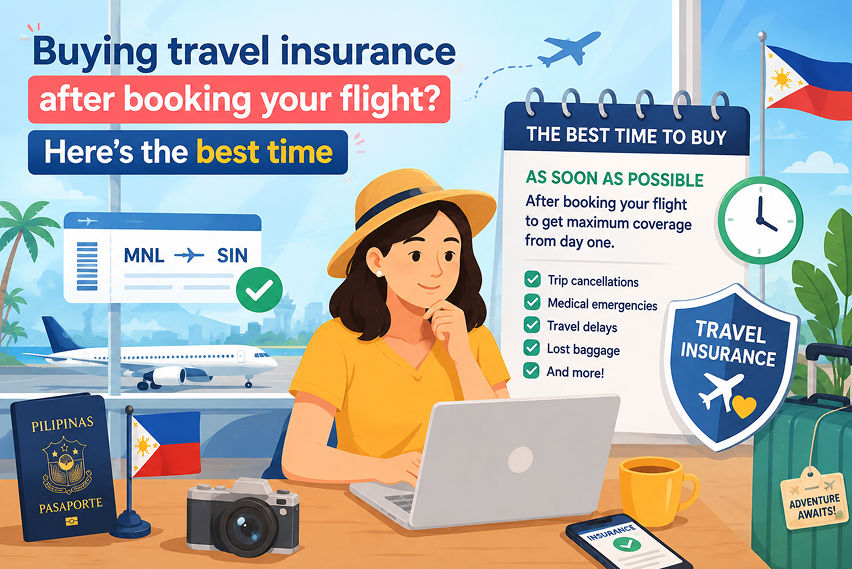
So you and your pals got all excited and booked a flight to your dream destination. Maybe you all got excited, saw a seat sale, and clicked "book now" before thinking about anything else. Now you're wondering: "Wait, can I still get travel insurance? Or did I mess it up already?"
Good news: you can. Breathe easy. Yes, you can still buy travel insurance after booking your flight. In fact, most Filipino travellers do it this way. Very few people buy insurance first and flights second.
Let's talk about how this works, why timing still matters, and when the best time is to buy your policy.
You don't need to buy insurance before your flight
A common myth is that travel insurance and flight bookings must happen at the same time, like a package deal. That's not true.
Travel insurance is separate. It isn't tied to your airline ticket. You can buy your flight today and get your insurance next week, next month, or even a few days before you fly. As long as your policy starts before your trip begins, you're covered.
Think of it like buying a helmet after you already bought your bike. The bike and the helmet don't have to be bought together. What matters is that you wear the helmet before you start riding.
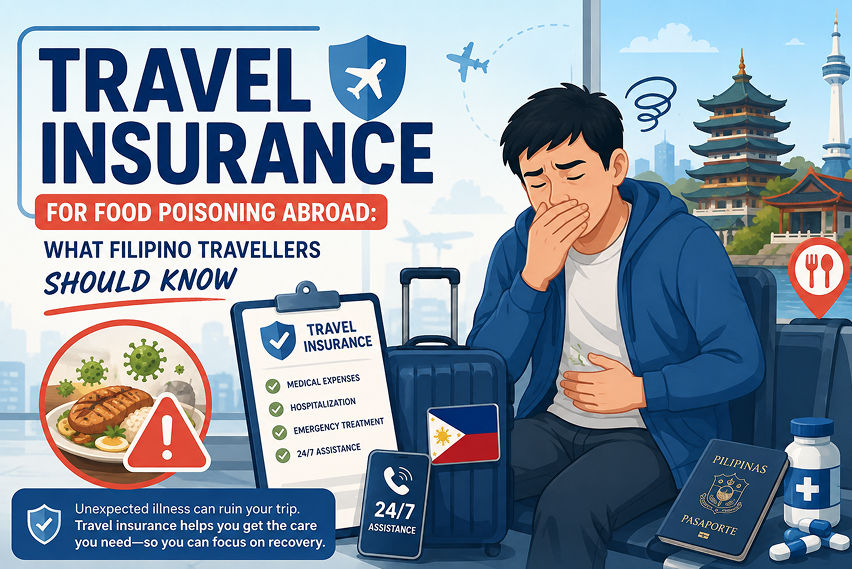
Also Read: Travel insurance for food poisoning abroad: What Filipino travellers should know
When is the best time to buy insurance?
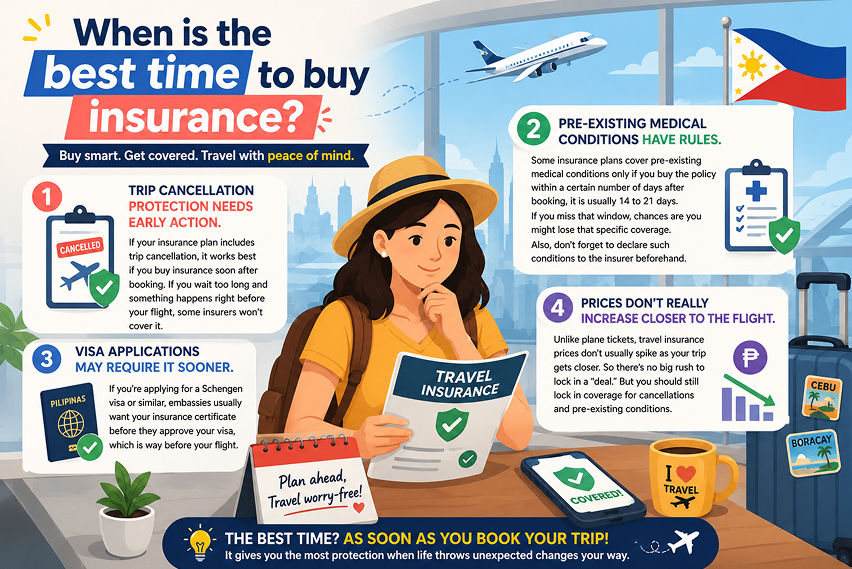
Here's the simple answer: the earlier, the better. However, "earlier" doesn't mean "before your flight." It means as soon as your travel dates and destination are confirmed.
 AI-Generated Image
Here's why timing matters:
1. Trip cancellation protection needs early action. If your insurance plan includes trip cancellation, i.e., money back if you cancel the trip due to sickness, accident, or emergency, it works best if you buy insurance soon after booking. If you wait too long and something happens right before your flight, some insurers won't cover it because you bought the policy too close to the issue.
2. Pre-existing medical conditions have rules. Some insurance plans cover pre-existing medical conditions, like asthma or diabetes, only if you buy the policy within a certain number of days after booking; it is usually 14 to 21 days. If you miss that window, you may lose that specific coverage. Also, don’t forget to declare such conditions to the insurer beforehand.
3. Visa applications may require it sooner. If you're applying for a Schengen visa or similar, embassies usually want your insurance certificate before they approve your visa, which is way before your flight.
4. Prices don't really increase closer to the flight. Unlike plane tickets, travel insurance prices don't usually spike as your trip gets closer. So there's no big rush to lock in a "deal." But you should still lock in coverage for cancellations and pre-existing conditions.
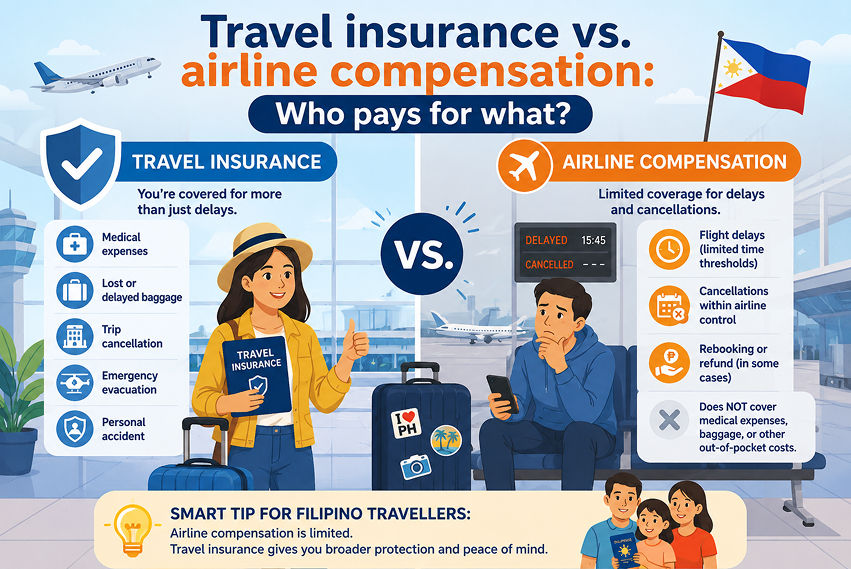
Also Read: Travel insurance vs. airline compensation: Who pays for what?
What if you already booked weeks ago?
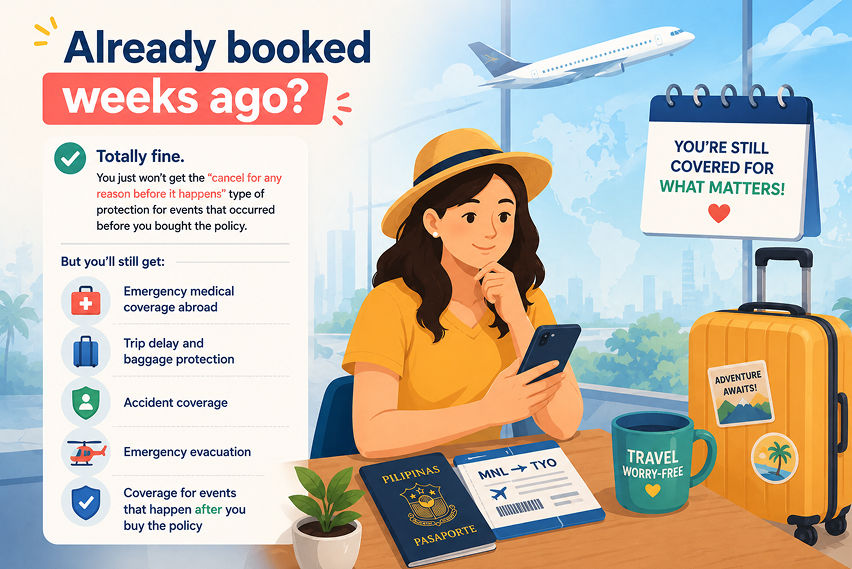
Totally fine. You just won't get the "cancel for any reason before it happens" type of protection for events that occurred before you bought the policy. But you'll still get:
 AI-Generated Image
- Emergency medical coverage abroad
- Trip delay and baggage protection
- Accident coverage
- Emergency evacuation
- Coverage for events that happen after you buy the policy
So even if you're buying insurance the night before your flight, it's still much better than having no insurance at all.
Also Read: Travelling with your aged parents? Don’t skip these travel insurance tips!
The Golden Rule to Remember
Buy your travel insurance as soon as you're sure about your trip, ideally within a few days of booking your flight or paying your trip deposit. If you can't do that, buy it at least a few days before departure. The absolute worst time to buy it? The moment you're already checking in at the airport, hoping nothing goes wrong. By then, some benefits (like cancellation coverage) simply won't apply anymore.
Also Read: Things to check before buying travel insurance: Flights, baggage, & smooth claims
Bottom line
Travellers need to understand that booking a flight first and thinking about travel insurance later is normal, not a mistake. So, don’t worry. What matters most, however, is buying travel insurance as soon as your travel plan feels real, even if that's a few days or weeks after you book your flight.
The key idea is to buy the travel insurance policy before your trip starts, and early enough to qualify for trip cancellation and access pre-existing condition benefits. Do that, and you'll be a smart, protected traveller, no matter when you click "book now."
Also Read: Travelling with your aged parents? Don’t skip these travel insurance tips!
FAQs
Q1. Can I buy travel insurance the day my flight is scheduled?
Ans. Yes, you can, and most insurance providers allow it. However, cancellation-related benefits won't apply since your trip is already happening or about to happen.
Q2. Is it more expensive to buy insurance late?
Ans. Not really. Prices depend on your trip length, destination, age, and coverage amount, not on how close you are to your flight date.
Q3. What happens if I get sick before buying insurance?
Ans. If you already know you're sick or injured before you purchase the policy, that condition usually won't be covered. This is why buying early protects you better.
Q4. Does travel insurance cover flight delays even if I bought it late?
Ans. Yes, as long as the policy is active before the delay happens, flight delay benefits usually apply.
Q5. Do embassies accept insurance bought after flight booking?
Ans. Yes. Embassies only care that your insurance covers your entire trip duration and meets their minimum requirements, not when you bought your ticket.
Q6. Can I still cancel my trip and get a refund through insurance if I buy it late?
Ans. It depends. Trip cancellation coverage usually needs to be purchased soon after your initial trip payment. If you buy it too late, this specific benefit may not apply, but other protections still will.
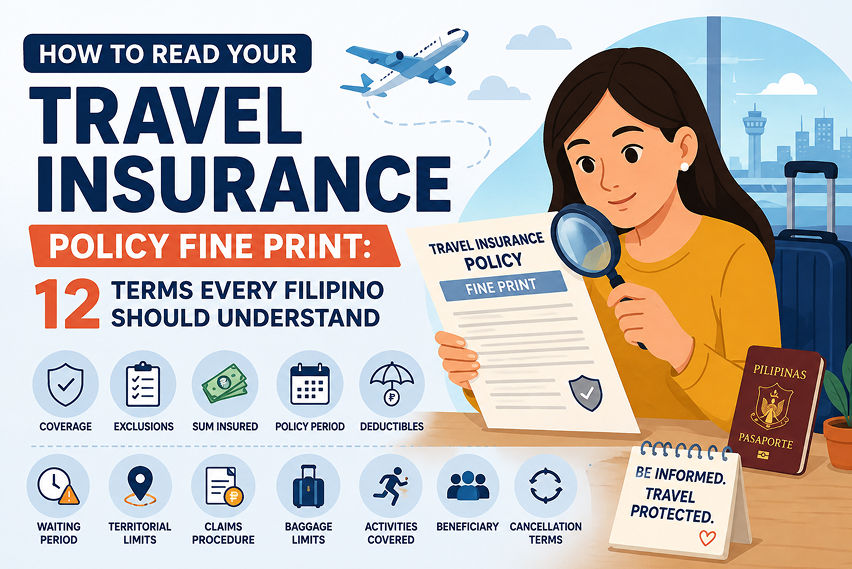
Also Read: How to read your travel insurance policy fine print: 12 terms every Filipino should understand