




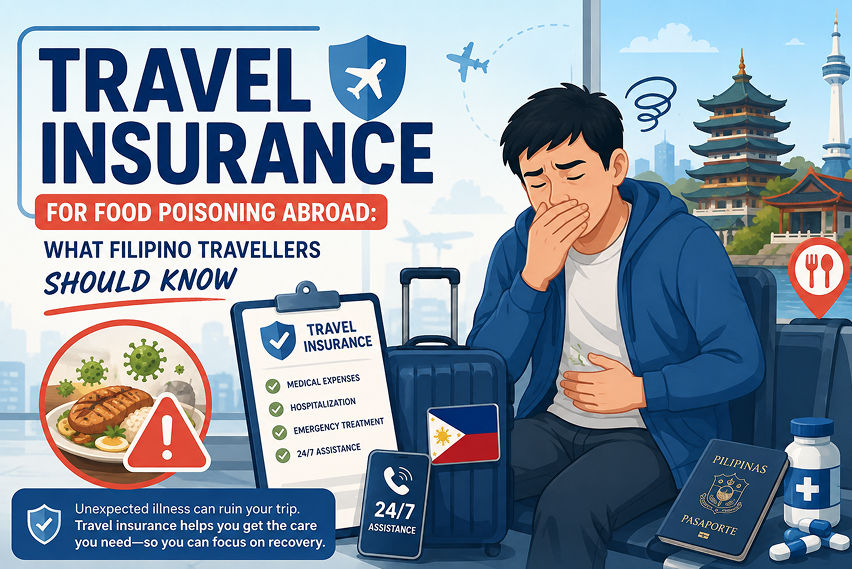
Picture this: you're finally on that dream trip to Bangkok, Tokyo, or Bali. You try the street food everyone raves about, and it's amazing, until your stomach starts to disagree a few hours later. Sudden stomach pain, vomiting, or diarrhoea can turn a fun vacation into a scary situation, especially when you're far from home and not sure which hospital to trust.
That's why Filipino travellers should understand how travel insurance works for food poisoning abroad. It's not the most glamorous topic, but it could save you money, stress, and worry.
Let's break it down as simply as possible.
What is food poisoning, really?
Food poisoning is an infection that happens when you eat food or drink something contaminated with harmful bacteria, viruses, or parasites. It's very common when travelling because your stomach isn't used to new ingredients, spices, or how food is prepared in another country. Even something as simple as ice cubes made from tap water can cause it.
Symptoms usually include:
- Stomach cramps
- Nausea and vomiting
- Diarrhea
- Fever
- Weakness or dizziness
Most cases go away in a day or two, but some can be serious enough that you need a doctor, IV fluids, or even hospital admission.
Also Read: Travel insurance for digital nomads: What Filipinos need to know
Does travel insurance cover food poisoning?
Good news: yes, most travel insurance plans do cover food poisoning, because it's classified as a sudden illness or medical emergency that happens during your trip. This usually falls under the "emergency medical expenses" part of your policy.
This can include:
- Doctor's consultation fees
- Medicines
- Hospital confinement, if needed
- Emergency room visits
- In serious cases, medical evacuation back to the Philippines
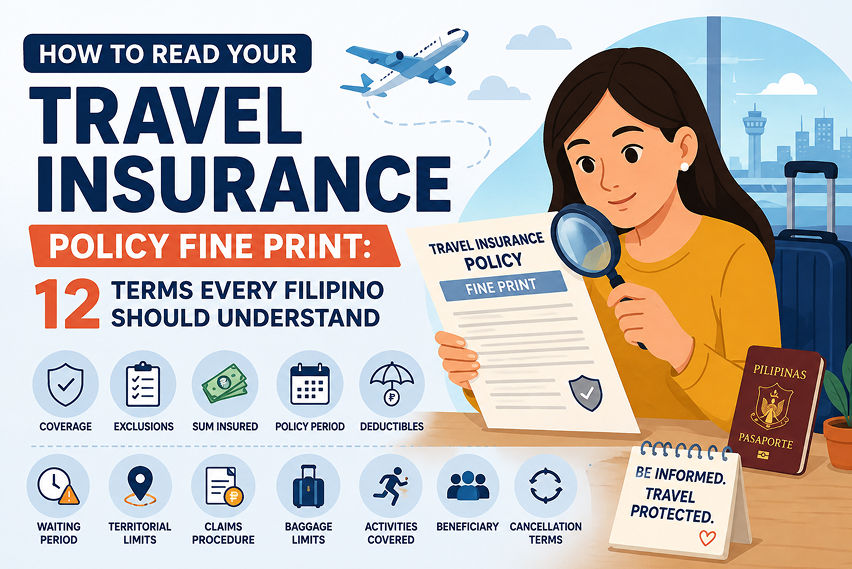
However, coverage details can differ from one insurance provider to another. Some plans may have specific conditions, limits, or exclusions, so it always pays to read the fine print before you fly.
Also Read: Travelling during typhoon season: What every Filipino traveller should know about insurance coverage
Why Filipino travellers should care about this
Filipinos love to travel and explore new cuisines, and that's part of the joy of a trip. But here's the reality: getting sick abroad, even from something as small as bad shrimp or unwashed fruit, can cost a lot more than you think.
Some real risks without travel insurance:
- Foreign hospitals can be very expensive, especially in countries like the US, Japan, or parts of Europe
- You may need to pay upfront in cash or card before they even treat you
- If you need to be flown home for treatment, that cost alone can reach hundreds of thousands of pesos
- You could lose money on prepaid tours, flights, or hotel bookings if you get too sick to continue your trip
- Travel insurance acts like a safety net, so a stomach bug doesn't turn into a financial nightmare.
Also Read: Travel insurance for multi-country trips: One policy or multiple policies?
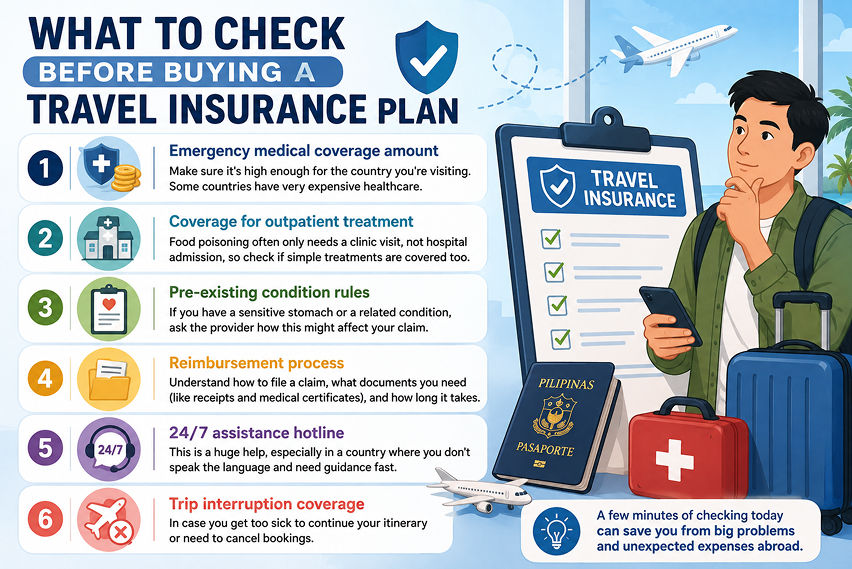
What to check before buying a travel insurance plan
 AI-Generated Image
Not all travel insurance is the same, so here are things Filipino travellers should look out for:
- Emergency medical coverage amount – Make sure it's high enough for the country you're visiting. Some countries have very expensive healthcare.
- Coverage for outpatient treatment – Food poisoning often only needs a clinic visit, not hospital admission, so check if simple treatments are covered too.
- Pre-existing condition rules – If you have a sensitive stomach or a related condition, ask the provider how this might affect your claim.
- Reimbursement process – Understand how to file a claim, what documents you need (like receipts and medical certificates), and how long it takes.
- 24/7 assistance hotline – This is a huge help, especially in a country where you don't speak the language and need guidance fast.
- Trip interruption coverage – In case you get too sick to continue your itinerary or need to cancel bookings.
 AI-Generated Image
Also Read: Lost laptop, camera & phone abroad: Does travel insurance cover electronics?
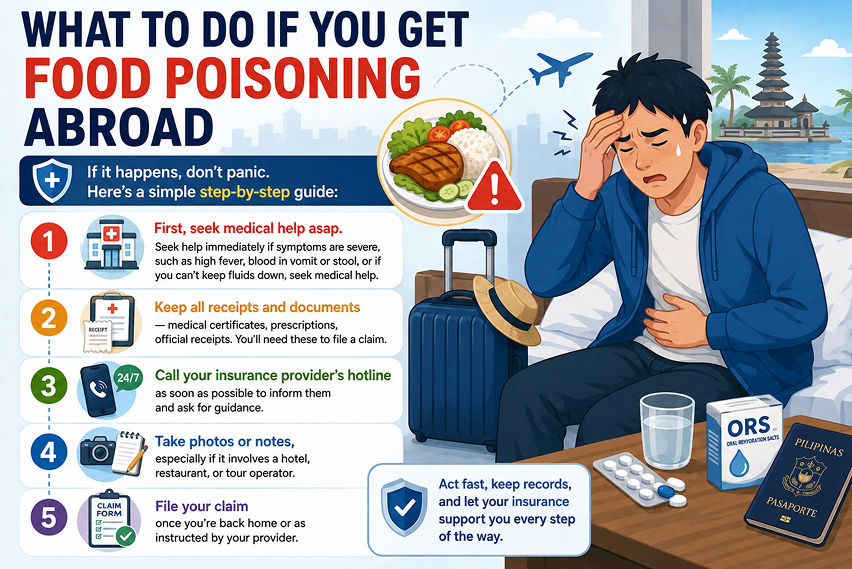
What to do if you get food poisoning abroad
If it happens, don't panic. Here's a simple step-by-step guide:
- First, seek medical help asap. Seek help immediately if symptoms are severe, such as high fever, blood in vomit or stool, or if you can't keep fluids down, seek medical help.
- Keep all receipts and documents — medical certificates, prescriptions, official receipts. You'll need these to file a claim.
- Call your insurance provider's hotline as soon as possible to inform them and ask for guidance.
- Take photos or notes, especially if it involves a hotel, restaurant, or tour operator.
- File your claim once you're back home or as instructed by your provider.
Also Read: Travel insurance for cruises: Do Filipinos need different coverage?
Final tips before you travel
- Buy your travel insurance before your trip, not after; coverage won't apply to something that already happened.
- Choose bottled or boiled water, especially in countries where tap water isn't safe to drink.
- Avoid raw or undercooked food if you're unsure about hygiene standards.
- Trust your gut (literally), if a food stall looks unsanitary, it's okay to skip it.
- Always carry your insurance policy number and hotline contact with you, not just saved on your phone in case it runs out of battery.
Also Read: Things to check before buying travel insurance: Flights, baggage, & smooth claims
Bottom line
Food poisoning is one of those travel risks that's easy to overlook until it actually happens to you. As Filipino travellers, exploring new food is part of what makes travelling fun, but it's always smart to travel prepared. Getting a good travel insurance plan means that if your stomach ever betrays you in a foreign land, you won't have to worry about huge medical bills or being stranded without help. A little bit of preparation goes a long way in making sure your dream trip stays a good memory, not a costly lesson.
Also Read: Travelling with your aged parents? Don’t skip these travel insurance tips!
FAQs
Q1. Are medicine and clinic-related visit expenses covered under travel insurance?
Ans. Many travel insurance plans cover medical-related treatment, including consultation fees and prescribed medicine. Do confirm the coverage amount, as it may vary.
Q2. What if I have a stomach condition before travelling; will the insurer approve my claim?
Ans. Such a condition would fall under pre-existing medical conditions and therefore may not be automatically covered. You need to disclose these conditions when applying for a policy and ask about appropriate coverage.
Q3. Do I need to pay at the hospital first and claim reimbursement later from the insurer?
Ans. In many cases, yes. Especially if the treatment cost is small, some insurance providers offer direct billing for hospitalisation, so check with your provider.
Q4. Can I still claim if I bought insurance last minute, right before my flight?
Ans. Usually yes, as long as the illness happens after your policy starts and during your trip dates, but do this early to avoid any issues.
Q5. Will my travel insurance policy cover the cost of flying home if my food poisoning condition becomes serious?
Ans. Many travel insurance comprehensive plans include medical evacuation or repatriation coverage. However, all this depends on your specific policy, so check the coverage limit beforehand.
Also Read: Travel insurance vs. airline compensation: Who pays for what?