




If you are new to the world of car insurance, you need to know about add-ons beyond the basics, like CTPL and a comprehensive policy. Add-ons are optional coverages that personalise your insurance policy, offering protection based on your driving and the risks it entails.
While add-ons like Acts of God and Roadside Assistance are popular, there are a few lesser-known but useful options, such as SRCC.
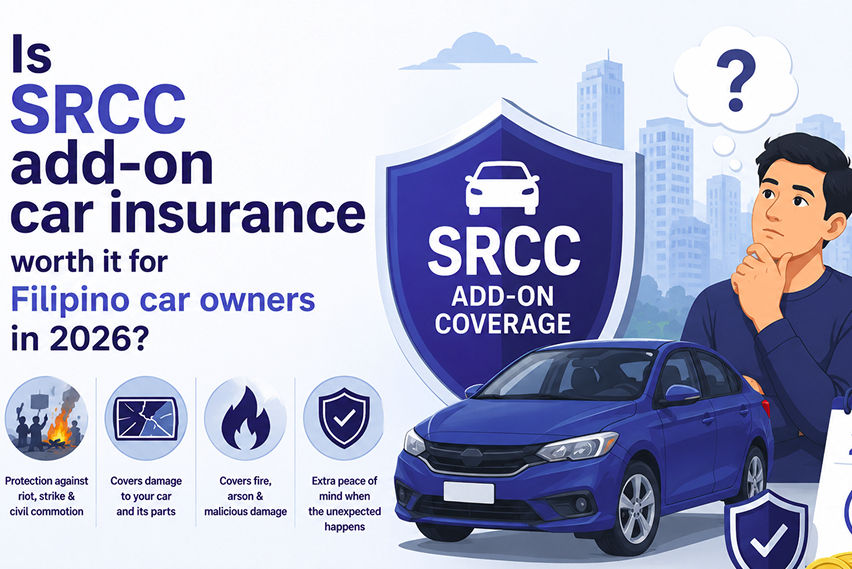
What does SRCC stand for? Each letter corresponds to an event for which this coverage provides protection. For instance, S for Strikes, R for Riots, and CC for Civil Commotion.
Also Read: Must-have add-ons for 2026: What you shouldn’t miss
SRCC coverage in 2026
In recent years, the world has seen political unrest, public demonstrations, and labour strikes - and the Philippines is no different. While most of these events are peaceful demonstrations, sometimes the situation takes a turn for the worse. This is where SRCC coverage becomes more relevant than ever.
Let us learn more about this coverage in detail…
SRCC add-on: What is covered & what is not
Events covered
SRCC coverage protects your car against damage caused by social disturbances, including -
Riots & civil commotion: This includes situations where individuals gather and cause disruption. This may also damage your car, including broken windows, vandalism, and fire damage.
Strikes & labour disturbances: Labour strikes are a reality, and when they occur, roads can be blocked and become congested. Thus putting your moving and/or parked vehicle at risk.
 AI-Generated Image
Also Read: Planning to renew your car insurance policy? Read this zero-dep guide first
Events that are not covered
SRCC coverage covers several events, but also doesn’t cover several damages unrelated to riots or civil unrest, including -
- Accident
- Collision
- Natural disasters
- Theft
- Fire
- War & terrorism act
Why does SRCC coverage matter?
For a Filipino car owner, SRCC coverage matters for two main reasons - political climate & urban risks. Let’s talk about the two in detail -
- Political climate & public gathering: Everyone knows that Filipinos go overboard when it comes to social and political affairs. While rallies are usually peaceful, you never know when the chaos will strike.
- Urban risks: Cities with high traffic, such as Metro Manila, are exposed to large gatherings from time to time. This increases the likelihood of SRCC-covered events such as riots and strikes.
Also Read: Is your current insurance provider still worth it in 2026? Here’s how to tell
Benefits & drawbacks of SRCC coverage
Advantages of SRCC
|
Financial protection: Car parts repair or replacement can cost thousands of pesos. With SRCC coverage by your side, you don’t need to worry about this sudden expense. Your insurer will handle most of it, if not all of it. Peace of mind: Knowing you are protected, even in the rarest of situations, gives you the peace and confidence you need while on the go. |
Drawbacks of SRCC
|
Additional cost consideration: Like every add-on, SRCC is not free; it adds to your annual premium. This might not suit budget-conscious drivers. Low probability & high risk: While unrest events like strikes and riots are rare, when they occur, the damage can be severe. Thus making it the classic case of low risk, high consequence. |
Cost of SRCC Coverage
Talking about the average pricing of SRCC coverage, it’s a very low percentage of your car’s value. Believe us, it will be an amount that won’t bother you much, especially compared to the repair cost you’ll shoulder without it.
Factors affecting the premium
Before deciding your premium, the insurer takes into consideration the following factors -
- Location
- Risk profile
- Car’s value
Also Read: Personal Accident Coverage for riders in the Philippines: Why it matters
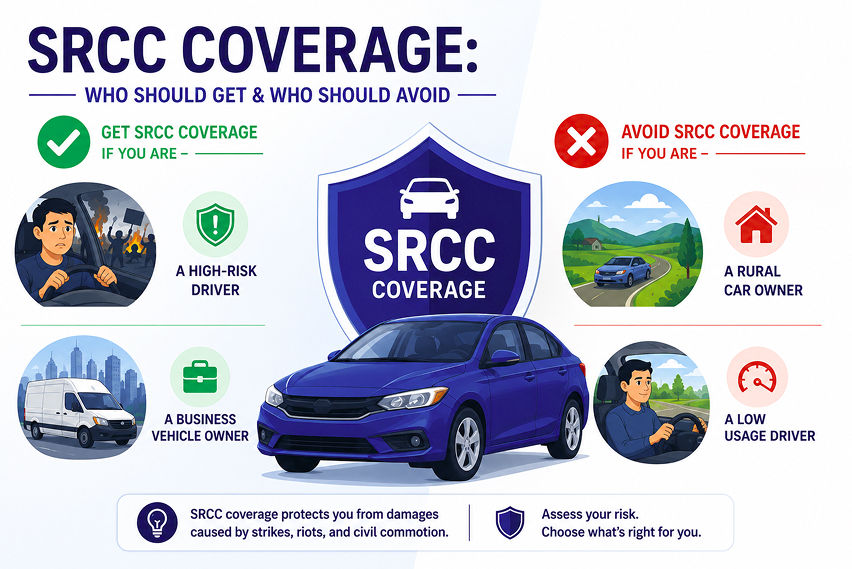
SRCC coverage: Who should get & who should avoid
 AI-Generated Image
Get SRCC coverage if you are -
- A high-risk driver: This coverage will prove beneficial for car owners who drive daily in Metro Manila or other high-risk & traffic areas, park in public areas, and travel during rallies/events.
- A business vehicle owner: If you own vehicles that are an integral part of your work, downtime due to a damaged unit can mean lost income. In such cases, add-ons such as SRCC and Loss of Use will provide much-needed relief.
Avoid SRCC coverage if you are -
- A rural car owner: If you live in a quiet province with minimal public unrest, investing in SRCC may be a complete waste.
- A low usage driver: If you are someone whose car mostly stays in the garage, SRCC can be skipped, as your risk exposure is low.
Also Read: When your car insurance won’t help you - even if you paid on time!
SRCC vs comprehensive insurance: Understanding the difference
Let us understand the distinction with the help of a table -
|
Coverage |
Standard Comprehensive Insurance |
Comprehensive insurance with SRCC Add-on |
|
Accident |
Covered |
Covered |
|
Theft |
Covered |
Covered |
|
Natural Disaster |
If Acts of God is part of the plan |
Not Covered |
|
Riots/Strikes |
Not Covered |
Covered |
Is SRCC part of the standard insurance plan?
Not usually. Most standard insurance plans do not include SRCC by default. You need to make a special request to your provider to have it included.
Real-life scenario where SRCC proved useful
Scenario 1. A parked car had its windshield smashed during a sudden clash in an ongoing nearby protest. Without SRCC coverage, the owner pays the entire cost of replacement.
Scenario 2. Strike-related incidents. During a public transport vehicle strike, vehicles caught in traffic were vandalised. Vehicles with SRCC coverage were compensated for the damage.
Also Read: The Philippines Insurance Commission: Ways in which it protects car owners
Buying the SRCC add-on? Do this for sure
Ask questions
- When you are seeking to include SRCC coverage in your insurance plan, make sure to ask the following questions during your discussion with your insurer/agent.
- Is SRCC coverage part of the comprehensive plan or an add-on?
- What are the exclusions?
- Are there any claim limits? If yes, ask for details
Compare policies
Before finalising the agreement with your insurer, make sure to check multiple providers and compare their claim processes, premium costs, and customer reviews.
Also Read: Got a new high-end car? Here is the best insurance guide (for 2026)
Bottom line
If the question ‘Is SRCC car insurance coverage essential, or can it be skipped?’ is going back & forth in your mind, then this article is a must-read. You see, there is no definitive answer to this question; it depends on factors like your lifestyle, location, and risk tolerance.
Opting for SRCC coverage makes sense if you live or drive frequently in areas with heavy traffic, often park in public lots, and/or rely heavily on your car. Having this coverage will offer you peace of mind and financial protection against rare unrest events that could prove costly.
However, you can skip this coverage entirely if you live in a low-risk area that has never seen a protest or strike and rarely use your car. Here, getting SRCC would be a waste of money, overinsurance.
Remember, any add-on coverage like SRCC is an umbrella - you don’t need it every day, but when the storm hits, you’ll be glad to have it.
Also Read: Car broke down? Here’s how towing can rescue you fast
FAQs
Q1. What does SRCC stand for in the car insurance world?
Ans. SRCC stands for Strike, Riot, and Civil Commotion.
Q2. Can an add-on be eliminated from the policy?
Ans. Yes, most insurance providers allow you to alter your policy at renewal and even mid-term, depending on your insurer.
Q3. What is the process to file an SRCC claim?
Ans. It is quite simple, start with reporting the incident, collect proof of unrest & damage, and contact your insurer asap.
Q4. Is SRCC useful for commercial vehicles?
Ans. Absolutely, even commercial vehicles require protection against riots, strikes, and civil commotion. It helps prevent income loss from unrest-related damage.
Q5. Does SRCC coverage cover natural disasters?
Ans. No, for protection against natural disasters like floods, earthquakes, etc, you require Acts of God/Nature coverage.
Q6. How much does SRCC coverage cost?
Ans. Not much. SRCC coverage only adds a small percentage to your premium, and compared to the cost of repair/replacement, this inclusion feels affordable.
Q7. Does SRCC cover vandalism?
Ans. Yes, if it occurs during a covered unrest event, such as a riot or protest.
Q8. Does a comprehensive insurance plan include SRCC coverage?
Ans. Usually not - SRCC coverage is an add-on that needs to be included separately.
Q9. Is SRCC coverage worth it for urban city drivers?
Ans. Yes, especially if they live in areas with heavy traffic and a history of unrest.
Q10. Is SRCC coverage mandatory for Filipino car owners?
Ans. Not at all, apart from CTPL insurance, every other coverage is optional.
Also Read: Engine protection in car insurance: What Philippine car owners should know