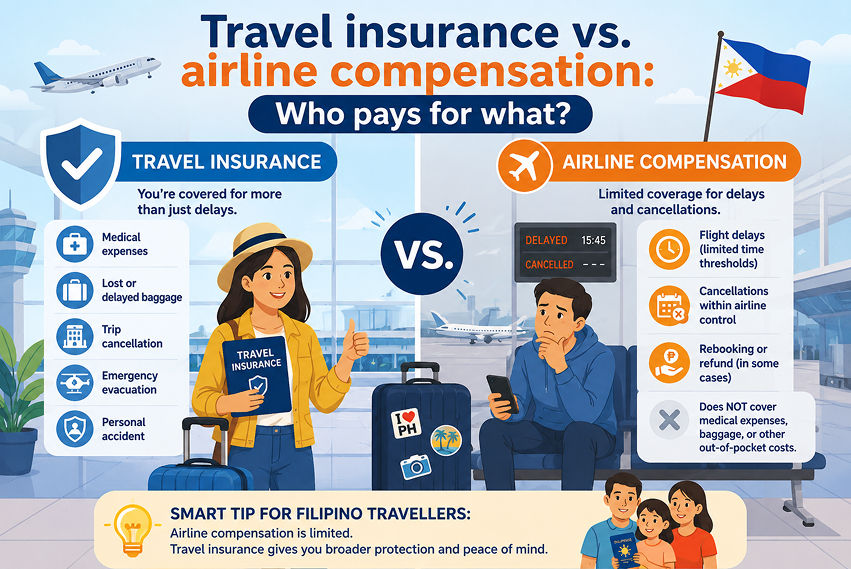





Imagine that you are on day three of your long-awaited vacation, and while walking down a bustling street, you take a bad misstep on the sidewalk, hear a sickening snap in your ankle, and find yourself in the back of an ambulance heading to an emergency room. When the doctor hand-delivers a medical bill totalling hundreds of thousands of pesos (which your local HMO or PhilHealth won't cover), your dream trip instantly turns into a terrifying financial nightmare.
This is where travel insurance steps in. For a long time, many Pinoy travellers viewed travel insurance as an unnecessary expense. But the second you leave Philippine airspace, a sudden stomach bug, an unexpected asthma attack from the cold, or a major injury can cost you a fortune out of pocket.
Travel insurance isn't just a piece of paper to show immigration officers; it is your ultimate medical safety net when health emergencies strike abroad. But here is the catch: not all travel insurance policies are created equal. Buying a plan with inadequate medical limits or hidden exclusions can leave you completely unprotected when you need help the most.
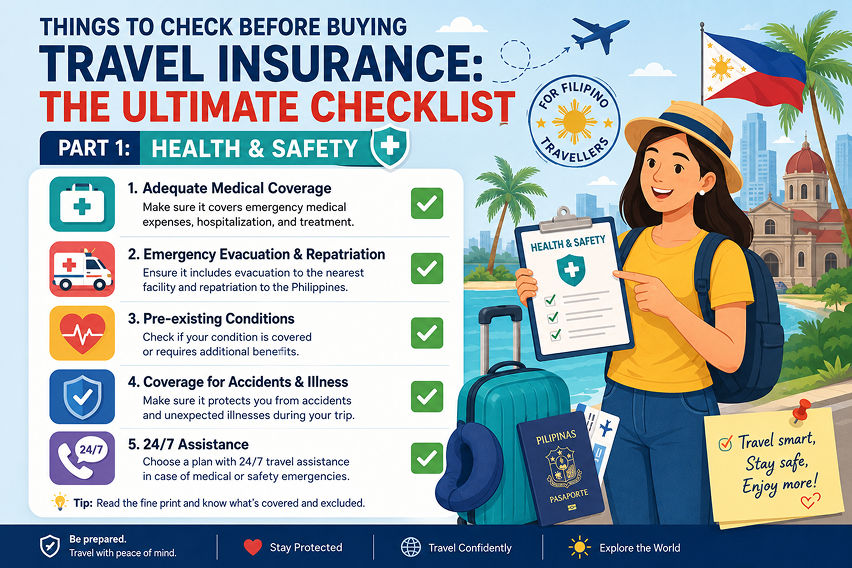
Before ticking the "Buy Now" tab, here are the critical health and medical safety points you need to double-check.
Also Read: Planning your next trip? Here is how AXA Smart Traveller keeps you covered
1. Medical coverage limits (overseas healthcare is shockingly pricey)
If there is only one reason you buy travel insurance, let it be emergency medical protection.
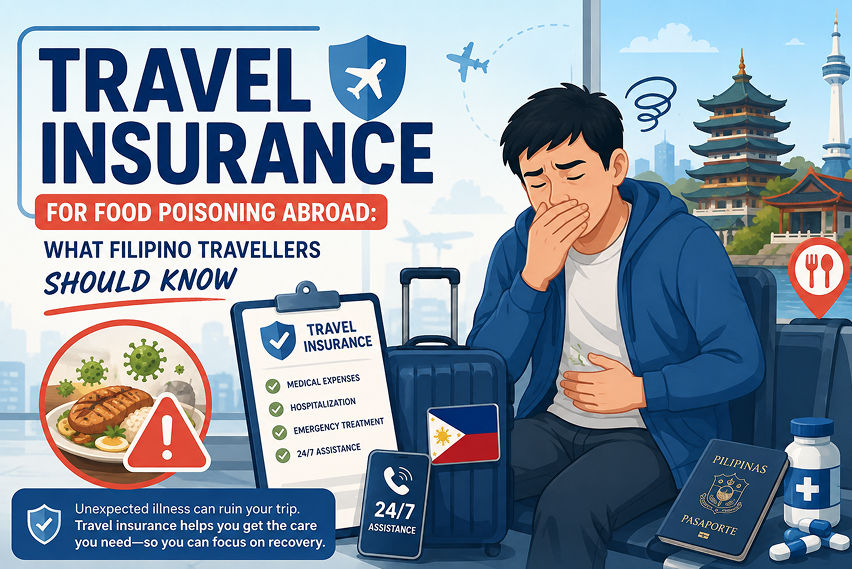
When you get sick or injured inside the Philippines, you might rely on your local HMO card or PhilHealth. But as soon as your plane leaves the Philippines, your local health coverage usually stops working. Healthcare in foreign countries, especially in places like the United States, Japan, Singapore, and Europe, is notoriously expensive. A simple hospital visit for a stomach bug or a sprained ankle can set you back tens of thousands of pesos out-of-pocket.
 AI-Generated Image
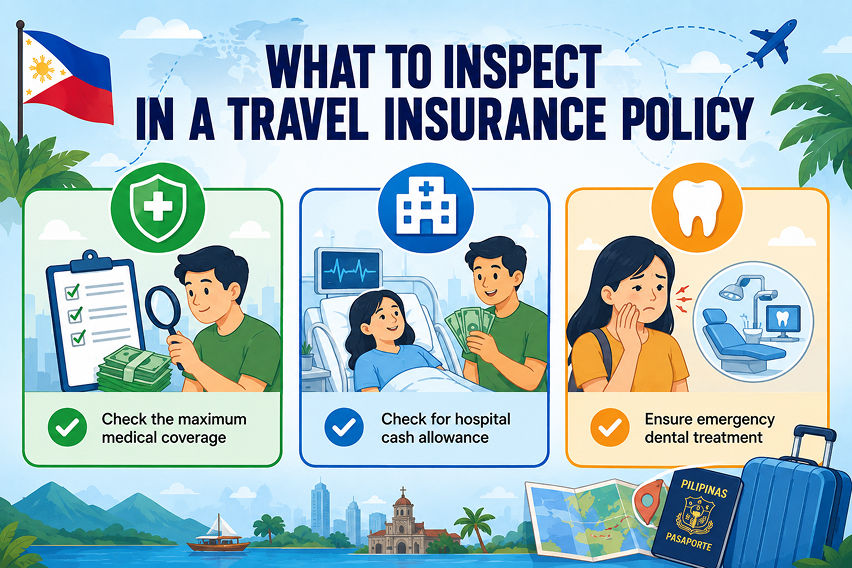
What to inspect in the policy?
- The coverage ceiling: Check the maximum amount the insurance company will pay for medical care. A plan that offers only PHP 100,000 in medical coverage might sound like a lot, but in countries like the US or Singapore, an overnight hospital stay can easily exceed that. It is advised to look for policies that offer at least PHP 1,000,000 to PHP 2,500,000 in medical coverage for foreign trips.
- Hospital cash allowance: Some policies pay you a fixed daily amount for every day you are stuck in a foreign hospital bed. It helps offset extra costs, such as meals for family members looking after you.
- Emergency dental treatment: Accidents happen. If you trip and chip a tooth or develop severe dental pain on vacation, ensure your plan includes basic emergency dental care.
Pinoy real-talk: Don't rely on basic credit card travel insurance without reading the fine print! Many free credit card insurances only cover accidental death and travel delays, and often leave out basic medical coverage.
Also Read: 7 Questions to ask before buying travel insurance
2. Emergency medical evacuation and repatriation
Nobody likes to think about extreme emergencies, but as a smart traveller, you must be prepared for worst-case scenarios.
Imagine you are island-hopping in a remote area or hiking up a mountain, and you suffer a severe injury. Local clinics might not have the medical tools to treat you properly. You would need to be airlifted or transported to a major hospital in the nearest city or flown straight back to Manila.
Why this matters:
Emergency medical evacuation without insurance can cost millions of pesos because it often involves air ambulances, specialised medical staff, and heavy transport equipment. Make sure your policy explicitly includes emergency medical evacuation and repatriation, and look for policies that cover the actual cost of evacuation rather than capping it at a tiny amount.
3. Coverage for Pre-Existing Medical Conditions (PECs)
This is the number one reason travel insurance claims get denied, so make sure you pay attention here!
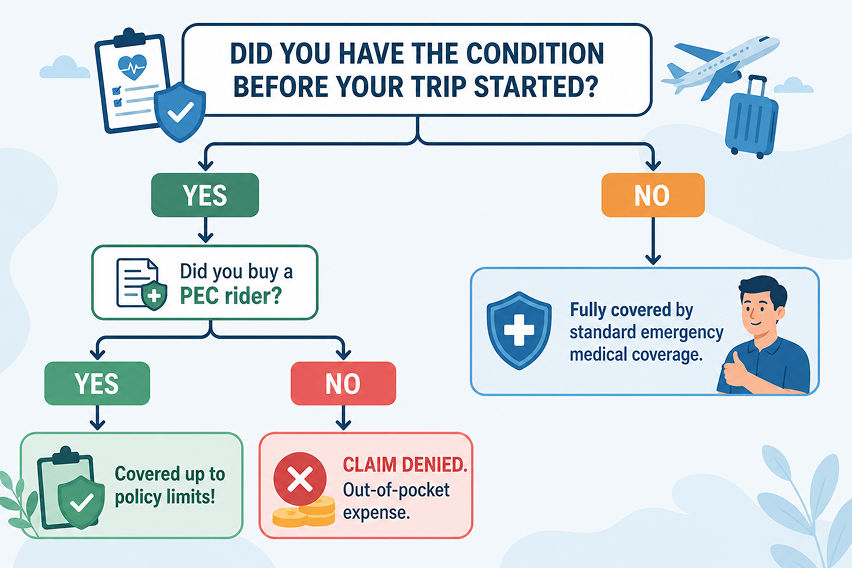
What is a pre-existing medical condition? It is a health issue, illness, or injury that you already had before the policy started. This includes common conditions like asthma, diabetes, high blood pressure, heart issues, or even past surgical injuries.
 AI-Generated Image
What to check?
- The standard exclusion: A standard travel insurance policy usually excludes travellers' pre-existing medical conditions. Meaning, if you have asthma and suffer an asthma attack in cold weather abroad, a standard basic policy will not cover your hospital bills.
- PEC add-ons: If you or an older family member (like your parents or grandparents) has ongoing medical conditions, opt for policies that offer a pre-existing condition add-on. This might cost more, but it offers essential protection if a chronic condition flares up during the journey.
Also Read: Traveller's blueprint: How and when travel insurance pays for emergencies
4. Exclusions for extreme sports and adventure activities
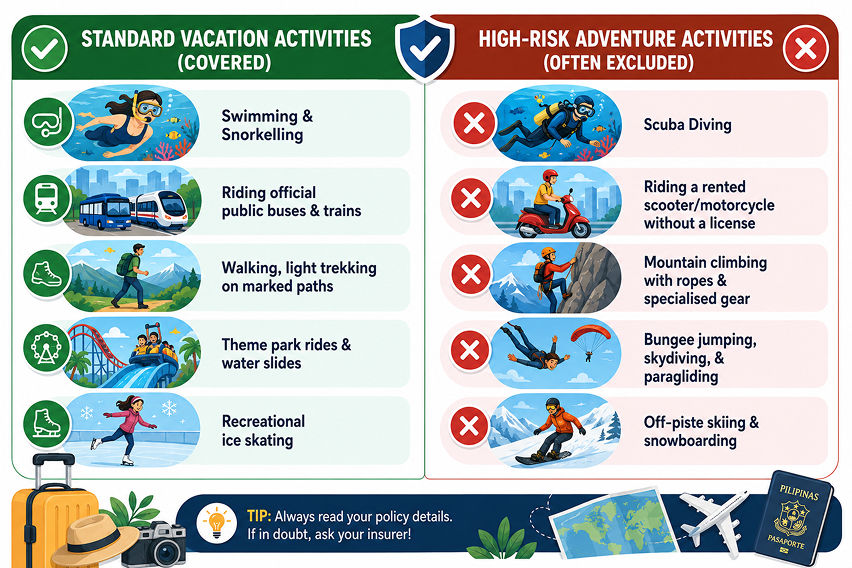
We Filipinos love adventure! Be scuba diving, skiing, riding, or paragliding, outdoor activities make a trip unforgettable. However, standard travel insurance treats most adventurous activities as "high-risk behaviour."
 AI-Generated Image
How to protect yourself:
If your itinerary includes adventurous activities, review the policy's exclusions list. If an activity you plan to do is excluded, purchase an Extreme Sports add-on or select an upgraded adventure plan. Also, keep in mind that riding a scooter in a foreign land without a valid International Driving Permit (IDP) or license will instantly void any accident claim!
Also Read: Travel Master vs. TraveLite: Which Malayan plan is right for your next trip?
Bottom line
Being concerned about your health abroad isn't about being overly cautious, but about ensuring an unexpected illness or accidental injury doesn't transform your dream vacation into a financial burden. By taking a few extra minutes to double-check the policy’s medical coverage limits, verify emergency evacuation terms, declare pre-existing conditions, and add-on for adventure activities, you safeguard both your physical well-being and hard-earned savings. Prioritising health and safety first gives you freedom to enjoy your trip with absolute peace of mind.
Also Read: Planning your next trip? Here is how AXA Smart Traveller keeps you covered
FAQs
Q1. When is the best time to buy travel insurance?
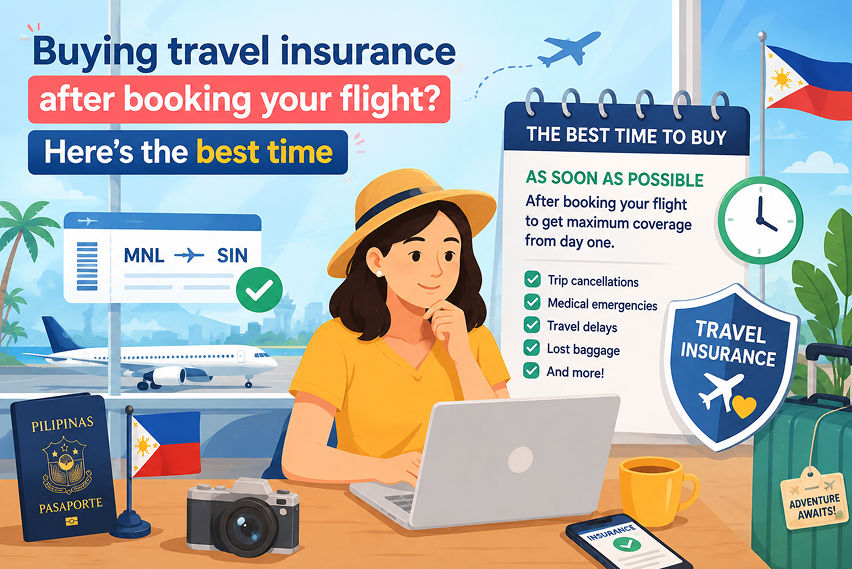
Ans. Buy your travel insurance right after you book your flights and hotels. Buying early doesn't cost extra, but it ensures your Trip Cancellation benefit is active immediately. If an unexpected medical emergency or typhoon forces you to cancel your trip weeks before departure, you're already protected!
Q2. Does travel insurance cover senior citizens (aged 60 and above)?
Ans. Yes, however, senior travellers may face different terms compared to others. Many insurance companies charge slightly higher premiums for travellers over 60 or 65, and may adjust maximum coverage limits for medical benefits.
Q3. Is travel insurance mandatory for Filipinos travelling internationally?
Ans. Not mandatory in every country, but required for certain visa applications (such as Schengen visa applications in Europe). However, even when it isn't strictly required by immigration, carrying travel insurance is highly recommended to protect against massive overseas medical expenses.
Also Read: Oona Philippines travel insurance: Everything you need to know before you buy