




Packing for a trip is already a headache. You’ve got your passport, your OEC or visa documents if you're working abroad, your outfit combos for the ‘gram, and a bag full of local snacks for relatives (and yourself).
Then someone asks, "Did you buy travel insurance already?"
Most of us just tap "add coverage" on a flight booking site without reading a single line. It’s cheap, it’s fast, and it gives us peace of mind. Until something actually goes wrong, like a typhoon grounding your plane at the airport, or a sudden stomach issue in Tokyo, and you realise that the PHP 270 add-on doesn't cover half of what you need.
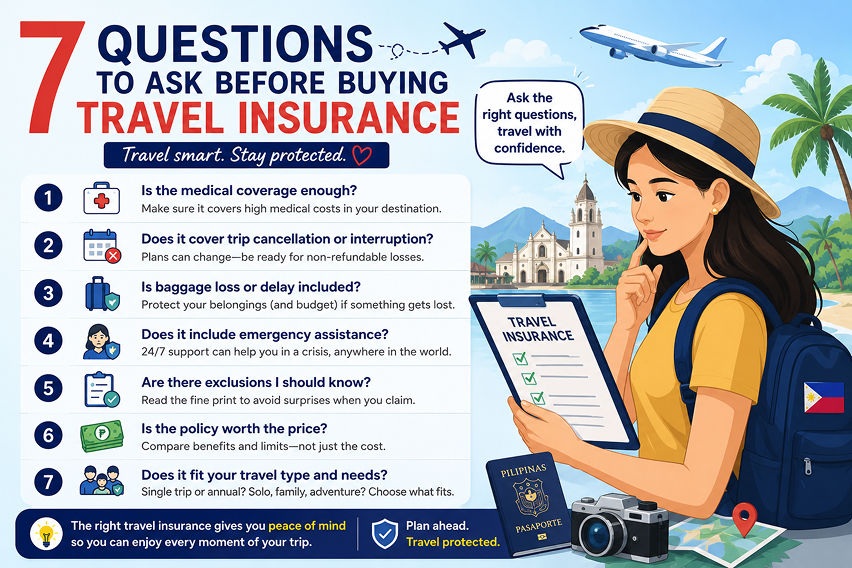
Before you swipe your card on the first policy you see, slow down. Ask these 7 basic questions first.
Also Read: No visa needed? You still need travel insurance
Q1. Does it pay the hospital directly, or do I pay out of pocket first?
This is huge.
Imagine landing in the hospital while on vacation. Some insurance policies use cashless coverage. They deal directly with the hospital billing department. You walk out without paying a single peso for covered treatments.
Note: This applies mostly to inpatient hospital stays with pre-authorisation.
Small outpatient clinic visits may not be covered. Make sure to get clarity on the same with your provider.
Other policies run on a reimbursement basis. That means you pay out of your own emergency fund or credit card first. Then, you compile a mountain of receipts and wait weeks (sometimes months) to get your money back from the insurer.
If you don't have a high credit limit, always look for plans with strong direct-billing networks.
Also Read: Falling ill while travelling? Here's how travel insurance will come to your rescue
Q2. Are typhoons, volcanic eruptions, and delayed flights covered?
We live in the Philippines. Flight cancellations due to severe weather aren't rare emergencies; they're a regular event.
Don't assume every policy automatically covers natural disasters. Check if the policy pays out for:
- Flight delays
- Missed connecting flights because the first leg was delayed
- Extra hotel nights if an eruption or typhoon shuts down the airport
Always read the terms carefully. If a named storm is already broadcast on the news before you buy your policy, the insurance company might not cover delays caused by that specific storm. Therefore, make sure to buy your insurance early.
Also Read: Traveller's blueprint: How and when travel insurance pays for emergencies
Q3. What is the limit on medical expense coverage?
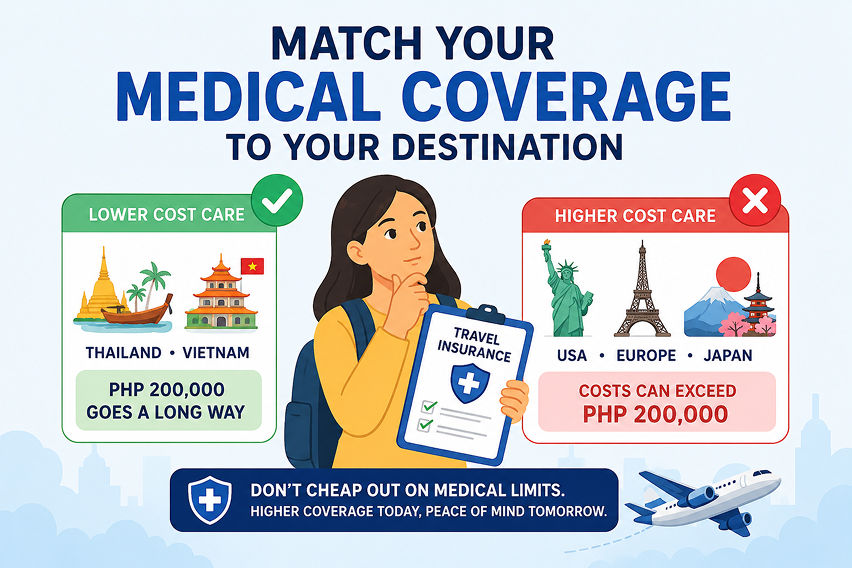
A policy might proudly advertise "Up to PHP 200,000 Medical Coverage!" It sounds like a lot, right?
It depends entirely on where you’re flying. For instance, PHP 200,000 goes a long way in countries like Thailand or Vietnam. But if you’re heading to the US, Europe, or Japan, medical care is wildly expensive. A single night in an American hospital room or an emergency appendectomy can easily run past the coverage amount without doctor fees included.
 AI-Generated Image
Match your coverage limits to your destination's actual healthcare costs. Don't cheap out on medical limits just to save a few hundred pesos on the premium.
Also Read: Smart travel: Should you buy travel insurance for one trip or the whole year?
Q4. Does it cover my planned activities, or will a simple adventure void the policy?
Planning to rent a scooter in Bali? Want to go scuba diving, ziplining, or skiing?
Be careful. Standard, budget-friendly travel insurance often excludes "extreme sports" or high-risk activities. Some policies even exclude events wherein you are a passenger in a motor vehicle and the rider doesn't hold an international license or isn't wearing a helmet.
If your itinerary involves anything more adventurous than walking around a shopping mall, check the policy's activity exclusions. You should buy an adventure add-on.
Also Read: Flying to Taiwan? Why travel insurance should be in your backpack
Q5. What is the exact process for lost or delayed baggage?
Losing a suitcase full of clothes, pasalubong, and expensive shoes hurts. But getting the insurance company to pay for it requires specific steps.
Ask these details:
- How many hours must the bag be delayed before you get an allowance for emergency clothes and toiletries? (Usually 6 to 12 hours).
- Do you need an official report? Yes, you almost always need a Property Irregularity Report from the airline staff before leaving the baggage hall.
- Are high-value items covered? Usually, items like laptops, cameras, and luxury bags often have very low individual payout limits unless declared separately.
Q6. How does the policy handle pre-existing medical conditions?
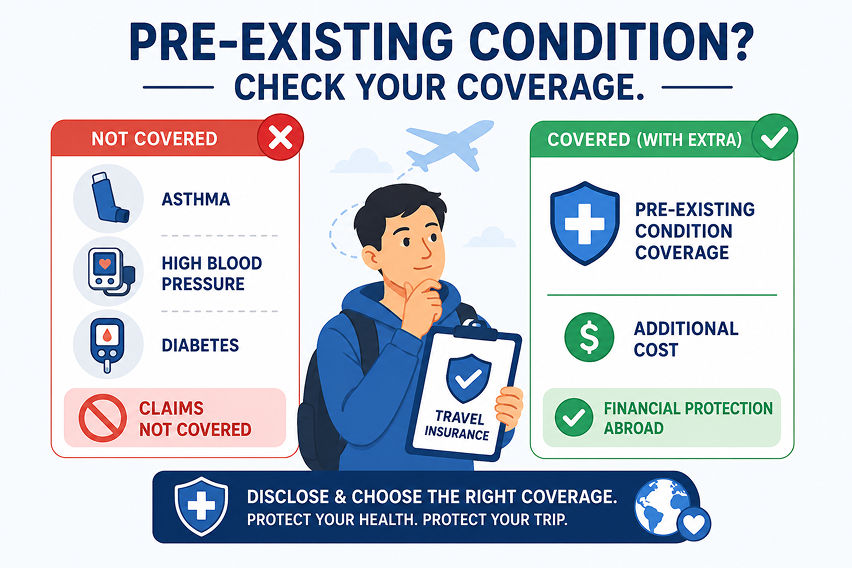
Got asthma, high blood pressure, or diabetes?
Most standard travel insurance plans explicitly exclude pre-existing conditions. If you end up in a clinic abroad because of a condition you already had before buying the policy, they won't cover the bill.
 AI-Generated Image
If you or a travelling family member has an ongoing health condition, ask for a plan that offers a pre-existing condition waiver or specific coverage for pre-existing illnesses. It costs extra, but it saves you from massive out-of-pocket medical debt.
Also Read: Why should you purchase a travel insurance policy online?
Q7. Is there a 24/7 hotline I can actually reach from abroad?
When things go wrong at 2 AM in a foreign land where you don't speak the language, you need help instantly.
Before committing to a policy, check their emergency contact options:
- Is there an international hotline number?
- Do they accept collect calls, or do they have a WhatsApp / Viber account?
- Is support available in English 24/7?
A policy is useless if you can't reach the provider during an emergency. Test their customer line or chat support before you buy to see how responsive they actually are.
Also Read: Comparing travel insurance plans online: An essential guide for Pinoy travellers
Bottom line
Travel insurance isn't just another annoying item to check off your prep list alongside your passport and packing cubes. Rather, it's your financial cushion when you're miles away from home, and things go sideways. Taking just ten minutes to ask these seven questions can save you hundreds of thousands of pesos and a world of heartbreak tomorrow.
So go ahead, book that dream trip, enjoy every bowl of ramen or sunset walk, and travel with total peace of mind knowing you're completely covered.
Also Read: Travel Master vs. TraveLite: Which Malayan plan is right for your next trip?
FAQ
Q1. Is travel insurance required when leaving the Philippines?
Ans. For most tourist destinations, it's optional but highly recommended. However, certain countries require mandatory health or travel insurance for visa entry (like Schengen area countries in Europe). Always verify entry requirements for your specific destination.
Q2. Can I buy travel insurance if I’m already abroad?
Ans. Most Philippine insurance providers require you to buy the policy before leaving the country. A few international providers allow you to buy coverage mid-trip, but there is usually a waiting period before the coverage kicks in.
Q3. Is the cheap insurance offered by airlines during flight booking enough?
Ans. Airline add-on insurance is convenient and great for basic flight delays or lost luggage. However, its medical coverage limits are often much lower than those of standalone policies from dedicated insurance companies. For long-haul or expensive trips, standalone policies offer far better protection.
Q4. Will insurance pay out if I cancel my trip just because I changed my mind?
Ans. No. Standard policies only cover cancellations for specific, unexpected reasons, such as sudden severe illness, death in the immediate family, or natural disasters. If you want the freedom to cancel for any reason, you need to buy a specific add-on called "Cancel For Any Reason" (CFAR) coverage.
Q5. What should I do first if I get sick or injured while travelling?
Ans. Call your insurance provider's 24/7 emergency hotline as soon as reasonably possible. They will guide you to an approved hospital or clinic in their network and help arrange direct payment so you don't have to handle the logistics alone.
Q6. Are gadgets like laptops and phones fully covered if stolen during the trip?
Ans. Only up to a certain limit. You see, basic travel insurance policies usually have a "per-item cap", which won't cover the full cost of a premium smartphone or laptop. You also need a police report from local authorities, usually within 24 hours of the incident, to file a claim.
Also Read: Planning your next trip? Here is how AXA Smart Traveller keeps you covered