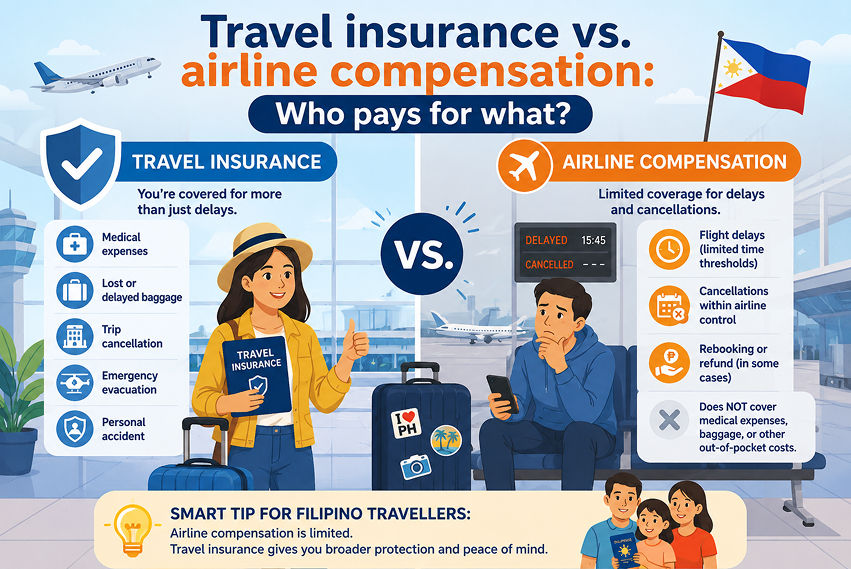





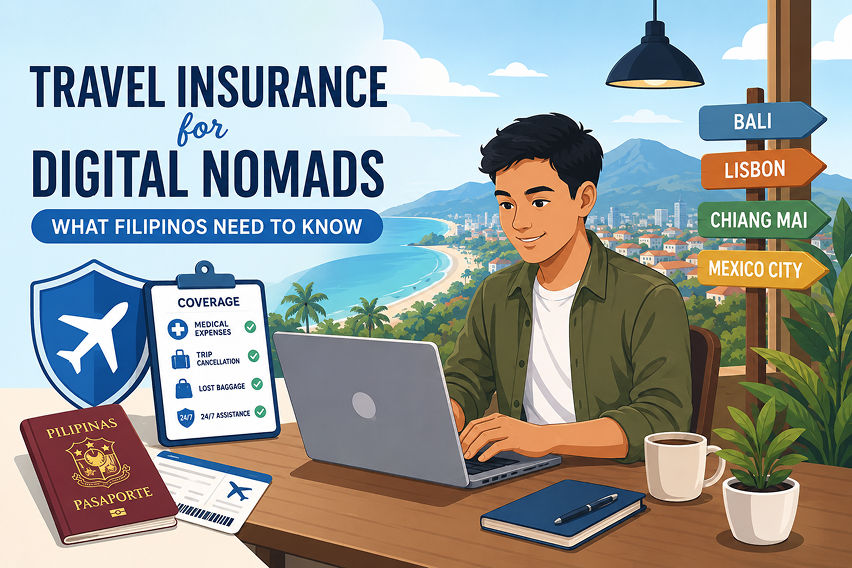
You are sitting at a cafe and sipping coffee, your laptop is open, a work deadline looming, and the best part is it is all happening at a beautiful resort in Bali! Great, isn’t it? Digital nomad culture is all about this and more. But this setup comes with its own set of problems. Suddenly, your stomach starts doing somersaults, maybe because of the street food you tried last night or that ice you weren't supposed to trust. Either way, you're now Googling "hospital near me" in a country where you don't speak the language, and your Philippine HMO card is sitting uselessly in your Manila drawer.
This is the moment every digital nomad from the Philippines dreads. And honestly? It's more common than people admit.
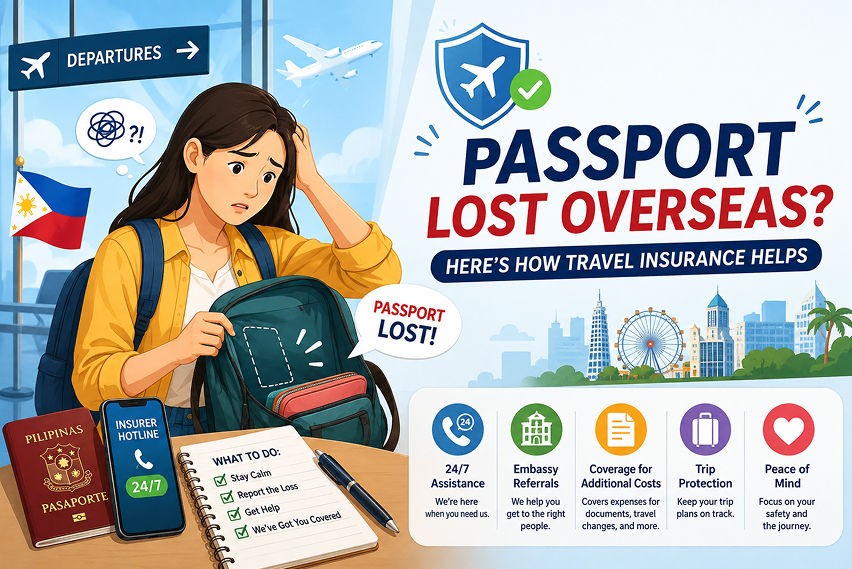
If you're one of the growing number of Filipinos trading cubicles for coworking spaces in Chiang Mai, Lisbon, or Medellín, you already know that freedom is real. But so are the risks. No PhilHealth coverage abroad. No family clinic you can just walk into. No safety net unless you build one yourself.
That's where travel insurance comes in — and no, it's not just some overpriced add-on airlines try to sell you at checkout. For remote workers living out of suitcases, it's closer to a survival tool.
Let's break down what it actually means to protect yourself as a Filipino digital nomad, without the confusing insurance jargon.
Also Read: The biggest travel insurance claim mistakes Filipino travellers make & how to avoid them
Why regular travel insurance isn't built for nomad life
Here's the thing most people don't realise until it's too late: standard travel insurance is designed for tourists, not long-term travellers.
You see, a typical travel insurance policy offers coverage for a limited period, say a two-week vacation or a five-day trip. It assumes you'll fly home soon, so it adds limits, short coverage windows, and exclusions for anything that suggests "living abroad" instead of "visiting abroad."
Digital nomads aren't really visiting; they're living somewhere new every few months. And this difference matters enormously for what your policy will actually pay for.
A nomad might need:
- Coverage that lasts months, not days
- Protection that spreads across multiple countries in a single trip
- Coverage that includes a work laptop
- Mental health support
- Flexibility to extend coverage
- Try asking a basic tourist policy for any of the above perks, and you'll most likely hit a wall.
The PhilHealth gap
Many Filipinos think that PhilHealth has their back no matter where they are. Unfortunately, that isn’t true. PhilHealth only covers treatment within the Philippines. Once you step outside the country, you're on your own unless you've arranged dedicated coverage.
Surprisingly, this fact catches so many first-time digital nomads off guard. Working professionals will plan smartly and budget for coworking spaces, visas, and flights, but forget to factor in the cost of an emergency room visit in the US, which in most cases is more than your entire monthly travel budget.
Also Read: How to claim travel insurance: A step-by-step guide for Pinoy travellers
Digital nomad travel insurance: What it covers
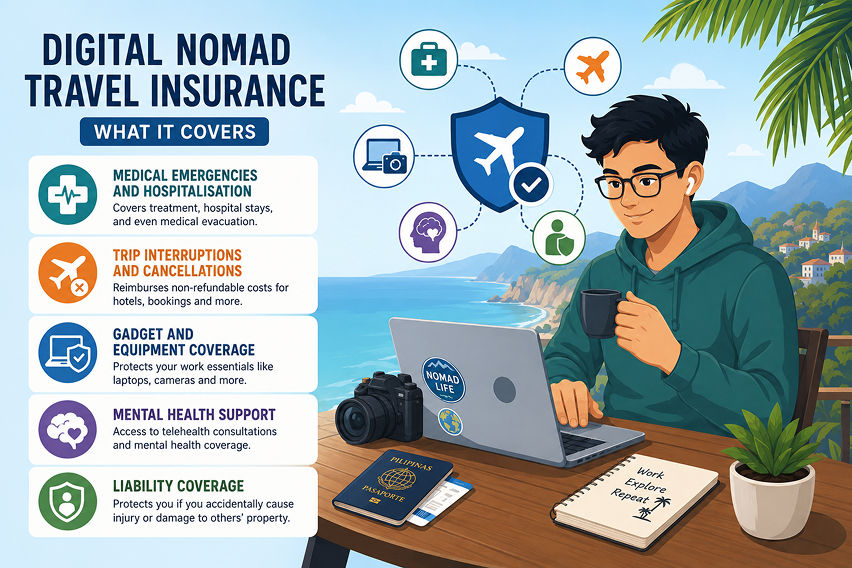
A good nomad-specific travel insurance from a reliable provider isn't just "travel insurance and longer." Rather, it's built differently from the ground up. Here's what a solid plan usually includes.
 AI-Generated Image
Medical emergencies and hospitalisation
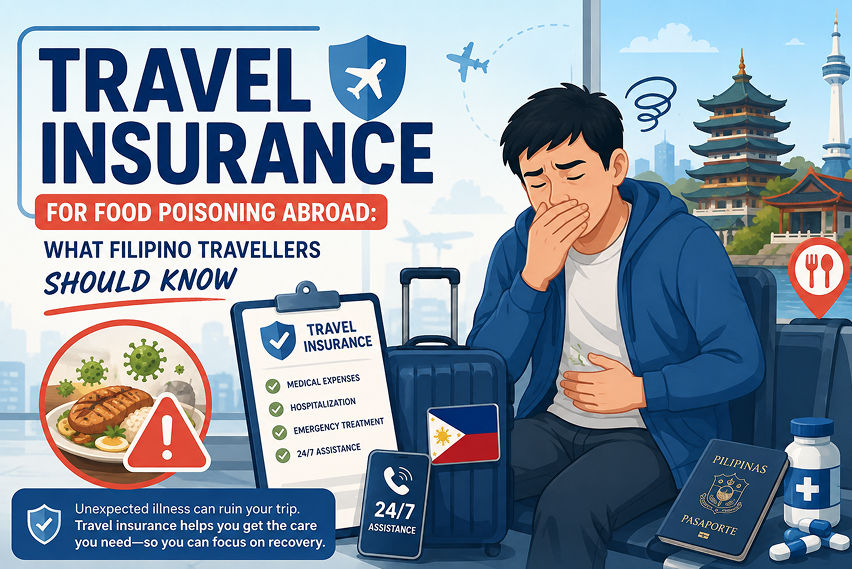
This is the big one. A lot can go wrong when you are away from home. On a bad day, you can get food poisoning from all that junk or break your ankle. In those cases, or in more serious ones, medical coverage pays for treatment, hospital stays, and sometimes even medical evacuation if you need to be flown to a place with better facilities.
Trip interruptions and cancellations
A nomad lifestyle is full of unpredictable events. For example, your visa can be delayed, flights can be cancelled, or a family emergency can call you home unexpectedly. In such cases, good insurance can reimburse non-refundable costs for hotels or other bookings.
Gadget and equipment coverage
This is especially important for digital nomads. Gadgets like a laptop or camera aren’t just devices. They're their source of income. If it gets stolen or damaged during a trip, that's a direct hit to their livelihood.
Most nomad-focused travel insurance policies therefore cover work-related equipment like laptops, cameras, and more.
Mental health support
This one's a bit underrated but equally essential. You see, a long-term travel plan sounds fun and exciting, but in reality it comes with challenges like loneliness, burnout, and anxiety. You're bouncing between time zones without a stable support system. Some new insurance providers have introduced telehealth consultations and mental health coverage, which honestly is required and should be made standard.
Liability coverage
If you accidentally damage someone's property or cause an injury while travelling, liability coverage protects you from that massive legal and/or compensation bill.
Also Read: Travelling with your aged parents? Don’t skip these travel insurance tips!
Tips to choose the right plan as a Filipino nomad
Choosing the right insurance plan is essential, as the wrong policy can invite trouble. You should also understand that not all travel insurance plans are the same and may not meet your requirements.
 AI-Generated Image
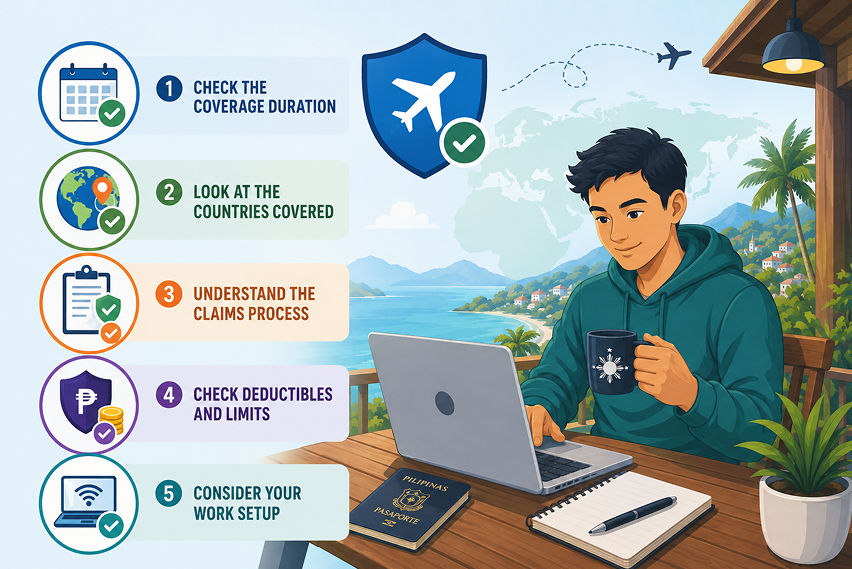
Check the coverage duration
Most travel insurance plans cap coverage at 30, 60, or 90 days per trip, depending on the insurer and policy terms. So, if you're planning to be away for six months or more, you need a plan that is explicitly built for long-term travel. These plans are commonly called "nomad insurance" or "expat insurance."
Look at the countries covered
Some travel insurance plans exclude certain countries because of high medical costs or other reasons. If your nomad route includes such a country, double-check this before you buy a policy.
Understand the claims process
Buying a plan just because it is cheap is never a good idea. What you should look closely at, apart from coverage, is the claim filing process. Always choose an insurer with a straightforward online claims process, English & local language support, and a reasonable turnaround time.
Check deductibles and limits
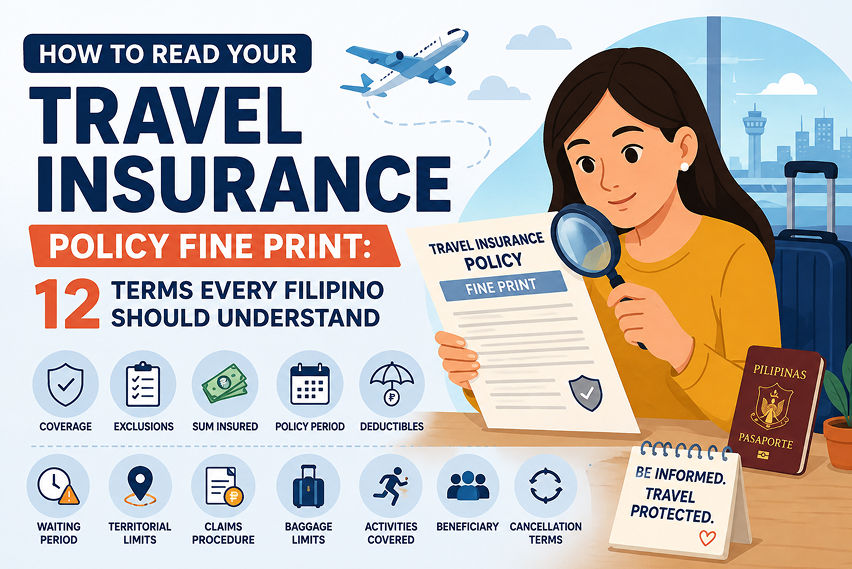
A lower-premium policy often means higher deductibles or a lower payout cap. A traveller, especially one on long-duration international travel, should never choose a plan just because it's cheap. When buying a plan, read the fine print, because a policy that seems like a bargain can leave you paying thousands out of pocket during an emergency.
Consider your work setup
Some insurance providers may ask about your work type- freelance, remote employee, or running your own online business. A few even offer income protection add-ons in case illness or injury stops you from working for an extended period.
Also Read: Things to check before buying travel insurance: Flights, baggage, & smooth claims
Popular insurance options Filipino nomads are looking at
- Global nomad insurance providers: They cater specifically to remote workers and long-term travellers, often with monthly subscription-style pricing instead of one-time premiums.
- Traditional Philippine insurers: They have started offering extended travel plans, though coverage for true long-term nomad life is still catching up compared to international providers.
- Expat health insurance: It works well for nomads who tend to stay in one region for extended periods rather than hopping between countries every few weeks.
The right insurance choice really depends on your travel style. A slow traveller based mostly in Southeast Asia has different needs than someone bouncing between three continents in a year.
Also Read: Travel insurance for cruises: Do Filipinos need different coverage?
Final tips before you buy insurance
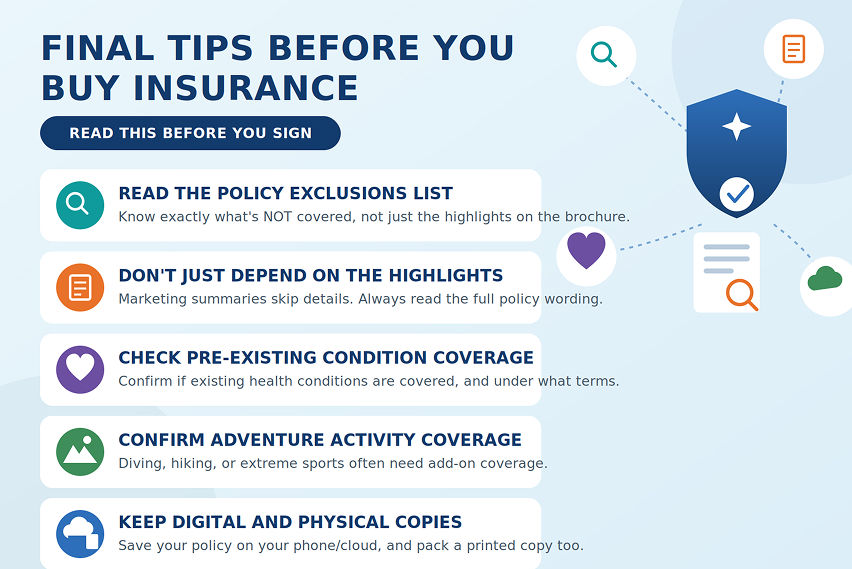 AI-Generated Image
Also Read: Lost laptop, camera & phone abroad: Does travel insurance cover electronics?
Bottom line
Being a digital nomad brings an incredible kind of freedom. You get to visit new cities, follow a new routine, and you get to see new versions of yourself. But this freedom works best when luck isn't holding it against you.
We know travel insurance isn't the most exciting part of planning your journey. And for sure nobody is interested in or has the time to read policy documents while sipping their morning coffee. But some things are necessary for long-term safety. Insurance is the shield that protects you against the chaos and unpredictability of life on the move.
So, before you book that next flight, take an hour or two to compare a few insurance plans and pick one that actually fits.
Also Read: Travel insurance for multi-country trips: One policy or multiple policies?
FAQs
Q1. Is travel insurance mandatory for digital nomads from the Philippines?
Ans. It's not legally required in most cases, but some countries do require proof of insurance for certain visa types, especially long-stay or digital nomad visas.
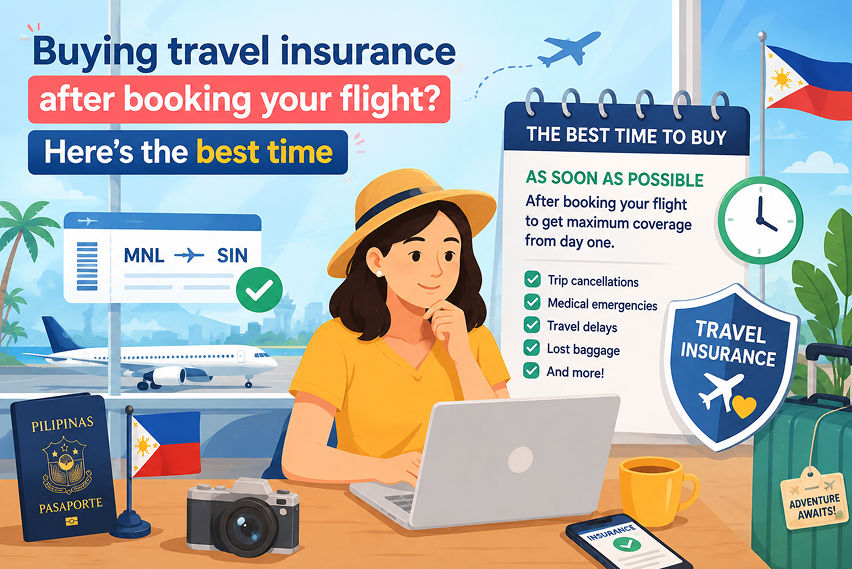
Q2. Can I buy travel insurance after I've already left the Philippines?
Ans. Some providers allow this, but it's generally smarter and often cheaper to purchase before departure, especially since some plans require you to buy while still in your home country.
Q3. Does travel insurance cover pandemics?
Ans. It all depends on the insurance provider and the policy terms. Many plans now include pandemic-related medical coverage; however, it's always best to confirm & assume.
Q4. What happens if I need coverage for more than one country?
Ans. Most nomad-focused plans support multi-country coverage under a single policy, which is exactly why they're better suited for this lifestyle than standard tourist insurance.
Q5. Is it worth getting insurance if I'm generally healthy and careful?
Ans. You must get insurance. You see, it isn't about assuming that something will go wrong. Rather, it's about protecting yourself financially if things don't go as planned. Accidents and emergencies rarely give you a warning before they hit.
Also Read: Travelling during typhoon season: What every Filipino traveller should know about insurance coverage