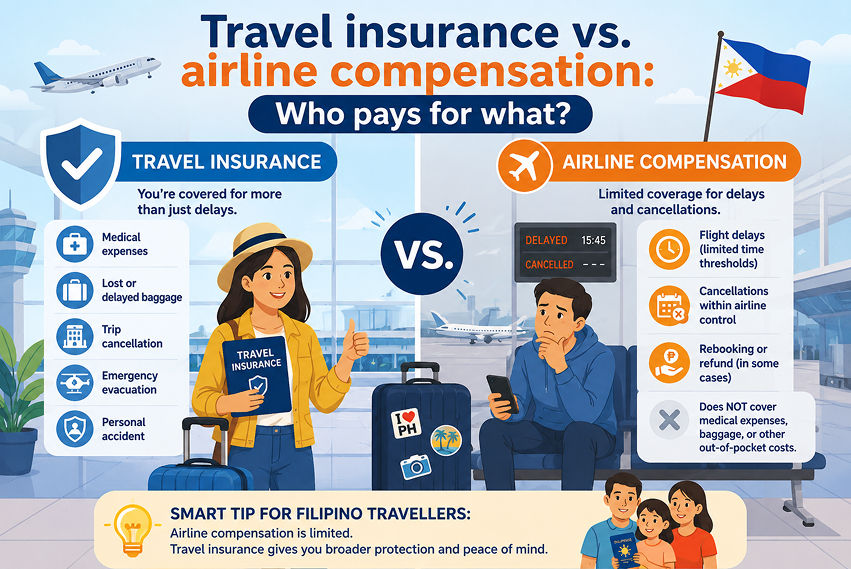





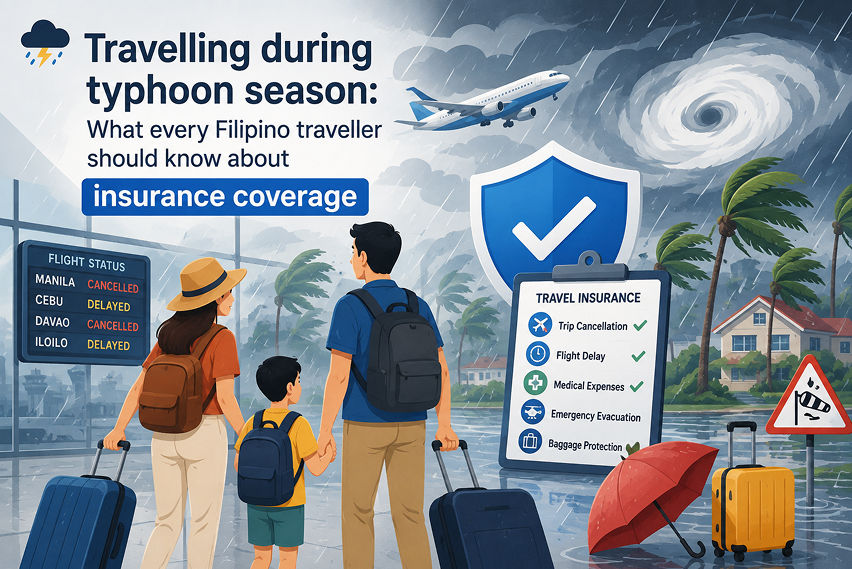
We’ve all been there: months spent planning a long-weekend escape or an autumn international trip, only to watch the airport broadcast a fresh low-pressure area heading straight for your flight path.
Living in a country hit by around 20 typhoons a year, dealing with rain and severe weather is just part of life for any Pinoy traveller. But there’s a big difference between braving a sudden downpour and watching your hard-earned vacation funds vanish because authorities grounded every departure at NAIA.
This is where travel insurance comes in. While most of us still check that little "Add Insurance" box when booking flights online, very few actually know what happens when a typhoon hits. Here is the real deal behind typhoon coverage, how to make sure your policy pays out, and the fine print that can save your holiday budget.
Let’s get started…
Also Read: How to claim travel insurance: A step-by-step guide for Pinoy travellers
The "named storm" rule: Timing is everything
One of the most important concepts in weather-related travel insurance is the named storm rule.
Insurance protects you against unexpected events. Once a weather disturbance is officially named, it becomes a known event.
If you buy your travel insurance plan after a typhoon has already entered the Philippine Area of Responsibility (PAR) and/or has gotten its official name from the authorities, your policy will not cover any cancellations, delays, or disruptions caused by that specific storm. The insurance provider assumes you bought the policy precisely because you knew the storm was coming, and in the insurance world, that’s a non-starter.
Rule of thumb: Buy your travel insurance the same day you book your flights and hotels. Do not wait until the week of travel to check the forecast.
What travel insurance actually covers during a typhoon
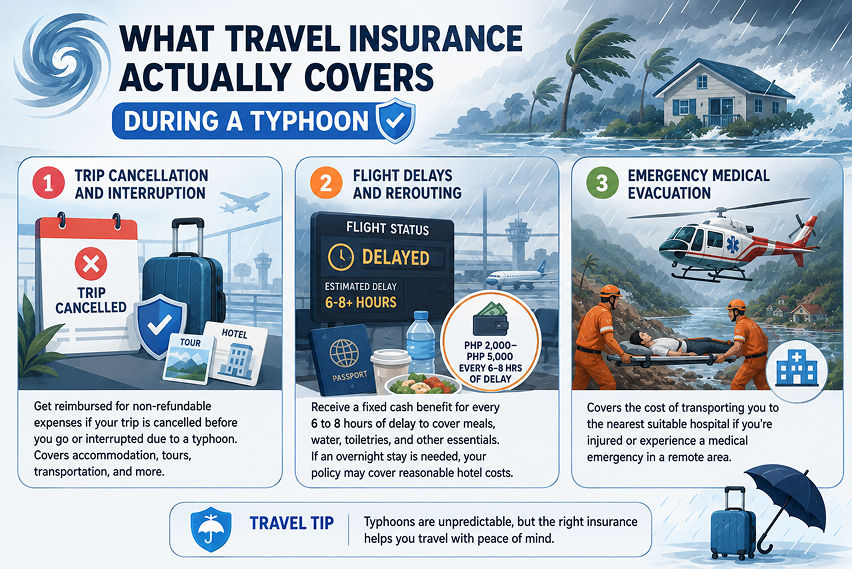
Not all weather disruptions are treated equally by a travel insurance policy. So, when a typhoon hits, a standard comprehensive insurance policy usually covers the following:
 AI-Generated Image
1. Trip cancellation and interruption
If a typhoon hits and damages your destination’s airport, forces your carrier to cancel your flight, or makes your booked hotel uninhabitable before you arrive, trip cancellation coverage can be a great help. It helps you recover non-refundable expenses such as accommodation, tours, or connecting transportation.
If the typhoon hits while you are already there and forces you to cut your vacation short to fly home, trip interruption kicks in to reimburse unused days and cover the extra costs of rebooking.
2. Flight delays and rerouting
When a fast-approaching typhoon status triggers a domino effect that delays operations across major hubs, your policy typically offers a fixed benefit. In most cases, it is PHP 2,000 to PHP 5,000 for every 6 to 8 hours of continuous delay. This cash is meant to cover meals, water, and essential toiletries while you’re stuck at the
AIRPORT.
If the typhoon-related delay forces an overnight stay, comprehensive travel insurance plans often reimburse reasonable hotel expenses.
3. Emergency medical evacuation
Typhoons bring flash floods, landslides, and high ocean swells. If you are injured or experience a medical emergency in a remote area (such as an island town with limited healthcare facilities), emergency medical evacuation coverage covers the high cost of transporting you to a major hospital.
Also Read: Travelling with your aged parents? Don’t skip these travel insurance tips!
Airline travel insurance vs. comprehensive insurance: The better choice
When buying tickets from a domestic budget airline, adding the PHP 300-500 insurance add-on at checkout feels easy. But is that really enough? Let us find out
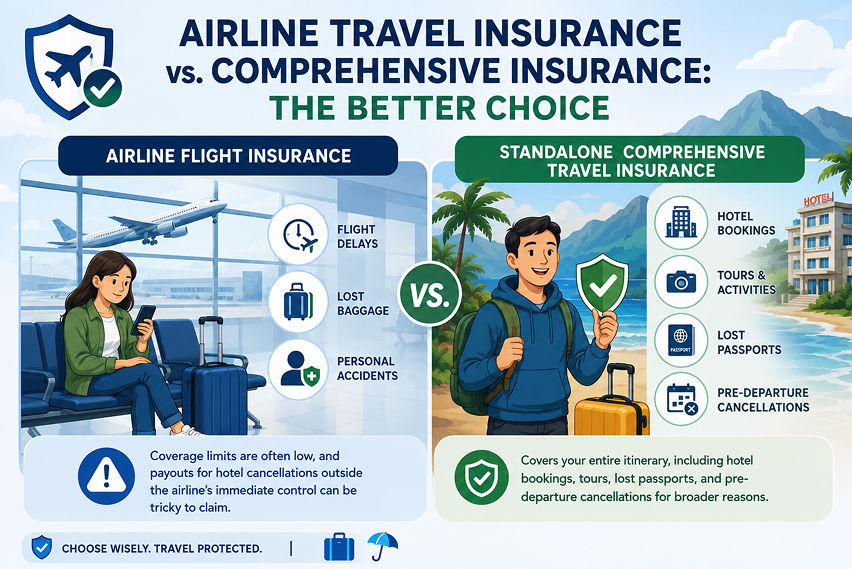
Airline flight insurance: This one is great for basic coverage. For instance, it covers the following: flight delays, lost baggage, and personal accidents tied specifically to the flight legs.
However, coverage limits are often low, and payouts for hotel cancellations outside the airline’s immediate control can be tricky to claim.
 AI-Generated Image
Standalone comprehensive travel insurance: Here you buy a policy directly from insurers (such as Pioneer, Malayan, AXA, or Chubb). These policies cover your entire itinerary, including hotel bookings, tours, lost passports, and pre-departure cancellations for a wider range of reasons.
Note: If you are travelling locally for a sweet & short weekend trip, an airline add-on might be okay. However, if yours is a multi-leg trip, an overseas vacation, or an expensive island getaway during peak typhoon months, independent comprehensive insurance is usually worth every extra peso.
Also Read: The biggest travel insurance claim mistakes Filipino travellers make & how to avoid them
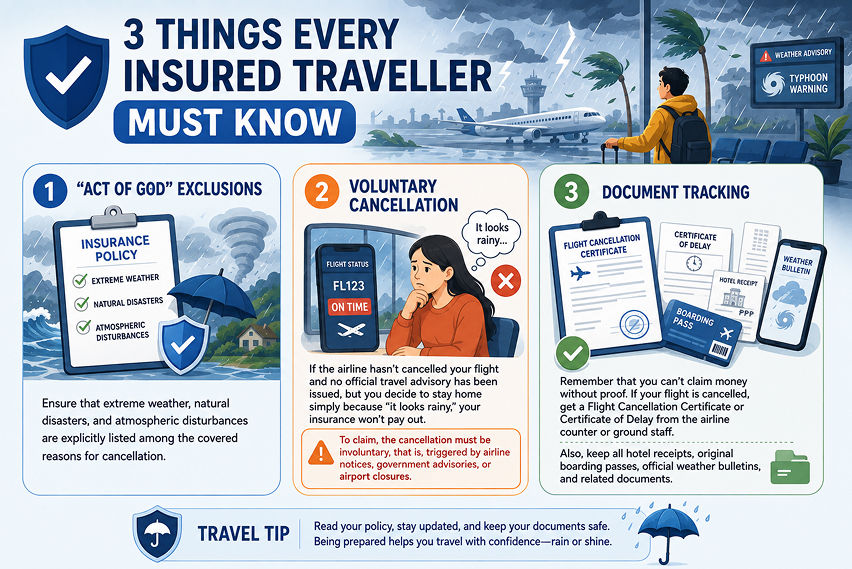
3 things every insured traveller must know
 AI-Generated Image
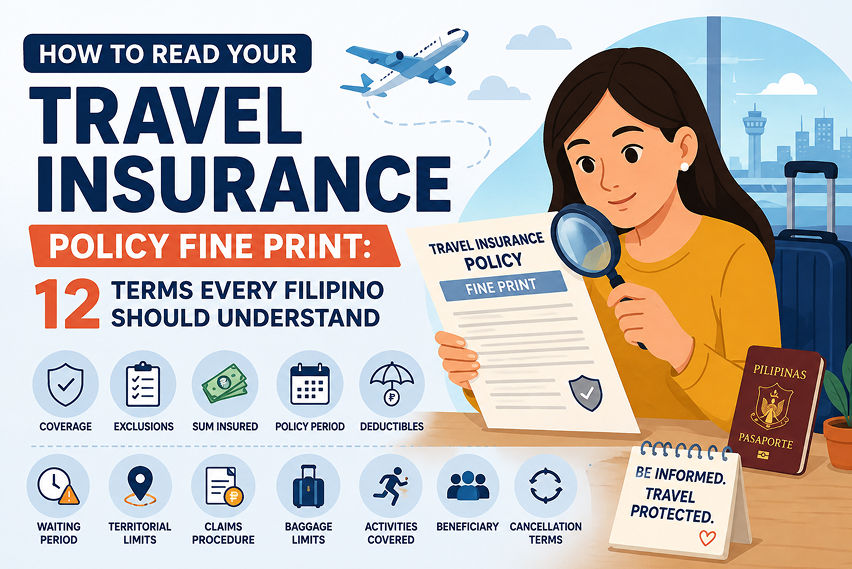
- "Act of God" exclusions: Ensure that extreme weather, natural disasters, and atmospheric disturbances are explicitly listed among the covered reasons for cancellation.
- Voluntary cancellation: If the airline hasn’t cancelled your flight and no official travel advisory has been issued, but you decide to stay home simply because "it looks rainy," your insurance won't pay out. To claim, the cancellation must be involuntary, that is, triggered by airline notices, government advisories, or airport closures.
- Document tracking: Remember that you can't claim money without proof. If your flight is cancelled, get a Flight Cancellation Certificate or Certificate of Delay from the airline counter or ground staff. Also, keep all hotel receipts, original boarding passes, official weather bulletins, and related documents.
Also Read: Travel insurance checklist for first-time Filipino travellers
Bottom line
Travelling plans during the rainy season can be exciting, but they also come with their own challenges. But we understand that the rainy season doesn't have to mean locking yourself indoors and skipping out on exploring. Solution? With a bit of foresight, an eye on the weather updates, and a solid insurance policy bought early enough, you can set off exploring in complete peace of mind.
So, storms might delay your itinerary, but with the right safety net by your side, bad weather won’t be able to wash away your hard-earned savings.
Also Read: Medical emergencies abroad: How travel protection keeps you safe and covered
FAQ
Q1. If my airline gives me a full refund or a Travel Fund for a cancelled flight, can I still claim from my travel insurance?
Ans. No, you cannot. Travel insurance reimburses actual out-of-pocket losses. If the airline gives you a cash refund or credit voucher for your airfare, the insurance company considers that cost settled.
Q2. What happens if I get stranded at an island resort because the Coast Guard cancelled the boat trip?
Ans. If the Philippine Coast Guard issues a sea travel suspension due to rough seas, your trip interruption or trip delay benefit typically steps in.
Q3. If a typhoon floods my home and I can't reach the airport, will my travel insurance policy cover cancellations?
Ans. It depends on your travel insurance policy and its terms. Many comprehensive plans cover you if typhoon-induced flooding makes your primary residence uninhabitable or severely damages it right before your trip. Confirm this with your provider in advance.
Q4. Will my insurance policy cover me if I go surfing during a storm?
Ans. Generally, no. Most insurance policies include "negligence" and "hazardous activities" exclusions. So, read the fine print beforehand.
Q5. What should I do immediately if a typhoon hits while I am abroad?
Ans. Do not panic. First, ensure your personal safety and follow local authority directives. Next, contact your insurance provider via the 24/7 emergency hotline and report your situation. Don't forget to keep every physical receipt for extra accommodation, transportation, and food, as you will need them when filing your claim upon returning home.
Also Read: Travel insurance for multi-country trips: One policy or multiple policies?