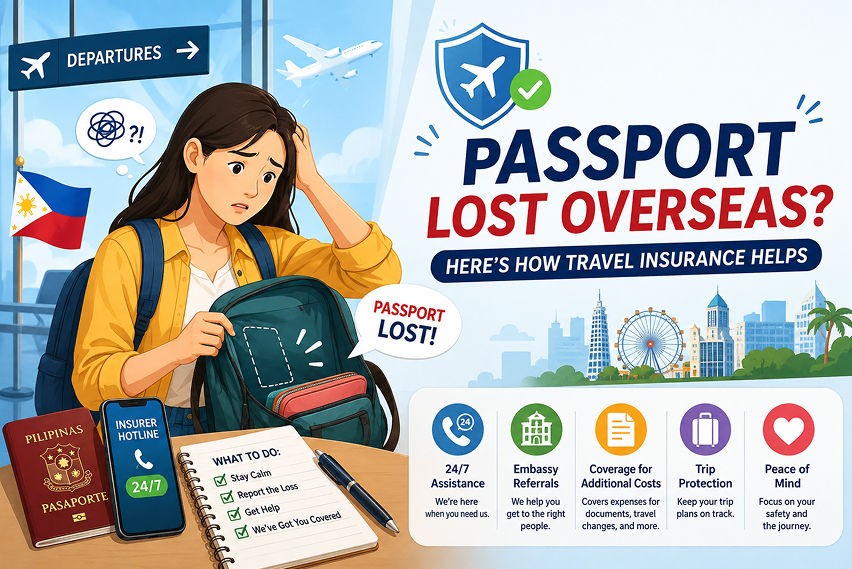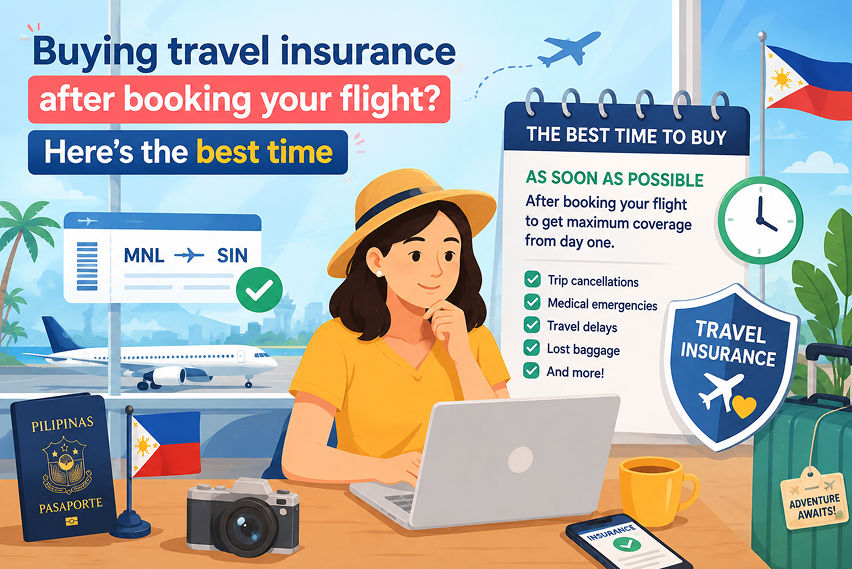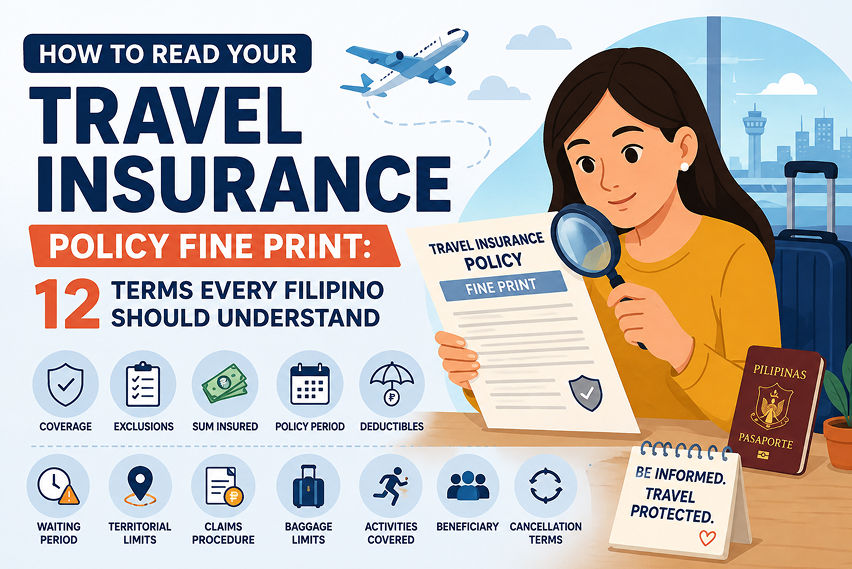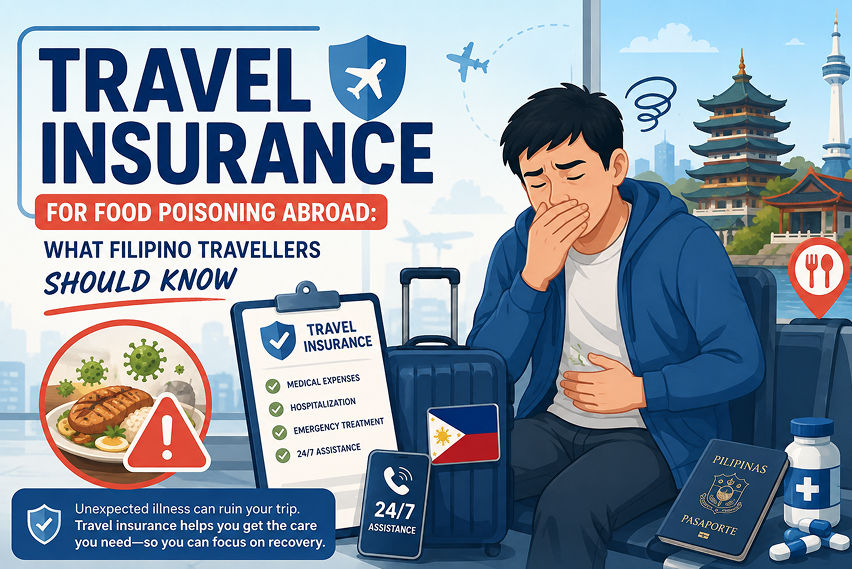





We've all seen a movie where the protagonist is standing at the airport, looking out the giant glass windows at the aeroplanes taking off, all set for an amazing trip. This makes us all imagine a fun, adventure-packed trip with family or friends, with bags packed with our favourite clothes, flight tickets saved on our phones, and activities & adventure planned. But then a thought crosses your mind: what if something goes wrong?
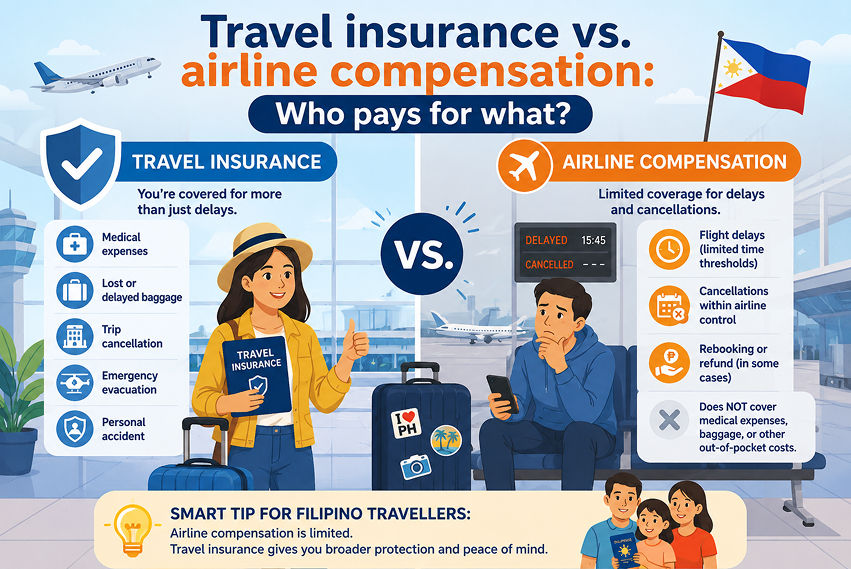
No one likes to think about bad things happening on vacation. Still, the reality is that every year, hundreds of tourists experience situations like suitcases getting lost by airlines, flights being cancelled due to bad weather, and getting sick or hurt while far from home. That is where travel insurance comes in.
Just like car insurance that safeguards you while on the road, travel insurance is a protective shield for your wallet, ensuring that unexpected expenses, health emergencies, and trip disruptions don't ruin your trip or cost you a fortune.
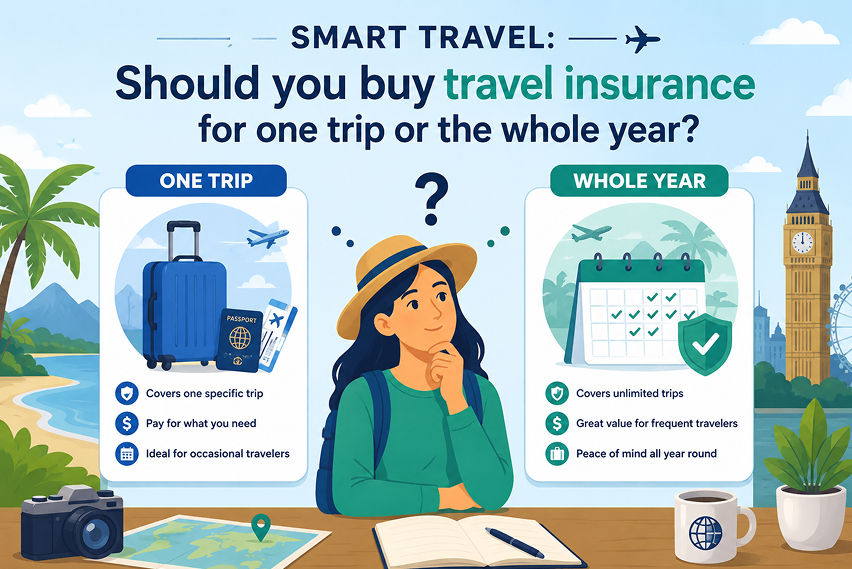
Generally, when someone decides to get this protective shield, they find themselves standing at a crossroads. A big decision is to be made: should you buy a plan for just one trip, or one that protects you for a whole year?
Choosing the right option is not just about safety; it will also save you a lot of cash. If you are planning to buy travel insurance soon or struggling to choose between a one-trip or annual package, this article is for you. Here, we have broken down exactly how these two choices work, examined the math behind them, and helped you pick the absolute best plan for your travel style.
Also Read: What is travel insurance, and why every Filipino traveller should understand it
The basics: Two ways to protect your journey
Before we start comparing the two options - single-trip and all-year insurance, it is important to understand exactly what they are and how they operate. To make it easy to understand, think of them as two different types of tickets to an amusement park, where one is a single-day pass, and the other is a season pass.
|
Travel Insurance |
|
|
Single-trip Insurance |
All-year Insurance |
|
Covers one specific vacation |
Covers 365 days of travel |
|
Starts when you leave home |
Pay once, travel many |
|
Ends when you return home |
Strict time limits per individual trip |
What is Single-trip Insurance?
As the name suggests, single-trip insurance is designed for one specific vacation. When you buy this plan, you tell the insurance company the exact day you are leaving your country, and the exact day you plan to return home.
The moment you arrive back from your vacation, this insurance plan ends. It expires. If you decide to go to a different beach or city next month, you will have to log back online and buy a brand-new policy. It is highly specific and custom-made for that one block of dates on your calendar.
What is All-Year Insurance?
All-year, annual, or multi-trip insurance is like a 365-day subscription to safety. You pay for this plan just one time at the beginning of the year. Once you have it, you are officially allowed to pack your bags and leave the country as many times as you want over the next 12 months. You do not need to call the insurance company before you leave, and you do not need to pay them any extra money when you cross a border.
However, there is an important rule you must follow: even though you can take an unlimited number of trips, each trip must be relatively short. They usually require you to return home within 30, 45, or 90 days before you can head out again. If you stay away longer than your plan's specific limit, the insurance safety shield stops working.
How to choose the right plan?
 AI-Generated Image
Now that you know the basics of the two plans, it is a good idea to know how to decide which one to choose. The best answer depends entirely on how often you leave home, where you are going, and what you like to do when you get there.
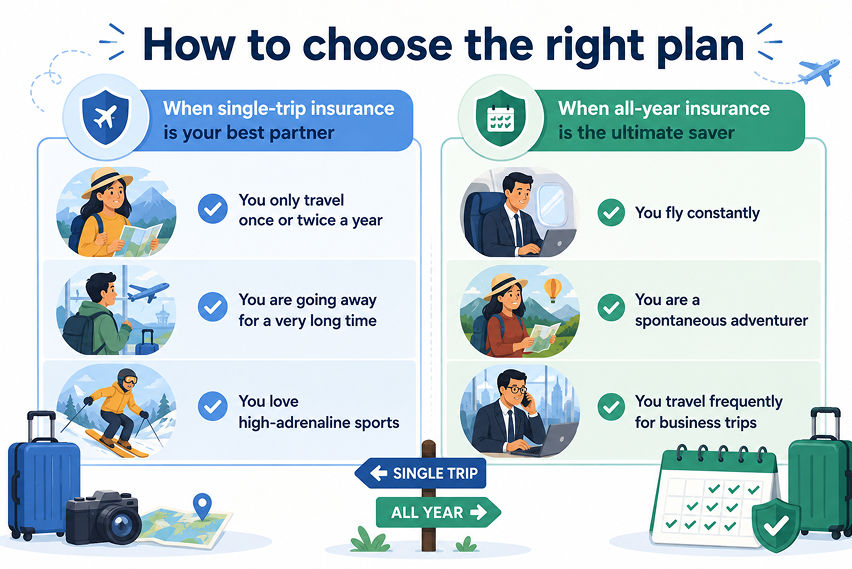
When single-trip insurance is your best partner
For many people, buying insurance one trip at a time makes the most sense. Here are the specific moments when it is the smartest tool to pick -
You only travel once or twice a year: If your family saves up all year for one big summer holiday to see a new country, or if you only travel once a year to visit relatives for the holidays, single-trip insurance is a no-brainer. It will cost you very little money upfront because you are only paying for those exact 7 or 14 days of protection. Paying for a whole year of insurance when you are sitting at home for the rest of the year is simply wasting your money.
You are going away for a very long time: This one is quite rare, but some lucky ones get to plan massive adventures, like spending a whole school semester studying in a foreign country or backpacking through multiple countries for 3 months straight. As we mentioned earlier, yearly plans do not cover a single long journey due to their strict trip limits. A single-trip plan, however, can be customised to cover a long period, even up to 6 months.
You love high-adrenaline sports: If you are travelling specifically to ski down steep, snowy mountains, snowboard, or scuba dive deep under the ocean, you need to be very careful. Regular insurance plans often don't cover injuries caused by dangerous or extreme activities. With a single-trip policy, you can add special "adventure sports coverage" to your plan for those exact dates, ensuring that if something goes wrong, your medical bills are taken care of.
When all-year insurance is the ultimate saver
On the other side of the fence, some people live out of a suitcase. If that sounds like you or your family, a yearly travel insurance subscription is recommended. Here is why:
You fly constantly: If you travel three, four, or more times every year, buying a separate insurance policy each time is a lot of work. It also gets very expensive. By buying one annual policy, you get a bulk discount. The total cost of one yearly plan is usually much lower than the price of adding up four individual single-trip plans.
You are a spontaneous adventurer: Have you ever seen a crazy, ultra-cheap flight deal on a Tuesday night and thought, "I should buy this and go away this weekend!"? If you have all-year insurance, you can just buy the ticket and walk out the door. You never have to worry about rushing to an insurance website at midnight or forgetting to protect yourself before your flight takes off. You are already permanently covered.
You travel frequently for business trips: Many parents and professionals have jobs that require them to fly to another city for a quick two-day meeting on very short notice. If you are a frequent flyer, logging in to a website to buy insurance 12 times a year is a headache. An annual plan is the perfect solution that cuts out the annoying paperwork.
Also Read: Travel insurance explained: Medical emergencies, flight delays, and lost baggage
Cracking the math: A real-world price comparison
To make things even clearer, let's look at how the actual money breaks down across different travel insurance plans. Imagine a standard single-trip insurance plan costs about ₱800, while a full, all-year insurance plan costs around PHP 3,500. Let's look at three different types of travellers to see who wins and who loses.
Case 1: Juan, the annual vacationer
Juan goes on exactly one international trip a year. He spends two weeks in South Korea looking at the beautiful scenery.
- If he buys a single-trip plan, he pays PHP 800.
- If he buys an all-year plan, he pays PHP 3,500.
The winner: The single-trip plan. Juan saves PHP 2,700, which he can use to buy cool souvenirs and delicious street food in Seoul!
Case 2: Maria, the weekend explorer
Maria loves taking short weekend trips. She visits nearby Asian destinations four times a year, with each trip lasting about three or four days during long holiday weekends.
- If she buys single-trip plans, she pays PHP 800 four times (PHP 800 x 4) for a total of PHP 3,200.
- If she buys an all-year plan, she pays PHP 3,500.
The winner: This is almost a tie! While individual plans are ₱300 cheaper, the all-year plan gives Maria the amazing convenience of not having to buy insurance four separate times. Most people in this situation choose the all-year plan just to save time and be covered for any last-minute emergency trips.
Case 3: David, the ultimate frequent flyer
David travels a lot. Between visiting family abroad, taking holiday breaks, and taking short regional business trips, he leaves the country eight times each year.
If he buys single-trip plans, he pays PHP 800 eight times (PHP 800 x 8) for a total of PHP 6,400.
If he buys an all-year plan, he pays PHP 3,500.
The winner: The all-year plan is the massive champion here. David saves PHP 2,900 in total and never has to fill out an insurance form all year.
Important things to look out for
 AI-Generated Image
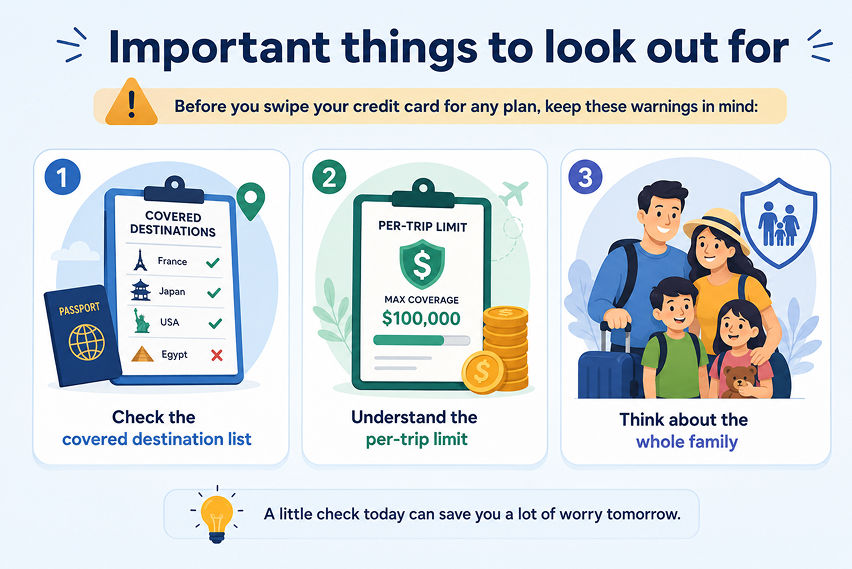
Price and frequency are the primary factors that guide a traveller's insurance decision-making process. However, there are a few details that can cause trouble if you aren't paying attention. Before you swipe your credit card for any plan, keep these warnings in mind:
Check the covered destination list: Not all yearly plans cover the entire planet. Some cheaper annual plans only cover countries near your home. If you buy a regular yearly plan but suddenly decide to fly to the other side of the world, you must check your policy to make sure that the specific country is included on their safety map.
Understand the per-trip limit: We cannot stress this enough: check the maximum trip length on an annual plan! If your annual plan has a 30-day limit and you stay on vacation for 32 days, you will have no insurance on days 31 and 32. If something goes wrong at the very end of your trip, you will be completely on your own.
Think about the whole family: If you are travelling as a group, sometimes family plans offer massive discounts. However, on an annual family plan, you need to check whether the kids are covered if they travel without the parents. Therefore, it is recommended to read the small text carefully.
Also Read: The most common travel insurance myths Filipinos still believe
The final verdict
The secret to winning the travel insurance game is simply being honest about your calendar. If you are someone who looks forward to a single, spectacular vacation every year, then keeping things light and buying insurance trip by trip will keep you and your wallet happy. It gives you targeted protection without forcing you to pay for months of safety you won't use.
On the flip side, if your passport is always sitting on your nightstand, if you have apps for three different airlines on your phone, or if you love the thrill of booking a flight suddenly, then an all-year plan is your golden ticket. This one eliminates boring paperwork, gives you incredible peace of mind, and saves you a noticeable amount of money by the time you board your third or fourth flight.
Take a few minutes to look at the next twelve months on your calendar, think about where you want to go, and do a quick bit of math. By aligning your insurance choice with your actual lifestyle, you can wave goodbye to worry, board your plane with total confidence, and focus entirely on making memories that will last a lifetime!
FAQs
Q1. Can I switch from a single-trip policy to an annual policy if I suddenly decide to travel more?
Ans. Generally, no. You cannot simply hit a button to upgrade or convert a single-trip plan once it has already started. If you bought a single plan and later realise you are going to travel a lot more this year, your best move is to let that first plan expire and then buy a brand-new annual policy to cover the rest of the year.
Q2. Does annual travel insurance offer unlimited days of coverage abroad?
Ans. No, it does not. While it allows you to take an unlimited number of trips, the total length of any single journey is strictly limited. For example, if your policy has a 45-day limit, you must return to your home country before the 45th day. Once you set foot back inside your home country, the clock resets to zero, and you can instantly leave for another 45-day trip.
Q3. Will my insurance cover my losses if I cancel my trip just because I changed my mind?
Ans. No, standard travel insurance will not help you if you simply decide you don't feel like travelling anymore. To get your money back, you must have a major, serious reason that is listed in the policy rules. This usually includes things like becoming severely ill, an extreme storm that closes the airport, or a family emergency. If you want the freedom to cancel for any reason, you have to buy an expensive upgrade.
Q4. What happens if I accidentally forget to buy travel insurance until after I land in another country?
Ans. This is a major mistake! Almost all travel insurance companies require you to buy your policy before you leave your home country. If you try to buy a plan while you are already in a hotel room in another country, the policy will usually be invalid or won't cover anything that has already happened. Always secure your plan before your feet leave the ground!
Q5. If I have a medical emergency abroad, does the insurance company pay the hospital directly?
Ans. It depends on how big the bill is. For small things, like buying a quick medicine at a pharmacy or visiting a small local clinic for a scrape, you will usually pay out of pocket first. Do save all the paper receipts and hand them to the insurance company later so they can reimburse you. However, for major emergencies that require you to stay in a hospital bed, you or someone with you should call the insurance company's emergency phone number immediately. They will work directly with the hospital to handle the bills.
Q6. Are my expensive electronics, like my smartphone, laptop, or tablet, fully covered if they get stolen?
Ans. Only up to a certain point. While most travel insurance plans do cover lost or stolen baggage, they usually have a strict limit for "valuable items." So, if you are travelling with a very expensive computer, tablet, or camera, consider a premium plan or add extra coverage for high-value items.