




You’ve decided the destination, even picked out your favourite outfits, made a list of essential things to carry, and started working on the itinerary. But before you go any further in the planning process, there is one super important question you need to ask: Will the country you are visiting actually let you in without travel insurance?
Travel insurance is just an optional requirement, like buying a protective case for a new phone. But in many countries around the world, having travel insurance is mandatory. If you don't have it, the border officers won't let you cross into their country.
Let's look at where travel insurance is a must-have, why countries require it, and how it works.
Also Read: What is travel insurance, and why every Filipino traveller should understand it
Where in the world is travel insurance a must?
Different countries have different rules about who they’ll let inside their borders. In some parts of the world, you cannot legally visit unless you prove you have travel insurance.
The Schengen Zone (Europe)
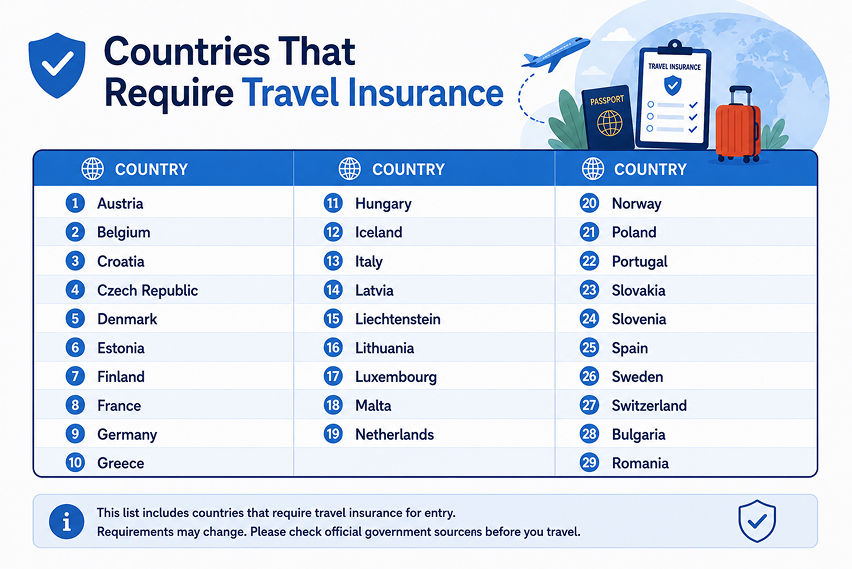
If you are planning a dream vacation to Europe, you will likely visit the Schengen Area. This is a big group of 29 European countries that act like one giant country with no borders between them.
To get a visa to visit these countries, you must buy a specific type of travel insurance. If you don't show them the insurance paperwork, they will say "no" to your visa application.
 AI-Generated Image
To get a Schengen visa, your travel insurance can't be a cheap, basic plan. It must meet strict rules and cover a specific, high amount for medical emergencies and for flying you home if you get severely sick. If you don't include the official insurance certificate with your application, the embassy will automatically reject your visa.
Also Read: Travel insurance explained: Medical emergencies, flight delays, and lost baggage
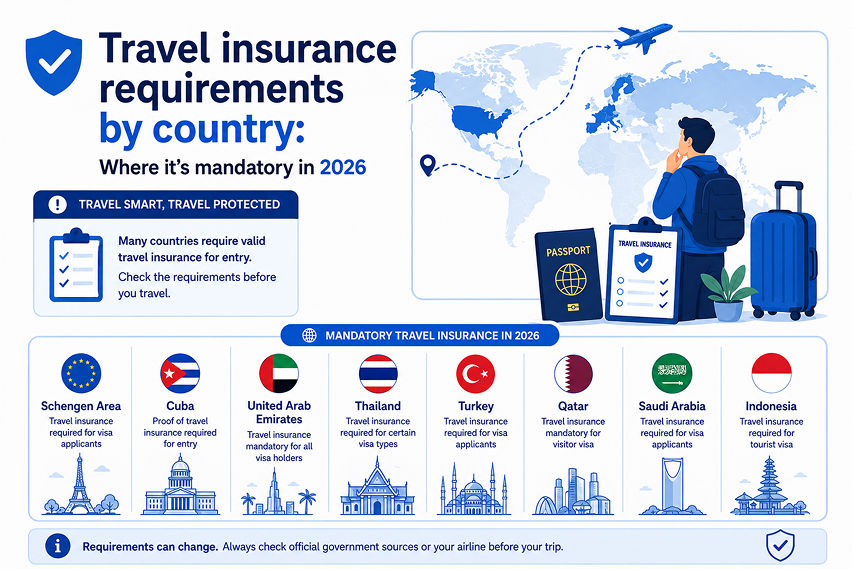
Other countries around the world that have compulsory coverage requirements
Europe isn't the only place with this rule. Many other countries across Asia, South America, and Africa require you to have insurance before you land.
Right now, some of the places that require travel insurance include:
- The Americas & Islands: Cuba, Ecuador, Antarctica, Bermuda
- Asia & the Middle East: Bhutan, Nepal, Qatar, Saudi Arabia, Turkey, Iran, Jordan
- Africa & More: Rwanda, Seychelles, Russia
| Quick travel tip: Rules can change quickly! A country that doesn't require insurance today might change its mind tomorrow. Therefore, make sure to check the country's official government website before you book your flight. |
Also Read: The most common travel insurance myths Filipinos still believe
Why do governments care about travel insurance?
You might wonder, “Why does the government care if I have travel insurance or not?”
It all comes down to money. If an uninsured tourist gets really sick or gets into a bad accident while on vacation, they have to go to a local hospital. If the tourist cannot afford the huge hospital bill, the government of that country has to pay for it with its own citizens' tax money.
By making insurance mandatory, countries ensure that private insurance companies cover tourist emergencies rather than having local taxpayers cover them.
The danger of going uninsured (even where it’s optional)
Even if a country says you don't need insurance to enter, travelling without it is a huge gamble. Some places have incredibly expensive healthcare systems.
The United States: Medical care in the U.S. is famous for being very expensive. A simple trip to the emergency room for a broken bone can cost thousands of dollars.
Japan: Japan does not force you to buy insurance, but you have to pay for all medical care yourself. Even worse, Japan tracks people who leave without paying their hospital bills. If you owe a Japanese hospital money, they can ban you from ever visiting the country again!
Singapore and South Korea: These countries have amazing, high-tech hospitals, but they are very pricey for tourists. A short hospital stay could easily wipe out all of your family's savings.
Also Read: Domestic vs. International Travel Insurance: A complete guide for Filipino travelers
Choosing the right travel insurance plan: What to look for
Not all travel insurance plans are the same. The choice of plan depends on what you plan to do on your trip, and based on that, you might need a special type of coverage.
Adventure sports
If you plan to do activities like surfing, scuba diving, skiing, or skateboarding, a standard travel insurance plan won't cover you. You need to ask for a special add-on so the insurance company pays if you get hurt while having fun.
Family trip
Travelling with grandparents: Older family members need plans with higher medical limits since they are more likely to get sick.
Travelling with kids
Look for a plan that includes a "return of minor children" rule. This means that if the parents get stuck in a hospital, the insurance company will pay to send the kids back home safely with a trusted adult.
Flight troubles
If you have a long trip with multiple flights, you want "missed connection" coverage. If your first plane is late and causes you to miss your second plane, the insurance company will help pay for a new ticket and a hotel room while you wait.
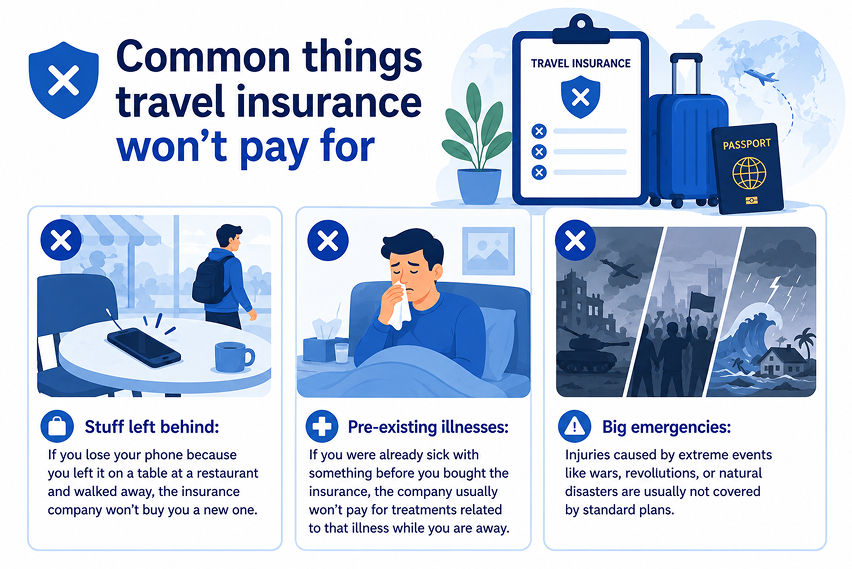
Understanding the fine print: What's NOT covered?
Insurance is great, but it doesn't cover absolutely everything. Insurance providers have strict rules about what they will and won't pay for.
 AI-Generated Image
Also Read: Smart travel: Should you buy travel insurance for one trip or the whole year?
How to make a travel insurance claim (if something goes wrong)
If something bad happens on your trip, you have to follow a few rules to get the insurance company to pay:
- Call right away: Most insurance companies have a 24/7 phone number you can call. Call them as soon as an emergency happens.
- Keep every receipt: If you have to pay for a doctor's visit, medicine, or a new suitcase, keep every single receipt. The insurance company needs proof of how much you spent.
- Get a police report: If something gets stolen, you must go to the local police station and get an official report within 24 hours, or the insurance company might not believe you.
Final thoughts
Travel insurance shouldn't just be seen as an annoying rule or an expense to appease border guards. It is there to protect you. Some countries won’t even allow you to visit them without a travel insurance policy. Wondering why it is so important and highly recommended?
You see, travelling is super exciting, but things can go wrong anytime, anywhere. Like flights can get delayed, bags can get lost, and people can get sick. Having insurance means an unexpected problem won't ruin your trip and finances.
Also Read: Traveller's blueprint: How and when travel insurance pays for emergencies
FAQs
Q1. What are the basic requirements for getting travel insurance?
Ans. The requirements vary from providers; however, common inclusions include -
- Duly filled application form
- Passport details
- Destination
- Pre-existing illnesses details
Q2. What happens if I go to Thailand, get hurt, and can't pay the bill?
Ans. Thailand does not require insurance, but it is recommended to get one, since paying for medical assistance in a foreign land out of your own pocket is pretty painful.
Q3. Can I just use the free insurance that comes with my parents' credit card?
Ans. Sometimes, but you have to be very careful. Free credit card insurance often has strict rules, low limits, and might not cover medical bills or emergencies. You always need to check if the card's insurance is strong enough for the country you are visiting.
Q4. When is the best time to buy travel insurance?
Ans. You should buy it right after you book your flights and hotels.
Q5. Can I get a refund on my insurance if I cancel my trip?
Ans. Usually, it depends on the insurer. Some allow it, only if you cancel quickly. Also, the providers that do give clients a 10 to 15-day "free look" period after they buy the policy. If you cancel during this time, you get your money back. After that, it is usually non-refundable.
Q6. What is the difference between "Cashless" and "Reimbursement" insurance?
Ans. "Cashless" means the insurance company talks directly to the hospital and pays the bill for you, so you don't have to use your own money. "Reimbursement" means you have to pay the hospital bill yourself first, and the insurance company reimburses you later after you show them the receipts.