




Most Filipinos treat the "Add Travel Insurance" checkbox on airline websites like a terms-and-conditions page; they skip right past it without reading. We usually assume that bad things only happen to others, and we rely on a quick prayer before boarding.
But the reality of travelling is that you are leaving your comfort zone, your local health network, and your familiar support systems behind. The moment you step onto an aeroplane, your company health card (HMO) and regular local benefits stay on the ground. If an emergency occurs a thousand miles away, you are entirely on your own financially.
This is where travel insurance steps in. It isn’t an airline scam to get a few extra hundred pesos out of you; it is a legally binding contract that forces a massive corporation to pay your bill when a vacation goes sideways.
Let's strip away all the confusion and look at exactly what travel insurance actually covers, what it skips, and how it protects your hard-earned money.
Also Read: What is travel insurance, and why every Filipino traveller should understand it
The big three: What travel insurance is designed to do
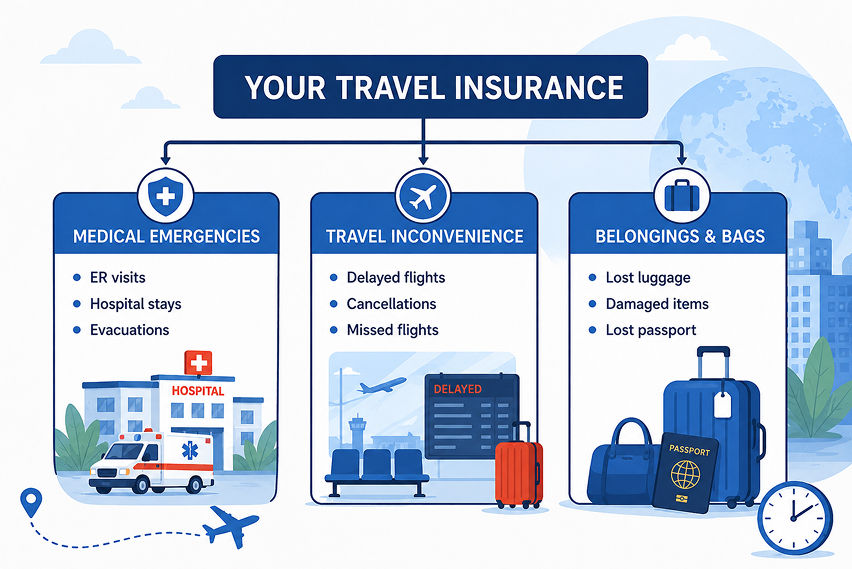
Think of travel insurance as a superhero shield that protects you from three massive mishaps: medical emergencies, travel inconveniences, and emergencies with your belongings.
Different insurance companies like AXA, Pacific Cross, Malayan, or Pioneer might call their features by fancy names, but they all boil down to these three main categories.
Also Read: Travel insurance explained: Medical emergencies, flight delays, and lost baggage
 AI-Generated Image
Medical emergencies: Because getting sick abroad is expensive
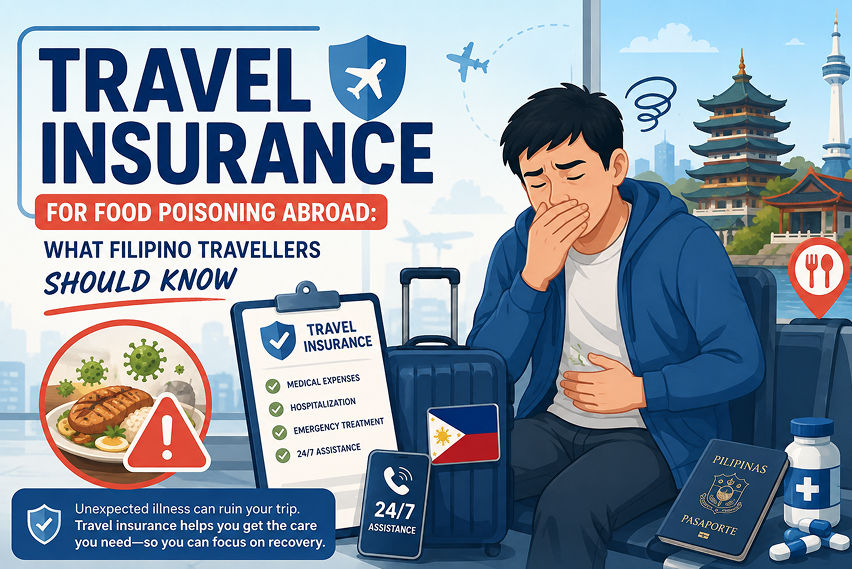
Imagine eating delicious street food in Bangkok, only for your stomach to make strange noises and then suddenly have a massive protest. And all of a sudden, you end up in a private hospital layout with an IV drip attached to your arm.
If you are at home in the Philippines, you may have your company HMO card or PhilHealth to save you. But the moment your plane leaves the Philippines? Those local cards usually become completely useless.
This is where your travel insurance's medical coverage steps in.
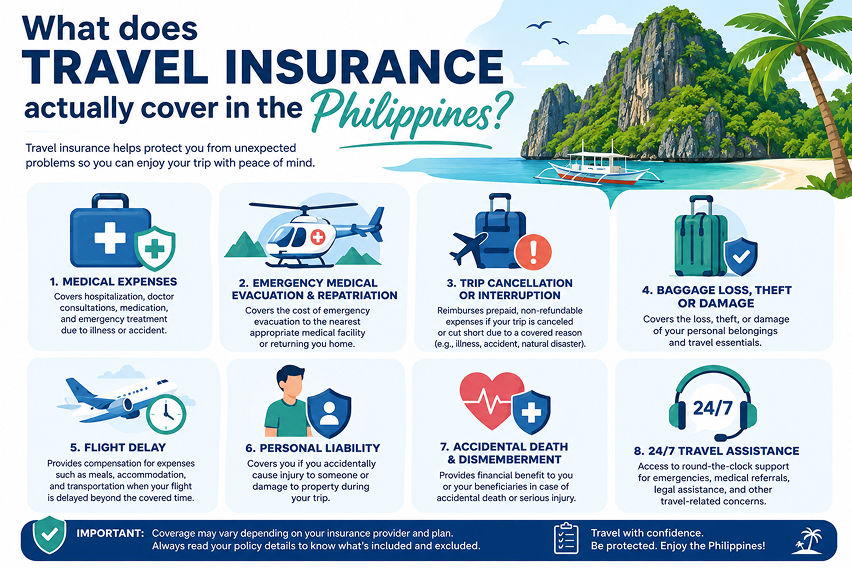
Emergency medical expenses
If you get into an accident or suddenly fall ill during your trip, your policy will help pay for your doctor’s fees, hospital bills, medicines, and X-rays. Instead of paying thousands of pesos out of your own pocket, the insurance company covers it up to a specific limit, depending on your plan.
Hospital income benefit
Some premium plans give you a "hospital allowance." If you are stuck in an overseas hospital for more than 3 days, they will give you a fixed daily cash allowance to help cover your basic personal needs or make up for the time you are missing work.
Emergency medical evacuation
This sounds extreme, but it happens. If you are hiking in a remote area or visiting an isolated island and suffer a severe injury, a regular ambulance won't cut it. Medical evacuation means the insurance company will pay for a helicopter or a specially equipped plane to bring you to the nearest proper hospital.
Crucial note on ‘Cashless vs. Reimbursement’
Some providers offer cashless medical treatment, meaning they settle the bill directly with the international hospital. Others work on a reimbursement basis, which means you have to pay the hospital first, collect every single receipt, and ask for a refund when you return to the Philippines. Always check which one your provider uses before buying!
Also Read: Travel insurance requirements by country: Where it's mandatory in 2026
Travel inconveniences: When your schedule gets messed up
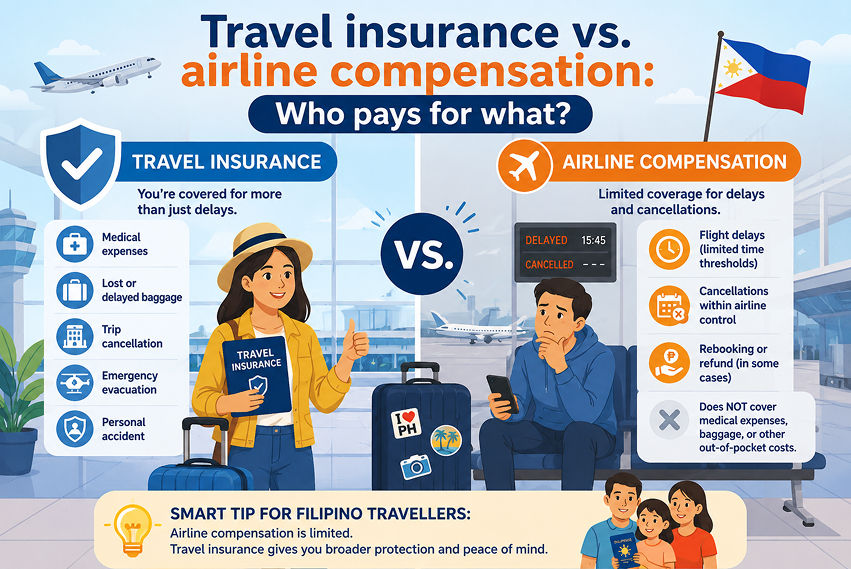
Airlines are great; they take you to places, but they aren't perfect. Flights get delayed, typhoons roll in, and schedules fall apart. They turn your itinerary into a chaotic mess, and here travel insurance steps in to soothe all your troubles.
Flight delays
We are all too familiar with sitting at the boarding gate for hours because of "technical issues" or bad weather. If your flight is delayed for more than a set number of hours, your insurance will pay you a fixed amount of money. This cash is meant to buy you a decent meal, coffee, or even a hotel room if you are stuck overnight.
Trip cancellation or postponement
What happens if you book a trip to South Korea but, three days before your flight, you get hospitalised with dengue? Or what if a sudden super typhoon shuts down Manila's airports entirely?
If you have to cancel your trip due to serious, unforeseen circumstances such as illness, a death in the immediate family, or a natural disaster, your insurance will reimburse you for any money you paid (hotel bookings and tour deposits).
Cutting short your trip (due to an emergency)
If you are already enjoying your vacation in Bali but suddenly have to fly back to the Philippines because of an emergency at home, your insurance can cover the cost of your emergency return flight ticket.
Also Read: The most common travel insurance myths Filipinos still believe
Protecting your belongings: The nightmare of a lost bag
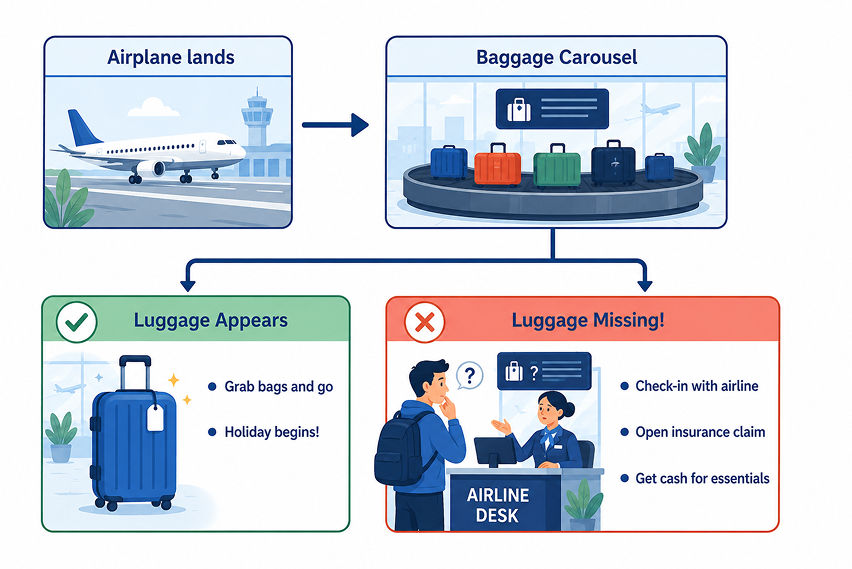
There is a specific kind of panic that you can only understand when it happens to you. We are talking about a scenario when you stand at the airport baggage carousel, watching everyone else grab their bags until the conveyor belt stops. Your bag is nowhere to be found.
 AI-Generated Image
Baggage delay
If your bag isn't lost forever but just took a wrong turn and arrived 12 hours late, you will need to buy a change of clothes, a toothbrush, and basic toiletries. Your travel insurance will provide an allowance so that you can spend your own pocket money on emergency clothes.
Loss or damage to baggage
If the airline completely loses your suitcase, or if it comes out with a broken wheel and a giant rip across the side, your insurance policy will pay you for the value of the suitcase and the items inside it.
Loss of travel documents
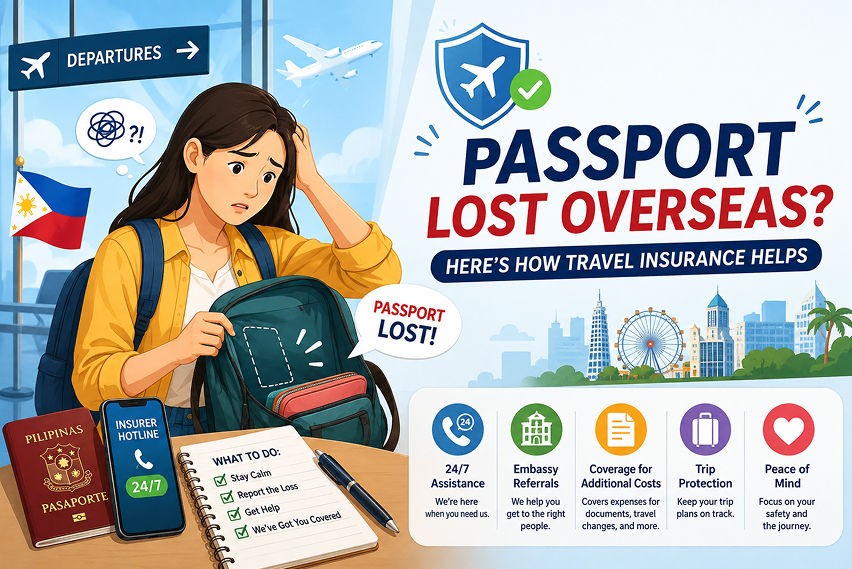
Losing your passport while abroad is an absolute nightmare. Your insurance won't automatically issue a new passport for you. Still, it will cover the actual costs of obtaining an emergency travel document from the Philippine Embassy, as well as the extra transportation and hotel costs you incurred while sorting out the mess.
Also Read: Domestic vs. International Travel Insurance: A complete guide for Filipino travelers
What travel insurance does NOT cover
Insurance companies are businesses, not charities. They have very strict boundaries regarding the protection they offer. Here’s a list of claims that, if you make, will certainly be rejected.
Pre-existing medical conditions: If you have asthma, diabetes, or hypertension before leaving, and you have to go to an overseas hospital because of a predictable flare-up of that condition, the insurance company will likely decline the bill.
Changing your mind: If you wake up on the morning of your flight and think of cancelling the trip, you cannot use your insurance to get your money back. An actual, provable emergency must trigger trip cancellation.
Extreme sports and high-risk adventures: Planning to go skydiving in Dubai, scuba diving without a license, or motorcycling without a helmet? Standard travel insurance treats these as high-risk behaviour. If you get hurt, you are on your own unless you paid extra for a specific add-on.
Acting recklessly or under the influence: If you get injured because you drank way too many cocktails at a beach party or picked a fight with a local, your insurance provider will walk away the moment they find out you were intoxicated.
Domestic vs. International: Do I need insurance for trips within the Philippines?
When we hear "travel insurance," we usually think of long international flights. But should you get it when you are just flying home to your province or taking a quick vacation in Siargao?
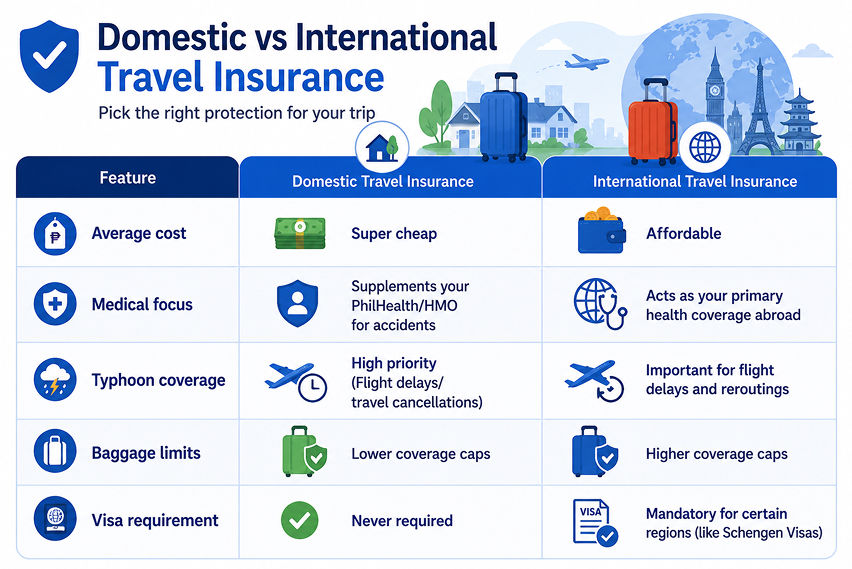
Let's look at how domestic and international policies stack up side-by-side:
 AI-Generated Image
For domestic travel, the biggest travel insurance perk is coverage for flight delays and typhoon disruptions. If you are travelling during the rainy season in the Philippines, a cheap domestic policy can save you from spending thousands on unexpected airport hotel stays when flights get grounded.
Also Read: Smart travel: Should you buy travel insurance for one trip or the whole year?
The Verdict: Is travel insurance worth it?
At the end of the day, buying travel insurance comes down to peace of mind. Spending an extra PHP 500 on a PHP 30,000 vacation might feel like an annoying minor expense, but it shields you from financial disasters that could ruin your savings.
Think of it as a small investment wrapper for your safety. You buy it hoping you will never, ever have to use it. But if the unexpected happens, you’ll be incredibly glad you checked that little box. Protect your hard-earned vacation money, travel smart, and enjoy your journey!
Also Read: Traveller's blueprint: How and when travel insurance pays for emergencies
FAQs
Q1. Can I buy travel insurance if I am already at the destination airport?
Ans. No. You must buy your travel insurance before your scheduled departure from the Philippines. The moment your plane takes off, you can no longer buy a policy for that specific trip.
Q2. What is covered under a standard travel insurance policy?
Ans. Most plans cover medical emergencies, lost baggage, and flight delays or cancellations.
Q3. What should I do immediately if my flight gets delayed or cancelled?
Ans. Do not leave the airport gate without getting a formal written statement from your airline’s customer service desk. This piece of paper states the exact reason for the delay and the total duration.
Q4. Will travel insurance pay for my stolen smartphone or laptop?
Ans. It depends entirely on the terms of your travel insurance plan. Standard baggage loss covers suitcases and general clothes. Expensive electronics like laptops, cameras, and smartphones often have a strict item limit cap or require you to purchase a separate add-on.