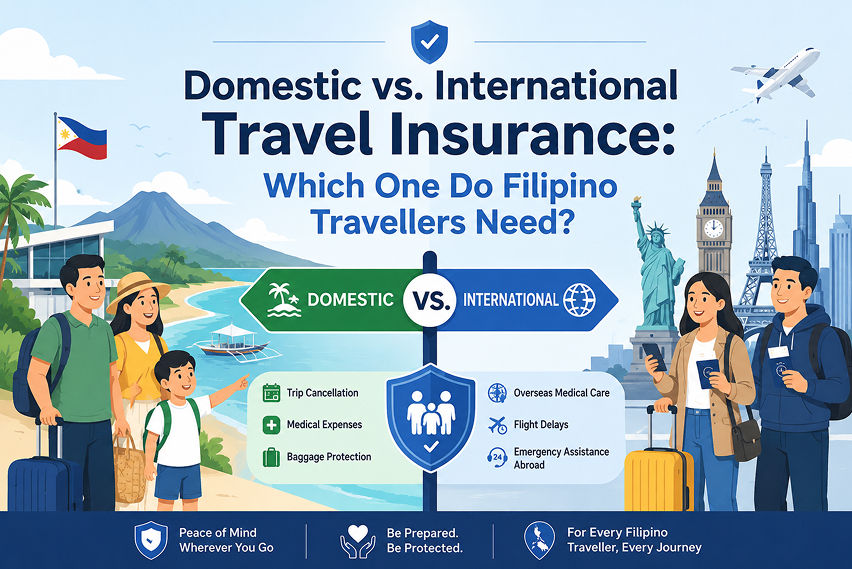






Have you noticed that when you imagine packing bags for a quick escape to Siargao or Boracay, your mind immediately gets filled with thoughts of crystal-clear waters, freshly grilled seafood, and unforgettable sunsets? When such a trip gets finalised, we count down the days, double-check our beachwear, and share our excitement with friends. Yet there is one critical step that many local travellers completely skip, i.e., travel insurance.
Most people assume that travel insurance is an exclusive requirement reserved only for international flights or complicated visa applications. And that’s where it all goes downhill.
You see, travelling within our own beautiful country can bring about the exact same unexpected twists and turns as when you fly across the globe. From sudden tropical storms that halt sea travel to an unexpected stomachache away from home, local journeys have their own set of unpredictable moments. Securing a local protection plan is not about being overly anxious or expecting the worst to happen. Instead, it is about making sure that your hard-earned vacation time and savings remain completely safe, thus allowing you to focus on creating beautiful memories.
Also Read: Traveller's blueprint: How and when travel insurance pays for emergencies
The realities of exploring locally: What can go wrong?
Flights and ferries do not always cooperate
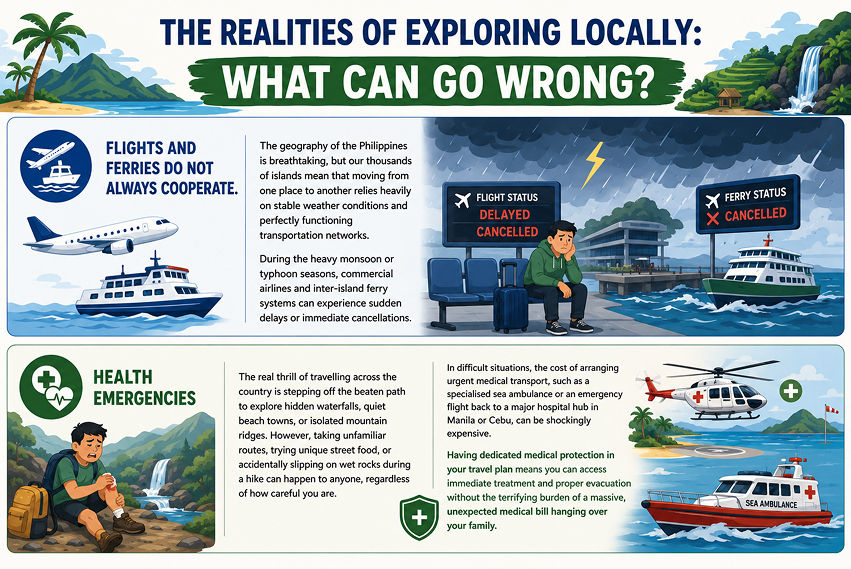
The geography of the Philippines is breathtaking, but our thousands of islands mean that moving from one place to another relies heavily on stable weather conditions and perfectly functioning transportation networks. During the heavy monsoon or typhoon seasons, commercial airlines and inter-island ferry systems can experience sudden delays or immediate cancellations.
Real-life scenario
You are at the airport and your flight time is pushed back, or, worse, cancelled until the next day. Sad, isn’t it? But do you know that this single change can trigger a costly chain reaction that can spoil your plan? You might lose out on a non-refundable night at a beachfront resort, or you could entirely miss a guided island-hopping excursion that you paid for months in advance. A dedicated domestic travel policy steps in during these frustrating moments, offering a financial cushion to help cover rebooking costs and accidental expenses so you do not have to pay out of pocket.
Also Read: Smart travel: Should you buy travel insurance for one trip or the whole year?
 AI-Generated Image
Health emergencies
The real thrill of travelling across the country is stepping off the beaten path to explore hidden waterfalls, quiet beach towns, or isolated mountain ridges. However, taking unfamiliar routes, trying unique street food, or accidentally slipping on wet rocks during a hike can happen to anyone, regardless of how careful you are. If you find yourself facing a medical emergency on a remote island or in a secluded province, the local medical facilities might be minimal or under-equipped to handle serious issues.
In difficult situations, the cost of arranging urgent medical transport, such as a specialised sea ambulance or an emergency flight back to a major hospital hub in Manila or Cebu, can be shockingly expensive. Having dedicated medical protection in your travel plan means you can access immediate treatment and proper evacuation without the terrifying burden of a massive, unexpected medical bill hanging over your family.
Also Read: Domestic vs. International Travel Insurance: A complete guide for Filipino travelers
Essential pillars of a strong local protection plan
1. Trip delays and sudden interruptions
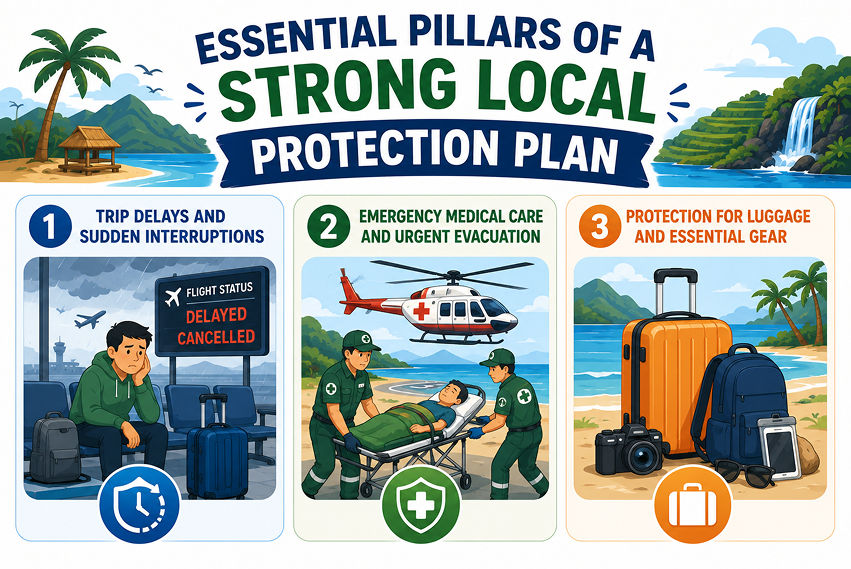
This specific benefit serves as your primary defence against notorious tropical weather conditions and abrupt airline schedule adjustments. If a strong storm rolls through your flight path and grounds your plane, this coverage helps you recover the value of your lost accommodations, covers alternative transport fees, and can even provide a small monetary allowance to buy meals. At the same time, you wait out the delay at the airport.
2. Emergency medical care and urgent evacuation
A common misconception among local travellers is that their regular workplace health card or standard healthcare coverage will take care of everything when they are away on vacation. In reality, many regional clinics and provincial hospitals operate on a strict cash-before-treatment basis or fall outside of your standard health network.
A comprehensive travel insurance plan directly addresses this gap by covering emergencies. In most cases, it covers room fees, prescribed medications, and the high logistical costs of emergency medical relocation.
Also Read: The most common travel insurance myths Filipinos still believe
 AI-Generated Image
3. Protection for luggage and essential gear
There is nothing quite as heartbreaking as standing by a rotating baggage carousel at your destination, watching the crowd thin out, only to realise your suitcase never made it onto the aircraft.
Whether your belongings are delayed by several hours, completely lost by the transit provider, or accidentally damaged during heavy handling, baggage protection saves the day. It provides you with the immediate funds you need to purchase basic clothing, toiletries, and essentials, so a missing bag doesn't ruin your first few days in paradise.
Also Read: What does travel insurance actually cover in the Philippines?
Who benefits the most from domestic travel insurance?
Travelling groups with young children &/or elderly members
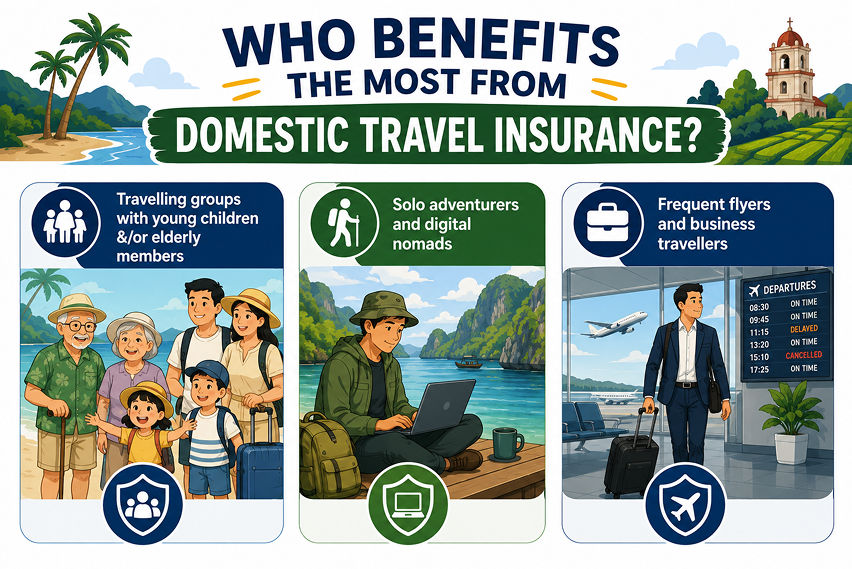
Travelling with an extended family group magnifies the joy of a vacation, but it also multiplies the variables. Children are naturally more susceptible to sudden fevers, food allergies, or minor injuries while exploring new environments. If a child falls sick the night before a big family trip, a good policy ensures the family does not lose their heavy investment in prepaid airline seats and large family hotel suites. It allows parents to change plans safely without facing extreme financial penalties.
Solo adventurers and digital nomads
When you are travelling completely on your own, you do not have a built-in companion to watch your bags, navigate emergencies, or help share unexpected costs. For the solo traveller, an affordable protection plan acts like a reliable digital safety companion. It provides a direct line of support for medical referrals, covers lost personal gear such as laptops or cameras, and ensures you are never truly left stranded on your own when a crisis arises.
Also Read: Travel insurance requirements by country: Where it's mandatory in 2026
 AI-Generated Image
Frequent flyers and business travellers
For individuals who board domestic flights multiple times a month for work or leisure, the likelihood of encountering a flight delay or a missed connection increases significantly. Frequent travellers often find great value in choosing flexible protection plans that shield their professional schedules and personal budgets from the cumulative costs of routine airline disruptions.
Also Read: Travel insurance explained: Medical emergencies, flight delays, and lost baggage
Bottom line: Spend a little now & protect your peace of mind
At first glance, adding the cost of a domestic protection plan onto your travel checklist might feel like an unnecessary extra expense, especially when you are trying to stick to a tight vacation budget. However, when you contrast the minimal cost of a basic policy against the overwhelming expenses of buying emergency replacement flights, paying for a missed hotel reservation, or settling an unexpected hospital bill out of your own wallet, the choice becomes clear. Investing in a local protection plan is one of the smartest ways to travel. It not only transforms an unpredictable journey into an organised, manageable experience, but also makes it more enjoyable. But it establishes a solid safety net before you leave home. Thus helping you gain the absolute freedom to fully immerse yourself in the beauty of the Philippines, knowing that your finances and well-being are protected at every step.
Also Read: A complete guide to travel insurance for different travellers
FAQs
Q1. Should I buy a travel insurance policy if I am travelling within the Philippines?
Ans. Yes, even though domestic travel does not require clearing international immigration, local trips still face the same logistical challenges. From severe tropical weather and flight delays to sudden cancellations and lost or broken luggage, to unexpected medical emergencies, anything can happen anywhere. A local policy ensures these common travel headaches do not result in significant financial losses.
Q2. Won't my regular health card cover me while I am on vacation?
Ans. While your standard health card or PhilHealth can help cover conventional hospital stays, they generally do not cover non-medical travel mishaps. They will not reimburse you for a cancelled flight, pay for hotel nights you missed due to bad weather, replace stolen luggage, or fund the high cost of an emergency air ambulance from a remote island to a major city hospital.
Q3. What does emergency medical evacuation actually mean?
Ans. If you suffer a critical injury or a severe illness while visiting an isolated island or a rural mountain region that lacks advanced medical facilities, emergency medical evacuation steps in. This benefit organises and funds the complex process of safely transporting you via specialised medical aircraft or sea vessel to the nearest major hospital capable of providing proper care.
Q4. Can I cover my entire group of friends/family under a single travel insurance plan?
Ans. Yes, absolutely. Most insurance providers in the Philippines offer specialised group or family packages. These options let you easily bundle multiple travellers into a single policy. This approach is more practical and cost-effective than attempting to purchase separate, individual policies for every single child and adult travelling in your party.
Q5. What steps should I take if my baggage is lost or my flight is delayed?
Ans. You should immediately report the issue to your airline representative before leaving the airport premises. For delayed or lost luggage, request an official Property Irregularity Report (PIR). For significant flight disruptions, ask the airline staff for a formal written statement explaining the exact cause and duration of the delay. These documents are vital pieces of evidence required when you submit a claim.
Q6. Are domestic travel protection plans expensive?
Ans. No. Domestic travel plans are mostly budget-friendly. A basic policy that covers a standard local trip often costs less than a single fast-food meal.
Also Read: What’s not covered under a travel insurance policy? A must-read for Filipino travellers