




You have finally booked those dream plane tickets for your first international trip, say to Tokyo, after months of hunting for a seat sale. Your bags are packed with your finest aesthetic outfits, your itinerary is colour-coded, and the camera is ready to capture every single moment. You are ready to eat authentic local food and explore the local markets. But just as you are about to check in online, a tiny thought pops into your head: What if something goes wrong?
As Filipinos, we are naturally optimistic people. We often hope for the best, trusting that our pure excitement and good vibes will carry us through. But if there is one thing that experienced travellers will tell you, it is that unexpected things can happen to anyone, anywhere. Flights get delayed because of sudden typhoons, luggage vanishes into thin air at busy transit airports, or a strange street food dish might give you an upset stomach that sends you straight to a foreign hospital.
That is where travel insurance comes in. It is not just an extra piece of paper to print out; it is your ultimate safety net.
Buying travel insurance
These days, buying travel insurance is easier than ever because you can do it completely online in just a few clicks. However, not all insurers and insurance plans are created equal. Buying the wrong plan can be just as bad as having no insurance at all. To make sure you do not waste your hard-earned pesos, here is a complete guide on what Filipino travellers must look out for when buying travel insurance online.
Also Read: Decoding the fine print: A Pinoy guide to travel insurance policies
So, let’s begin …
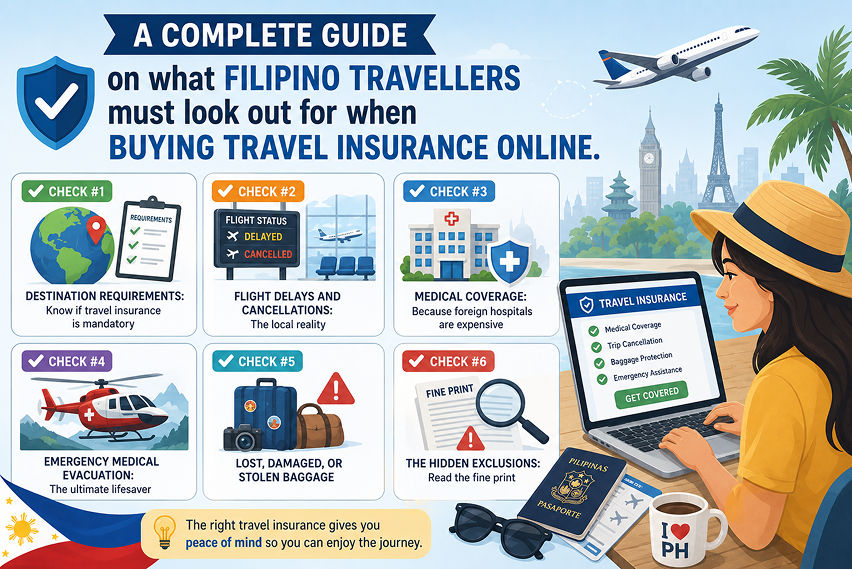
Check #1. Destination requirements: Know if travel insurance is mandatory
Before you begin comparing prices online, you need to understand where you are going and what that country requires. In many destinations across Asia, such as Singapore, Thailand, or Hong Kong, travel insurance is highly recommended but not required upon entry. You can pass through immigration smoothly without it, though skipping it remains a significant risk.
However, if you are planning a big trip to Europe to walk the romantic streets of Paris or see the historic sites of Rome, you will need a Schengen Visa. And to get this visa, having travel insurance is absolutely mandatory.
Did you know? The European embassies have very strict rules. Your insurance policy must cover medical expenses for a minimum amount and be valid for your entire stay across all Schengen countries.
Also Read: Travel insurance FAQs for 2026: Everything travellers most commonly ask
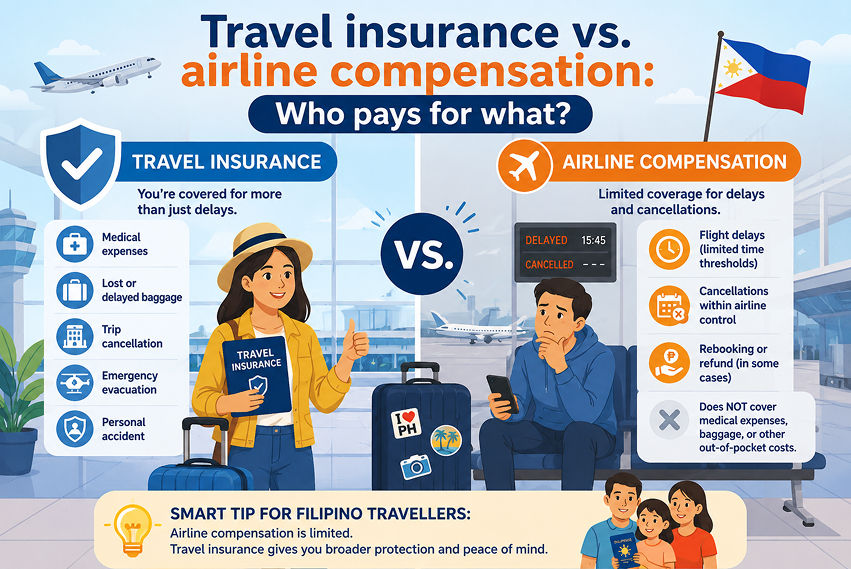
Check #2. Flight delays and cancellations: The local reality
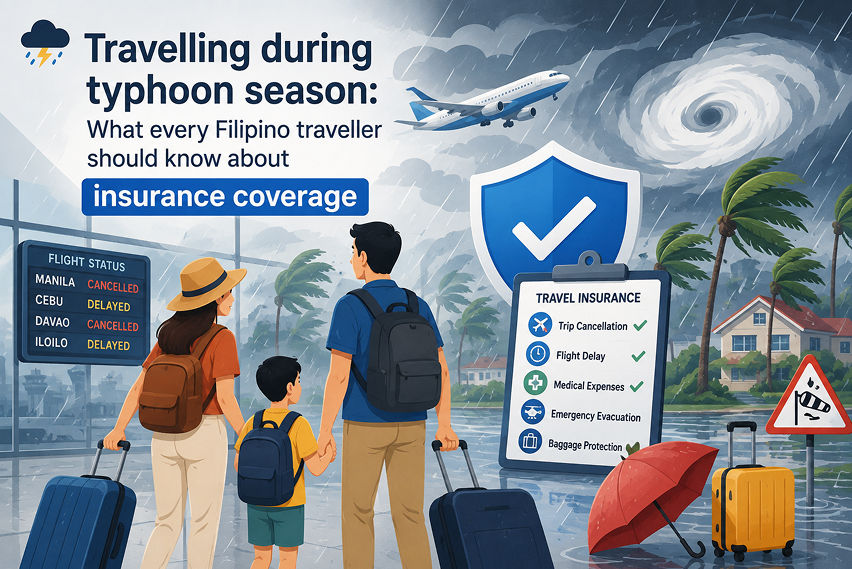
Let us talk about something every single Filipino flyer knows all too well: flight delays. We live in a country that is hit by around 20 typhoons every year. Our local airports can get highly congested, and sudden weather changes can throw even the best airline schedules off track. Imagine sitting on the floor of the terminal for twelve hours because a sudden storm hit Manila, missing your connecting flight to the United States.
When you look at insurance policies online, look closely at their ‘Flight Delay and Trip Cancellation’ sections. Do not just skim past it. Read the specific rules. Most policies will only compensate you if the delay lasts longer than a specific number of hours. They will pay you a fixed amount for every block of time you are stuck waiting, which helps cover the cost of airport meals or an unexpected overnight hotel stay.
Additionally, check what happens if the airline cancels your trip entirely. A good online travel insurance policy will reimburse you for non-refundable expenses, provided the cancellation was due to a covered reason such as a natural disaster or a sudden severe illness.
Pro-Tip for Local Travel: Even if you are just flying within the Philippines, like heading to Boracay, Siargao, or Batanes, the domestic travel insurance is incredibly cheap online and saves you from the massive headaches caused by cancelled flights during typhoon season.
Also Read: Falling ill while travelling? Here's how travel insurance will come to your rescue
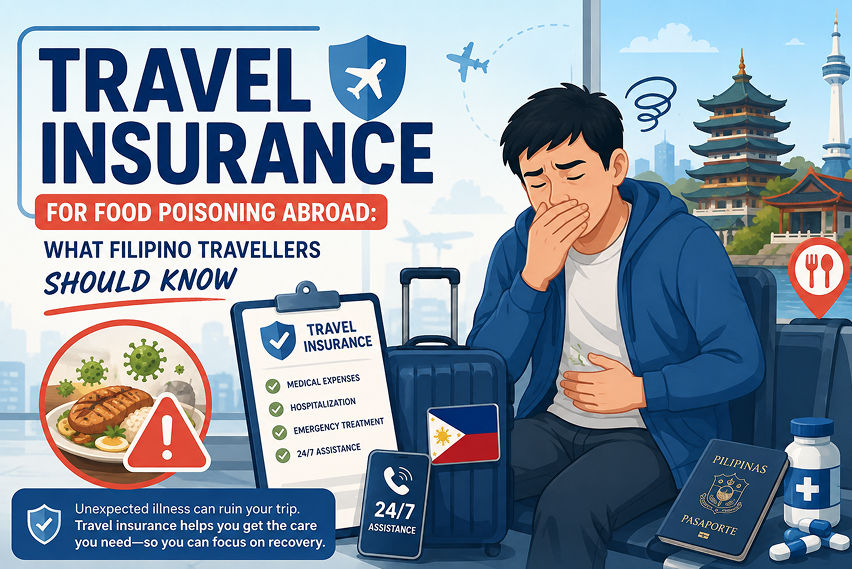
Check #3. Medical coverage: Because foreign hospitals are expensive
No traveller plans to get sick or injured on vacation, but accidents happen. You could twist your ankle while hiking or catch a severe case of the flu. While a regular check-up at your local family doctor in the Philippines is relatively affordable, medical care in foreign countries can cost an absolute fortune.
In places like Japan, Singapore, or the United States, a single night in a hospital bed or an emergency ambulance ride can easily cost hundreds of thousands of pesos. Your local PhilHealth card and your regular company HMO will almost never cover you once you leave Philippine waters. This means without travel insurance, you would have to pay those medical bills straight out of your own pocket or rely on emergency loans from family back home.
When comparing insurance options online, focus heavily on the ‘Emergency Medical Expenses Limit’. Ensure that the maximum amount the insurance company will pay is high enough to give you peace of mind.
 AI-Generated Image
Also Read: Travel insurance explained: Medical emergencies, flight delays, and lost baggage
Watch out for pre-existing medical conditions
This is a major detail that many travellers miss.
What is a pre-existing medical condition? It is a health issue that you already have before you buy the policy or before you step onto the aeroplane. Examples include asthma, high blood pressure, diabetes, or heart conditions.
Most standard, budget-friendly travel insurance plans bought online completely exclude pre-existing conditions. This means if you have asthma and suffer a severe attack while travelling due to cold weather, the insurance company might refuse to pay for your hospital treatment. If you have a known health condition, you must look for an online policy that offers an add-on or specific coverage for preexisting conditions. It will cost a bit more, but it prevents you from being left stranded with a massive bill.
Also Read: The cost of flying unprotected: Why travel insurance is your true best friend
Check #4. Emergency medical evacuation: The ultimate lifesaver
Imagine you are on a remote island, far from any major city, when a serious medical emergency occurs. The small local clinic on the island does not have proper tools or doctors to treat you, and you need to be flown immediately via a special medical helicopter to a proper hospital.
This process is called Emergency Medical Evacuation, and it is easily one of the most expensive things in the entire travel world. It can cost millions of pesos to arrange. When buying your insurance online, check if this is included and what its specific limit is. A good policy will cover the complex logistics and high costs of safely transporting you to the nearest high-quality medical centre, if necessary, and flying you back home to the Philippines with a medical escort.
Also Read: Smart travel: Should you buy travel insurance for one trip or the whole year?
Check #5. Lost, damaged, or stolen baggage
We Filipinos are famous for packing heavy things. We love our giant suitcases filled with outfits, extra shoes, and space dedicated entirely to gifts for our relatives back home. Now, imagine arriving at your destination, standing by the airport luggage carousel for an hour, and realising everyone else has left, and your suitcase is nowhere to be found.
Online travel insurance helps soften this painful blow. It usually provides coverage for two distinct scenarios:
- Baggage delay: If your bags are temporarily lost by the airline, the insurance will provide an allowance to buy essential items like basic clothing, a toothbrush, and toiletries so you can survive while waiting for your luggage to arrive.
- Baggage loss or damage: If the airline completely loses your suitcase forever, or if it comes out of the conveyor belt completely broken and smashed, the insurance company will compensate you for the value of the suitcase and its contents, up to a certain limit.
Also Read: Traveller's blueprint: How and when travel insurance pays for emergencies
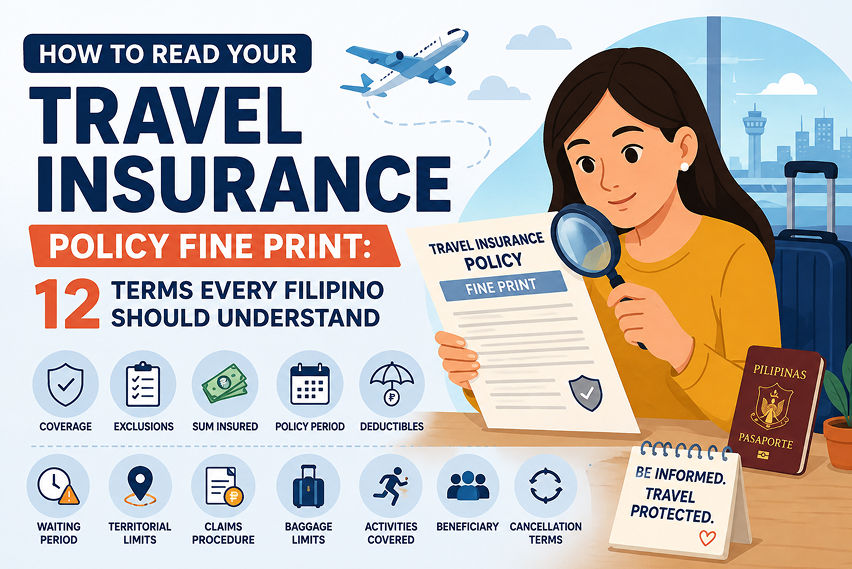
Check #6. The hidden exclusions: Read the fine print
When buying travel insurance online, you will come across the ‘I agree to the Terms & Conditions’ box. While it is incredibly tempting to just check it without actually reading anything, doing so is quite dangerous. You see, that long, boring document is where the most important details live. You need to know what your policy will not cover.
For example, you need to check if extreme sports are covered (if your travel plans include them). Many standard travel insurance policies will reject claims for injuries sustained while participating in an adventure sport. If you plan to do these thrilling activities, you must buy a specific add-on.
How easy is the online claim process?
 AI-Generated Image
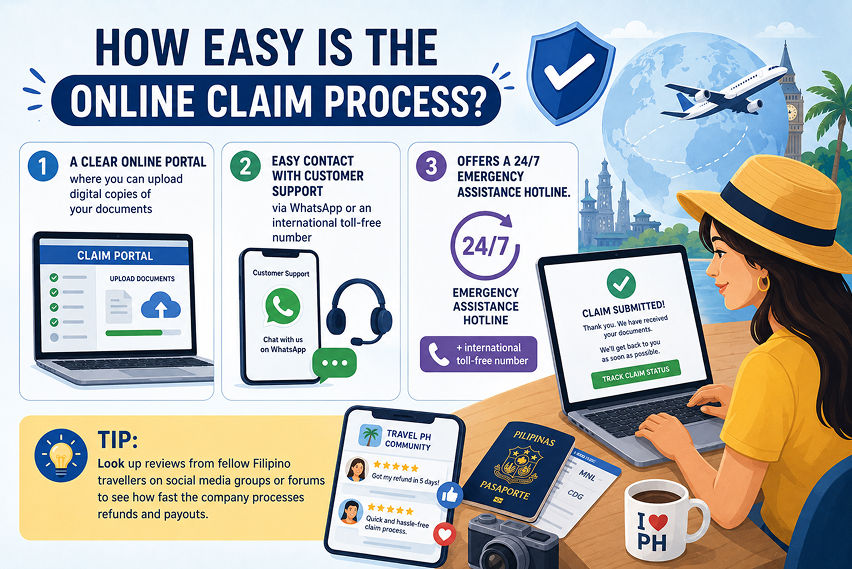
An insurance policy is only as good as its claim process. When you buy online, you want to make sure that filing a claim in the future will not feel like an endless paperwork process. Do thorough research and settle for a provider that offers the following -
- A clear online portal where you can upload digital copies of your documents
- Easy contact with customer support via WhatsApp or an international toll-free number
- Offers a 24/7 Emergency Assistance Hotline.
Tip: Look up reviews from fellow Filipino travellers on social media groups or forums to see how fast the company processes refunds and payouts.
Also Read: Flight Delayed? How travel insurance can save your dream road trip
Bottom line
At the end of the day, buying travel insurance online is not about expecting bad things to happen to you. It is about being a smart, responsible, and mature adult traveller. It is about making sure that if a sudden emergency disrupts your hard-earned vacation and life savings.
By spending a few hundred pesos on a solid online travel insurance policy, you will have the ultimate freedom to enjoy your trip. Before you head out the door to catch your flight, take 10 minutes to go online, compare your options, and secure your safety net.
Also Read: Travelling with kids? Don't skip these travel insurance tips
FAQs
Q1. Is travel insurance mandatory for Filipinos travelling abroad?
Ans. It depends heavily on your destination. For Asian countries like Japan, South Korea, and ASEAN nations, it is generally not mandatory but highly recommended. However, for Europe (Schengen countries) and certain other destinations, you cannot get a visa or enter the country without a valid, approved travel insurance policy.
Q2. Can I buy travel insurance online if I am already outside the Philippines?
Ans. Generally, no. Almost all Filipino insurance companies require you to purchase the policy before you leave the Philippines.
Q3. Does travel insurance cover flight cancellations caused by typhoons?
Ans. Yes, as long as you bought the insurance policy before the typhoon was officially named, subject to the insurer's terms and conditions.
Q4. What is the difference between "Cashless" and "Reimbursement" medical claims?
Ans. A cashless claim means the insurance company coordinates directly with the hospital to pay the bills. A reimbursement claim means you have to pay the foreign hospital bills using your own money or credit cards first, collect all official receipts, and then file a claim to get your money back once you return to the Philippines.
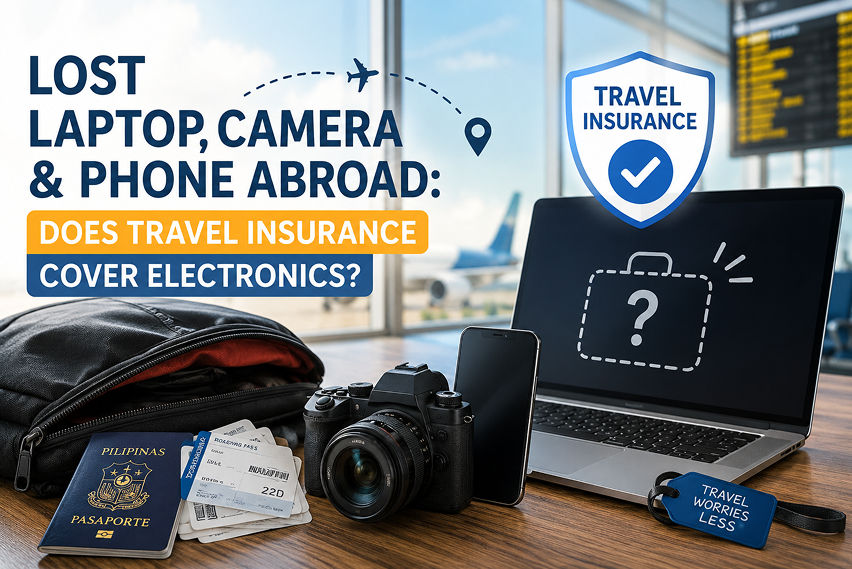
Q5. Will my travel insurance cover me if my phone or laptop gets stolen?
Ans. It depends on your plan. Basic plans usually only cover the airline's standard baggage loss. If you want coverage for personal belongings stolen while exploring a city, ensure your policy includes specific coverage.
Q6. Is the cheapest online travel insurance option always the best choice?
Ans. While it is tempting just to pick the cheapest plan to save money, those plans often have incredibly low coverage limits, high deductibles, and many exclusions.
Also Read: Maximising your peace of mind: Traveller's guide to Hong Kong travel insurance